

GARAGES, LONG CABLE ROUTES & TWO EVS · CENTRAL SCOTLAND
Home EV charging when your installation needs more thought
Detached garage, awkward driveway, older electrics or more than one EV? You do not need to work out the solution yourself. WB Electrical can assess the installation and explain the practical options.
AN ESTABLISHED ELECTRICAL CONTRACTOR, NOT JUST A CHARGER FITTER
OZEV APPROVED INSTALLER
1989
ESTABLISHED IN SCOTLAND
Years of electrical installation experience, from everyday jobs to more involved work.

SELECT MEMBER · LOCAL ELECTRICIANS
Based in Larkhall, WB Electrical works across Lanarkshire, Glasgow and the Central Belt. We can discuss the charger, the cable route and any wider electrical work as one clear project.
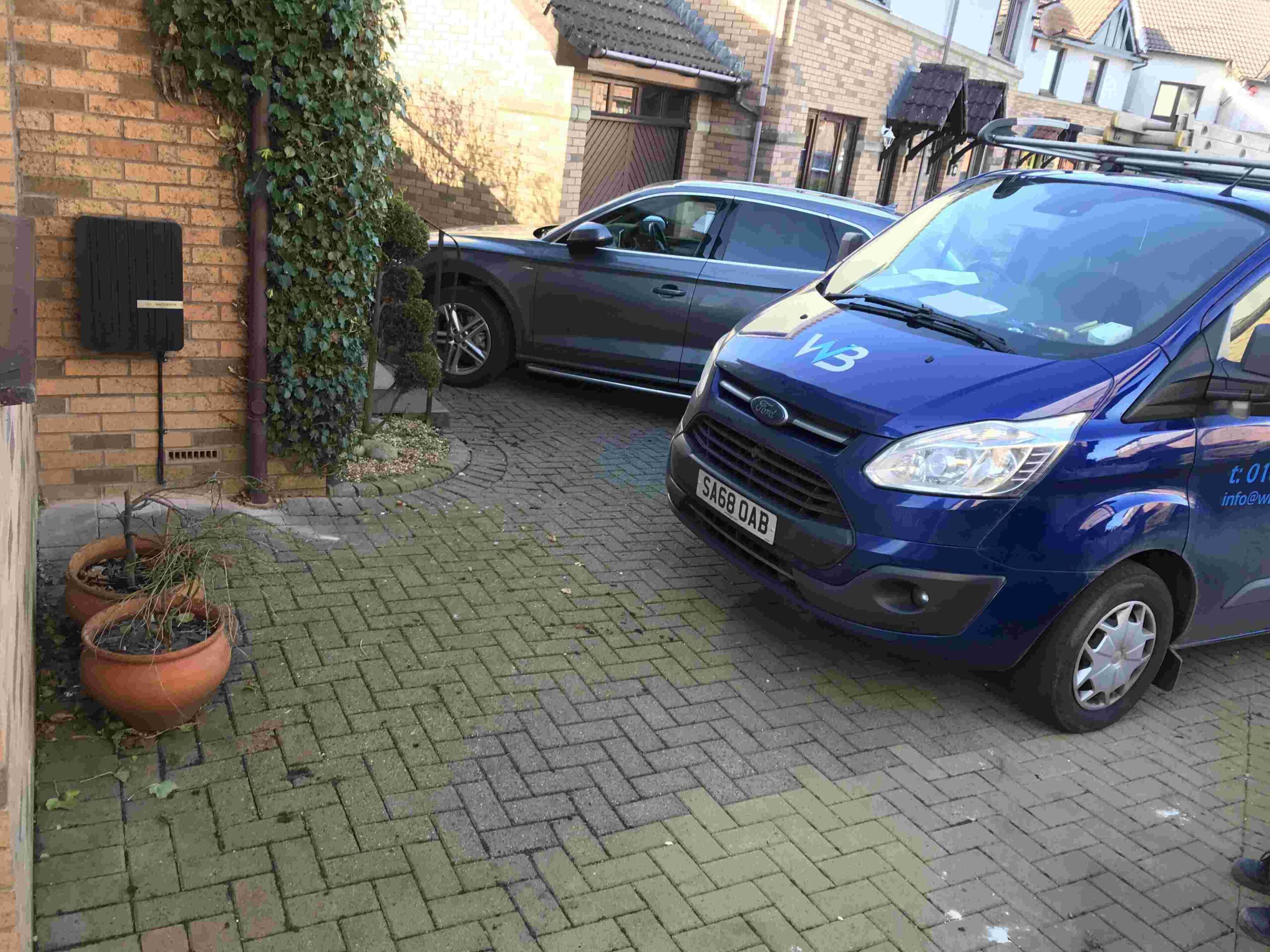
More thought behind the installation. Less guesswork for you.
YOUR HOME MAY NEED SOMETHING DIFFERENT
A practical home EV installation starts with the property
Some chargers are easy to fit beside the house. Others belong on a detached garage, need a longer route beneath the driveway or must share capacity with other household equipment.
We help you understand what is involved before you commit. You will know what is proposed, what needs checking and which parts of the work are included in the quotation.
FOUR COMMON INSTALLATION CHALLENGES
When the charger is not simply beside the front door
These are situations we can help assess. They do not automatically mean you need a major upgrade or an expensive solution.
01
Detached garages and outbuildings
A charger away from the house may need a suitable electrical supply, protective equipment and carefully planned cable route. We review the existing garage supply before assuming a new one is required.
02
Long or awkward cable routes
Driveways, paths and finished gardens can make cabling less straightforward. We discuss possible surface routes, containment, trenching or other interfaces, and agree any making-good or specialist groundworks separately.
03
Two electric cars at home
Two vehicles do not always mean two full-power chargers. We can consider charging habits, suitable power sharing, current equipment and whether a staged second installation would work better.
04
Consumer-unit and supply alterations
An older board or a busy household needs a proper capacity and protection review. Sometimes a suitable existing supply can be used; sometimes distribution changes or load controls deserve a separate quotation.
If you are considering a higher-power or three-phase supply, we can assess the electrical requirement. Any network-side alterations depend on the distribution network operator. See official network-connection guidance for background.
THREE THINGS WE LOOK AT FIRST
What makes the installation suitable for your home?
You do not have to know the technical answers. We can discuss what to check and whether photographs, a survey or a more detailed assessment will be useful.
01
Where you actually park
The car position, access, wall or post location and a tidy route that works with the property, not against it.
02
The available electrical supply
Existing household demand, consumer-unit condition, appropriate protection and whether compatible load controls would help.
03
The work and who is responsible
What WB can install, where third-party civils or the network operator may be involved, and which costs or timings depend on another party.
A three-phase connection is not automatically better for every home. Charging power is limited by the charger, supply and the vehicle itself. We will discuss whether it delivers a real benefit before suggesting that route.
A CLEAR PLAN BEFORE THE WORK
We explain the options and scope before installation day
Tell us your postcode, where the charger needs to go and what makes your home different. Photos or a rough sketch can help, but you can still start with a telephone call.
We review the electrical requirements, agree whether a site visit is needed and explain the proposed solution. The quotation should distinguish the charger installation from any alterations, groundworks or third-party charges.
Four easy steps
01. Tell us about the home, vehicles and parking location.
02. We review the cable route, supply and possible options.
03. We agree a written scope, clear quote and any separate works.
04. Once ready, we install, test and explain the charger setup.
Where excavation, driveway reinstatement or network changes are required, those elements are identified and programmed separately rather than quietly assumed to be included.
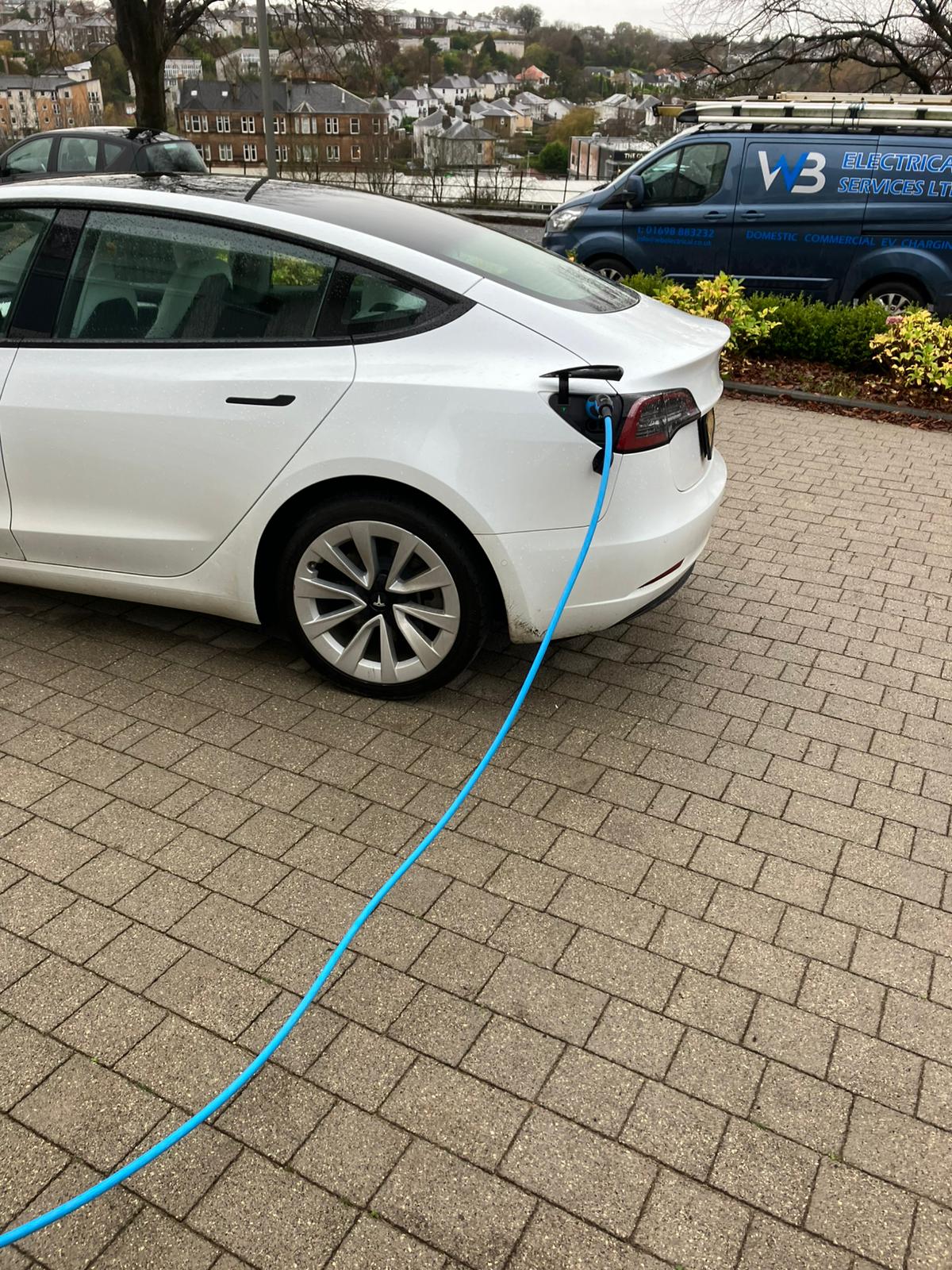
REAL DOMESTIC WORK · CAREFUL FINISHES
The finish matters, even when the route is more involved
Feedback published about WB Electrical’s domestic charging work highlights careful cable routing, a tidy installation and coordinated groundwork. Those are useful qualities when an installation requires more thought than a simple wall-mounted charger.
We want the finished work to make sense for your property. Any particular cable route, external making-good and electrical alterations will be agreed for the actual job, not assumed from a photograph.
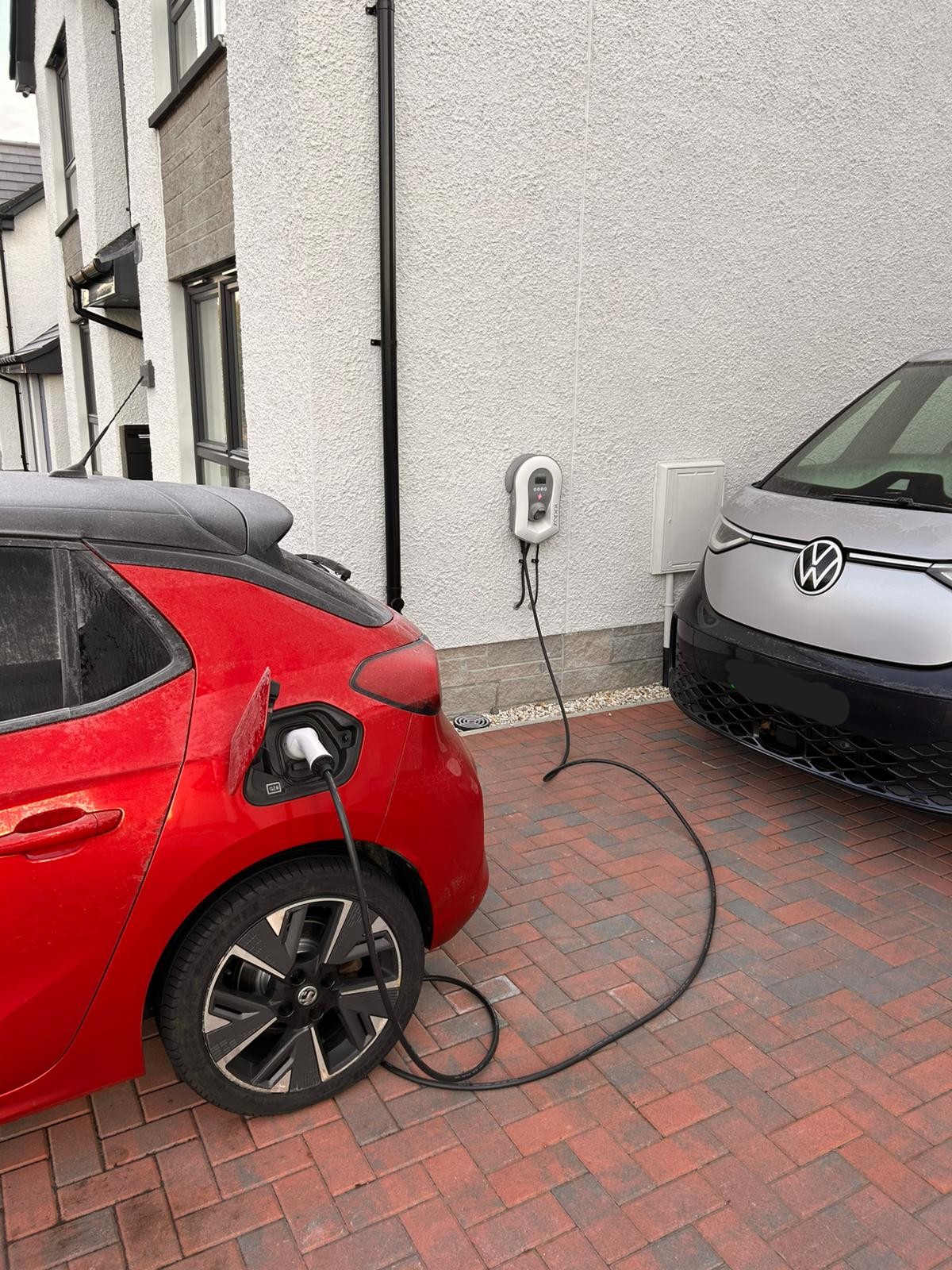
STILL CHOOSING A CHARGER?
We can help choose the charger after checking the home
There is no need to buy a particular charger before we understand the property. The right choice depends on the car, where you park, the electrical supply and whether you want smart scheduling, solar-aware charging or a discreet design.
For everyday charger options, see smart and solar home EV chargers. You can also return to the Home EV Charging hub to compare the wider range.
HOME EV INSTALLATION QUESTIONS
Questions when the installation needs a little more planning
Straight answers about garages, cable routes, capacity, more than one EV and what affects your quotation.
Can I install an EV charger in a detached garage?
Often, yes. We would review the distance, garage electrical supply, available capacity, mounting location and suitable protection. An existing garage circuit is not automatically suitable for a charger, so we will check it before specifying the work.
Will a long driveway mean a very expensive installation?
Not necessarily. Cable length, route, ground conditions, suitable containment and making-good all affect the scope. We can explore practical options and explain what needs to be priced before you commit.
Can I charge two electric cars at the same home?
Usually there are options, but the best arrangement depends on the vehicles, time available for charging and electrical supply. Some compatible chargers can manage or share demand. We will assess rather than assume that two independent full-power chargers are needed.
Do I need a new consumer unit to install a home charger?
Not automatically. We check the existing board, protection, electrical capacity and the charger requirements. A suitable dedicated arrangement may be possible without replacing the whole consumer unit; where alterations are needed we will explain them separately.
What if my home already uses a lot of electricity?
We review the household demand and whether suitable load management could keep charging within the available capacity. Smart controls can help manage demand, but they cannot create unlimited electrical capacity.
Would a three-phase supply make charging much faster?
It may help in some situations, but it is not automatically worthwhile. The charger and the car must support the higher AC rate, and the network operator determines whether a new or upgraded connection is available. We can discuss the electrical requirements first.
Can the charger cable go under a driveway or path?
A suitable buried cable route may be possible. The route, protection, excavation, reinstatement and any permissions need to be agreed. Specialist groundworks or making-good may form a separate part of the quotation.
What should I send WB to get a quotation?
Your postcode, vehicle details, preferred charger location and a short explanation of the challenge are enough to start. Photos of the consumer unit, parking space and proposed cable route are helpful when available, but not a requirement to make contact.
Will the quotation include all the extra electrical work?
We aim to make the agreed scope clear, including the charger, protective equipment, cabling and any additional electrical works. Network charges, specialist groundworks or other conditional items should be identified rather than hidden in a standard installation price.
Will my home still look tidy after the work?
We plan the route and finish with the property in mind. What is possible depends on the surface, access and agreed scope, so we discuss visible containment, excavations and making-good before work starts.
Not sure if your home counts as a more involved installation? You can still send a simple enquiry and we will help identify the right next step.
LET’S LOOK AT YOUR HOME EV PROJECT
A tricky cable route? Let’s find a sensible way forward
Tell us where the charger needs to go, what car or cars you have and anything unusual about the property. We will discuss the most useful next step, without expecting you to arrive with a finished electrical plan.
Prefer email? info@wbelectrical.co.uk. Want to compare ordinary charger options first? Visit WB Home EV Charging.