
Project case study | Client relationship since 2016
Distillery Electrical Maintenance and Infrastructure Support for North British Distillery
Planned upgrades, reactive fault finding, compliance support and electrical infrastructure works across operational distillery and warehousing sites.
- Long-term electrical support since 2016
- Edinburgh and West Lothian warehousing sites
- Planned, reactive, testing and improvement works
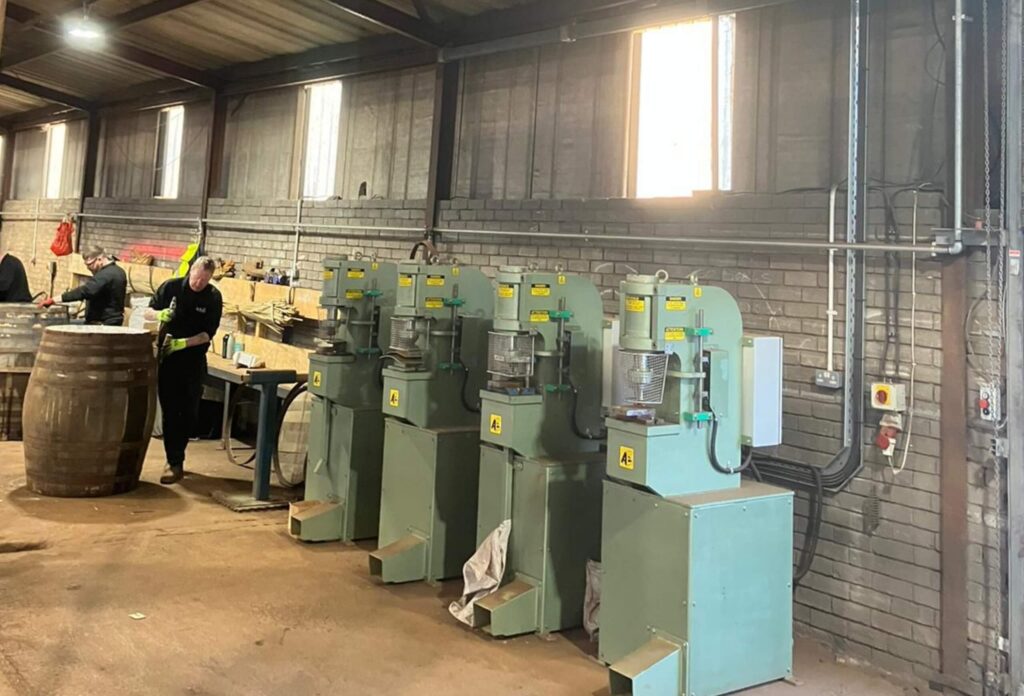
Support built around a working industrial site
The relationship covers day-to-day needs, planned improvements and compliance-led work as site requirements evolve.
Since 2016
Ongoing client relationship
Multi-site
Edinburgh and West Lothian
Industrial
Distillery and warehousing
Broad scope
Planned, reactive and compliance
The relationship
Supporting Live Distillery and Warehousing Operations
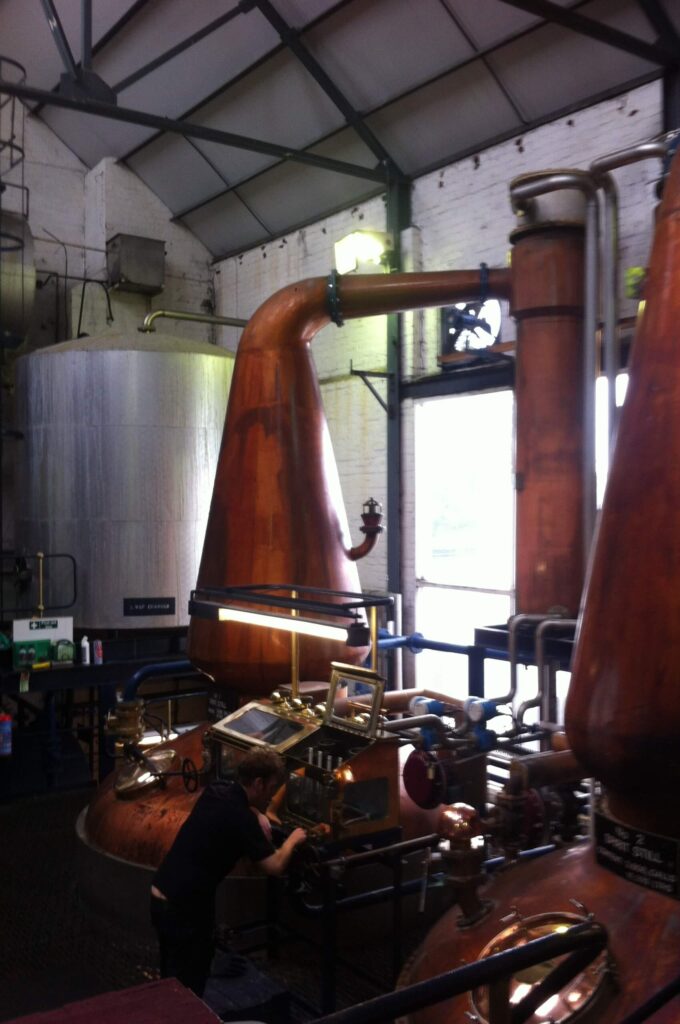
North British Distillery is an Edinburgh grain whisky producer with an industrial history dating back to 1885. WB Electrical has supported the client since 2016, with work extending from the Edinburgh distillery to associated warehousing sites in West Lothian.
The relationship is not centred on one isolated installation. It combines planned upgrades, reactive fault finding, compliance-led activity and practical electrical improvements as buildings, equipment and operational requirements change.
That continuity matters on a working industrial estate. Familiarity with the sites, their access arrangements and existing electrical infrastructure helps each new task begin with better context while the scope, risks and isolation requirements are still confirmed afresh.
The operating requirement
- Plan work around live operations, access and agreed shutdown windows
- Confirm isolations and site controls before work starts
- Use maintainable routes, equipment and labelling
- Test, document and hand back the completed electrical scope clearly
The challenge
Electrical Work That Has to Fit the Site
At a working distillery and its associated warehousing sites, electrical work has to fit around production activity, engineering priorities, secure access, stored stock and the availability of equipment for isolation. A technically sound solution also needs a practical route to installation.
Some requirements are planned improvements. Others begin with a fault, a damaged circuit, a new item of equipment or a compliance inspection that identifies remedial work. The priority can change, but the process still needs a defined scope, suitable controls and a clear handback.
Where work interfaces with a hazardous zoned area, the task must also follow the client’s existing hazardous-area information, equipment requirements, permit arrangements and DSEAR considerations. The whole site is not treated as one uniform environment.
The aim is consistent: complete the agreed electrical work safely, keep the solution maintainable and minimise avoidable disruption to the client’s operation.
The work delivered
Electrical Support Delivered Since 2016
The programme has included infrastructure work, equipment supplies, repairs, testing and phased improvements across different areas of the client’s estate.
01
Planned Infrastructure and Alterations
- Distribution board replacements and upgrades
- New circuits, electrical alterations, containment and cable routes
- Power supplies for site buildings, gates, dryer equipment and FLT charging bays
- Supplies for roller doors, CCTV, heaters and supporting site equipment
- Control panels, valve chamber distribution and standby power support
02
Reactive Maintenance and Fault Finding
- Electrical fault finding across operational buildings and equipment
- Electrical supplies to machinery, wiring repairs and damaged-circuit repairs
- Repairs to lighting, tanker lamps and supporting electrical systems
- Temporary power arrangements where required by the agreed task
- Follow-on improvement work after faults or changing site requirements
03
Compliance, Lighting and Connectivity
- EICR inspections, identified remedial works and earthing tests
- Emergency lighting inspection, testing and remedial activity
- Thermal imaging support for condition-led investigation
- Internal lighting, external lighting and floodlighting upgrades
- Data cabling and fibre installation across relevant site areas
Every task remains subject to its own survey, agreed scope, site controls and access requirements.
The delivery approach
How Work Is Planned Around the Operation
01
Define the Requirement
Confirm the fault, improvement or compliance need, survey the relevant area and agree what is inside and outside the task.
02
Plan Access and Isolation
Coordinate with the site contact around access, permits, production activity, equipment availability and a suitable isolation window.
03
Install and Test
Complete the agreed work using suitable equipment, routes and controls, then inspect and test the electrical scope.
04
Record and Hand Back
Confirm the completed scope with the site contact, issue the relevant records and identify any separate follow-on items clearly.
Scope clarity
Working Within Distillery Safety Controls
Electrical work at a distillery may interface with identified gas and vapour hazardous areas and tasks with DSEAR considerations. WB plans the electrical scope using the client’s existing DSEAR information, hazardous-area drawings or classification, equipment requirements and permit arrangements.
Work within an identified gas or vapour hazardous area proceeds only where the agreed scope, equipment selection, site information and competence requirements are clear. The requirements are considered for the specific task and location rather than being applied as a generic label to the whole estate.
Related specialist capability
Explore WB Electrical’s scope for gas and vapour hazardous-area installation, inspection and maintenance.
Current scope covers gas and vapour hazardous areas.
Testing and handover
A Clear Finish to Each Agreed Task
Long-term support still depends on closing each individual job properly. The handover is matched to the completed scope and the information the site needs to operate or maintain it.
- Inspection and testing relevant to the completed electrical work
- Labelling and circuit information updated where included in the task
- Relevant certificates, test records or completion information issued
- Separate defects or recommended follow-on items raised clearly
- Completed work handed back through the agreed site contact
What the relationship demonstrates
Practical Value From Continuing Site Support
Site Knowledge
Prior experience of the facilities gives useful context for planning and fault finding without replacing a fresh survey of each task.
Phased Improvement
Infrastructure can be repaired, adapted and upgraded in manageable packages as operational needs and priorities develop.
Broad Electrical Coverage
Planned work, reactive repairs, testing, lighting and infrastructure improvements can be coordinated through one electrical contractor.
Maintainable Handover
Suitable routes, labelling, inspection and task-specific records help the completed work remain understandable after installation.
More evidence from working sites
Explore Related Project Case Studies
Industrial site lifecycle
Bridon-Bekaert
Long-term industrial electrical support spanning site setup, operation, improvement and decommissioning.
Multi-site facilities
Scottish Opera
Planned and reactive electrical support across a varied operational and cultural estate.
Public sector estate
Scottish Ambulance Service
Planned, reactive and compliance support across a dispersed operational estate.
Project questions
Frequently Asked Questions
Can electrical work be planned around live distillery operations?
Yes. The work should be surveyed and coordinated with the client’s site contact so access, permits, operating activity, isolations and suitable work windows are understood before the task starts. The practical plan depends on the area and scope involved.
What electrical support can WB provide across distillery and warehousing sites?
The North British Distillery relationship has included planned infrastructure work, new supplies, electrical alterations, distribution upgrades, reactive fault finding, lighting, inspection and testing, remedial work, data cabling and fibre. Any new requirement is confirmed through its own survey and agreed scope.
Can WB assist with EICR remedial works and electrical records?
Yes. WB can review the relevant inspection findings, agree a prioritised remedial scope and complete suitable corrective work. Certification and records are issued for the work and testing included in the agreed task.
Does WB carry out DSEAR risk assessments or classify hazardous areas?
WB does not present formal DSEAR risk assessment or hazardous-area classification as part of its electrical contracting scope. Where work interfaces with an identified gas or vapour hazardous area, the electrical task is planned from the client’s current DSEAR information, hazardous-area classification, equipment requirements and permit controls. A competent specialist should provide or revise the assessment and classification when required.
Commercial and industrial electrical support
Need Electrical Support for a Live Industrial Site?
Tell us about the site, the electrical requirement and any access, shutdown or compliance constraints already known. We will review the enquiry and advise on the appropriate next step.
WB Electrical Services Ltd | Commercial and industrial electrical contractor serving Scotland