
Project case study | Client relationship since 2014
Industrial Electrical Support and Site Decommissioning for Bridon-Bekaert
Long-term electrical support across manufacturing and warehouse facilities in Coatbridge and Grangemouth, from operational maintenance and machinery-related work to controlled electrical decommissioning.
- Electrical support across two industrial sites
- Operational sites in Coatbridge and Grangemouth
- Installation, maintenance, machinery support, testing and decommissioning
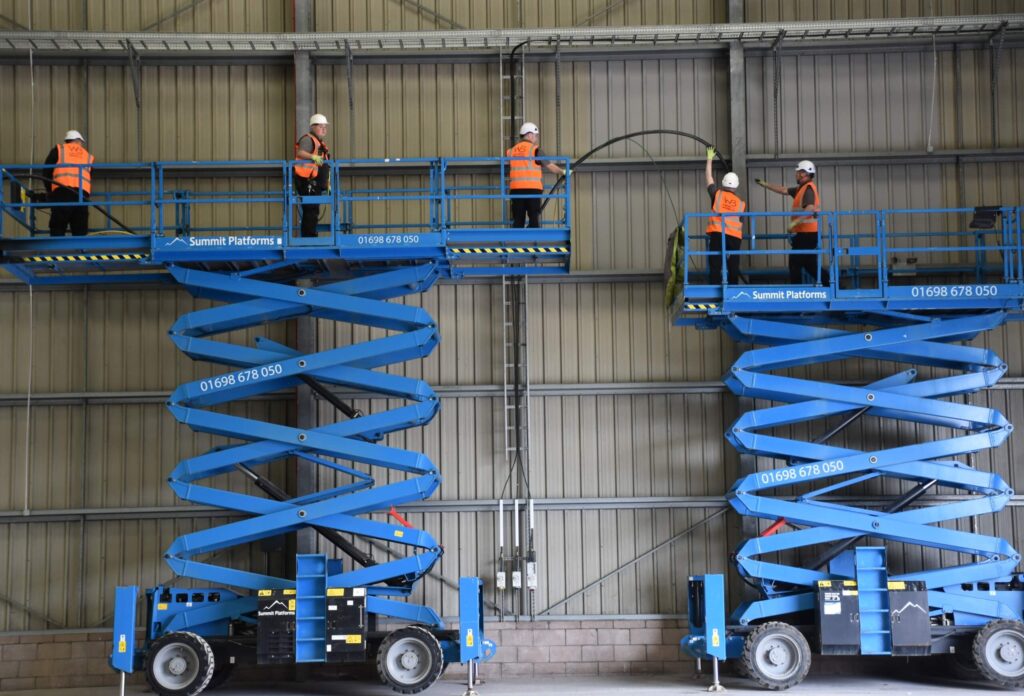
From operational support to final decommissioning
One long-term relationship spanning day-to-day maintenance, infrastructure changes, equipment support and a controlled strip-out at Grangemouth.
Since 2014
Client relationship
2 locations
Coatbridge and Grangemouth
Full lifecycle
Setup, operation, change and closure
Industrial sites
Manufacturing and warehousing
The relationship
Electrical Support Through Every Stage of an Industrial Site
WB Electrical has supported Bridon, now part of Bridon-Bekaert, since 2014 across facilities in Coatbridge and Grangemouth. The relationship has developed beyond individual jobs, covering initial setup work, ongoing maintenance, planned improvements, reactive repairs, testing and machinery-related electrical tasks.
At Coatbridge, work has supported a continuing manufacturing operation as electrical needs, equipment and layouts have changed. At Grangemouth, the role eventually moved from operational support into electrical decommissioning, including the removal of redundant services and making remaining infrastructure safe.
Sites and working environments
- Production and machinery areas
- Warehouse and industrial units
- Workshops, yards and external areas
- Welfare and supporting building services
- High-level work and decommissioning areas
The challenge
Supporting Production While Infrastructure Keeps Changing
Industrial sites rarely stand still. Production layouts, machinery, electrical loads and supporting facilities all change over time, while repairs and upgrades still need to be coordinated around the way the site operates.
Operational continuity
Repairs and planned improvements need suitable access, isolation and sequencing so the agreed work can be completed without creating avoidable disruption.
Machinery interfaces
New, moved or changing equipment may require supplies, controls, safety devices, diagnostics and electrical alterations coordinated with the site team.
High-level and external work
Warehouse lighting, yard infrastructure and strip-out work introduce different access, equipment and work-area controls from tasks completed at floor level.
End-of-life transition
Decommissioning requires redundant services to be identified, isolated and removed within an agreed boundary, with retained infrastructure left clear and safe.
The central challenge was continuity through change: support active facilities, adapt the electrical infrastructure as requirements evolved and later manage a controlled transition out of service at Grangemouth.
The work delivered
Industrial Electrical Work Across Operation, Improvement and Closure
The work recorded across the two sites covers everyday maintenance, new power requirements, machinery-related electrical tasks, lighting, testing and the later decommissioning of the Grangemouth unit.
01
Power and Distribution
- Distribution board replacements and alterations
- New circuits, three-phase supplies and industrial sockets
- Cable routes, containment, ladder and support systems
- Electrical supplies for roller doors, test equipment and welfare facilities
- Supplies for forklift and charging equipment
02
Machinery and Controls Support
- Electrical checks, diagnostics and fault finding
- Traverse drive and control-component replacements
- Emergency stops, sensors, limit switches and safety devices
- Cable replacement and electrical alterations for equipment moves
- Coordination with site and technical personnel
03
Lighting and Building Services
- Warehouse, production and high-level lighting maintenance
- New lighting, sensors and emergency lighting
- Yard and security lighting
- Electrical supplies for heaters, fans and air-conditioning equipment
- Small-power and welfare-area improvements
04
Maintenance, Testing and Decommissioning
- Reactive repairs and planned maintenance
- EICR, PAT and task-specific electrical testing
- Identification and isolation of redundant services
- Electrical strip-out and high-level removal work
- Support for return of the Grangemouth unit to the agreed handover condition
Lifecycle evidence: The strength of this case study is the range of work within one relationship, from everyday maintenance and production support to planned improvements and the controlled decommissioning of the Grangemouth unit.
Project evidence
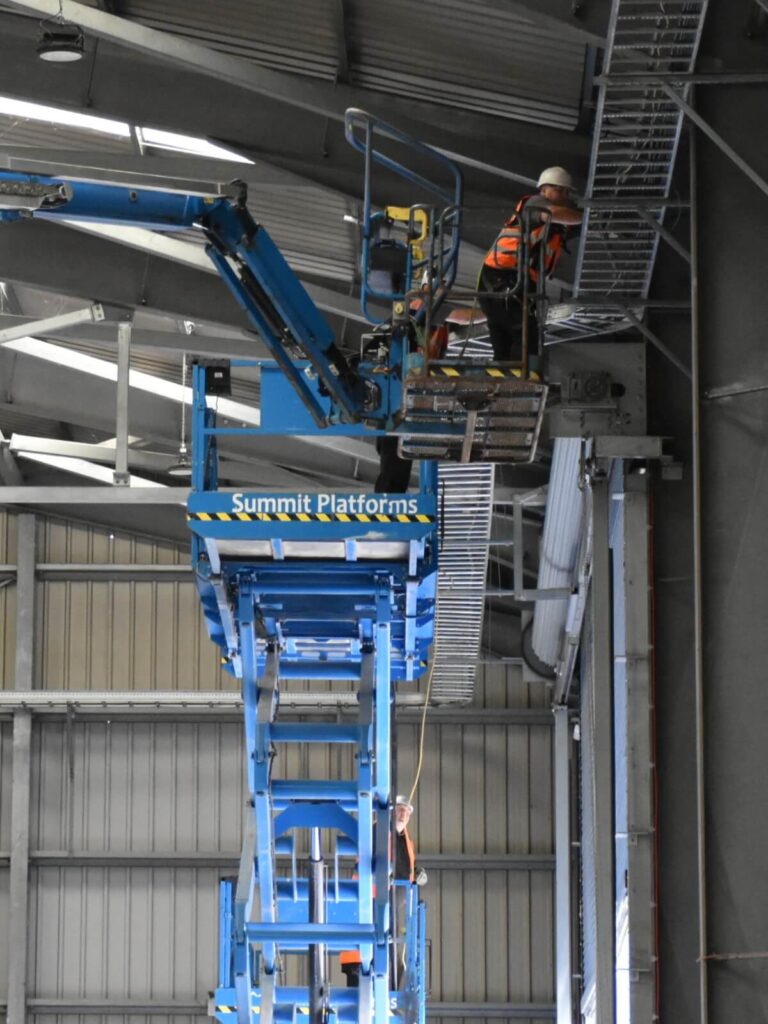
Decommissioning at the Grangemouth Site
The project photographs show the physical scale of the later decommissioning phase, including high-level access and the removal of redundant cabling and electrical infrastructure within the industrial unit.
The delivery approach
A Controlled Approach to Industrial Change
01
Understand the Requirement
Confirm the affected area, equipment or service, the operating context and the drawings, records or fault information already available.
02
Plan Access and Isolation
Agree the work area, access method, permits, isolation requirements, shutdown window and coordination needed with the site team.
03
Complete and Verify
Complete the agreed electrical work using suitable equipment and sequencing, followed by the inspection and testing relevant to the task.
04
Record and Hand Over
Provide the relevant completion information and distinguish clearly between completed work, retained services and any separate follow-on recommendation.
Industrial lifecycle
The Requirement Changes, but Control Must Remain
Long-term industrial support does not remain fixed. The priority can move from keeping equipment available to adding supplies, changing a layout, replacing components or removing infrastructure that is no longer required.
For Bridon-Bekaert, that range extended from routine repairs and lighting maintenance to machinery-related work, distribution upgrades and the later Grangemouth decommissioning. Familiarity with the sites gave each new task a stronger starting point as requirements changed.
Decommissioning is not simply installation in reverse. Redundant circuits and services must be correctly identified, isolated and removed within an agreed boundary, while retained infrastructure and the required handover condition remain clear.
Information that supports industrial work
- Site contact and operating constraints
- Relevant drawings, circuit and equipment information
- Isolation, shutdown and permit arrangements
- Access method for high-level or restricted areas
- Required testing, records and handover condition
Close-out and handover
Clear Evidence at the End of Each Phase
Whether the job is a repair, alteration or decommissioning task, the close-out should make clear what was worked on, what was tested, what was removed and what remains outside the agreed scope.
- Task-appropriate electrical inspection and testing
- Circuit and equipment identification where included
- Certificates, test results or completion records relevant to the work
- Separate recommendations or outstanding defects identified
- For decommissioning, confirmation of services made safe or removed
Verified relationship evidence
What This Case Study Demonstrates
Lifecycle Capability
Support extending from initial setup and site operation through improvement work, changing requirements and decommissioning.
Industrial Breadth
Distribution, supplies, lighting, machinery interfaces, maintenance and testing delivered across two industrial facilities.
Practical Problem Solving
Diagnostics, repairs and alterations used to respond to equipment, infrastructure and operational changes.
Controlled Change
Access, isolation, sequencing and handover considered for operational work and the later decommissioning phase.
More evidence from working sites
Explore Related Project Case Studies
Distillery and warehousing
North British Distillery
Planned, reactive, compliance and infrastructure support across live industrial sites.
Public-sector estates
Scottish Ambulance Service
Long-term planned, reactive and compliance support across a dispersed operational estate.
Commercial workplace
Procladd
A ten-unit commercial EV charging installation built on an established electrical support relationship.
Project questions
Frequently Asked Questions
What types of industrial electrical work did WB deliver for Bridon-Bekaert?
The relationship includes distribution and new supplies, containment, lighting, small power, machinery-related electrical work, diagnostics, reactive repairs, testing and the decommissioning work completed at Grangemouth.
Did the work include machinery as well as building electrical infrastructure?
Yes. The recorded work includes building infrastructure such as distribution, lighting, containment and welfare supplies, alongside electrical tasks involving drives, controls, sensors, emergency stops, equipment cabling and machinery moves.
How was work planned around a live manufacturing environment?
The agreed task was coordinated around the affected area and operating requirements. Access, permits, isolation, timing, high-level work and safe handover all depend on the equipment and site conditions involved.
What did the electrical decommissioning at Grangemouth involve?
The recorded scope included making services safe, removing redundant electrical infrastructure and completing high-level strip-out work as part of returning the industrial unit to the leaseholder’s agreed condition.
Can WB support another industrial site through changing requirements?
This case study demonstrates experience across setup, operation, improvement and decommissioning. For another site, WB would first review the location, equipment, electrical scope, operational constraints, access, programme and required records before confirming the appropriate support.
Industrial electrical support across Scotland
Planning Work at a Manufacturing or Industrial Site?
Tell us about the site, equipment, operating constraints and whether the requirement involves maintenance, new supplies, machinery-related work, testing, an upgrade or decommissioning. We will review the enquiry and advise on a practical next step.
WB Electrical Services Ltd | Commercial and industrial electrical contractor serving Scotland