
Project case study | Client relationship since 1990
Multi-Site Electrical Maintenance for the Scottish Ambulance Service
Planned, reactive and compliance electrical support across ambulance stations and operational support sites throughout mainland Scotland, the Highlands and Islands.
- More than 184 locations attended
- Coverage across 12 contract areas
- Installations, maintenance, reactive repairs and statutory testing
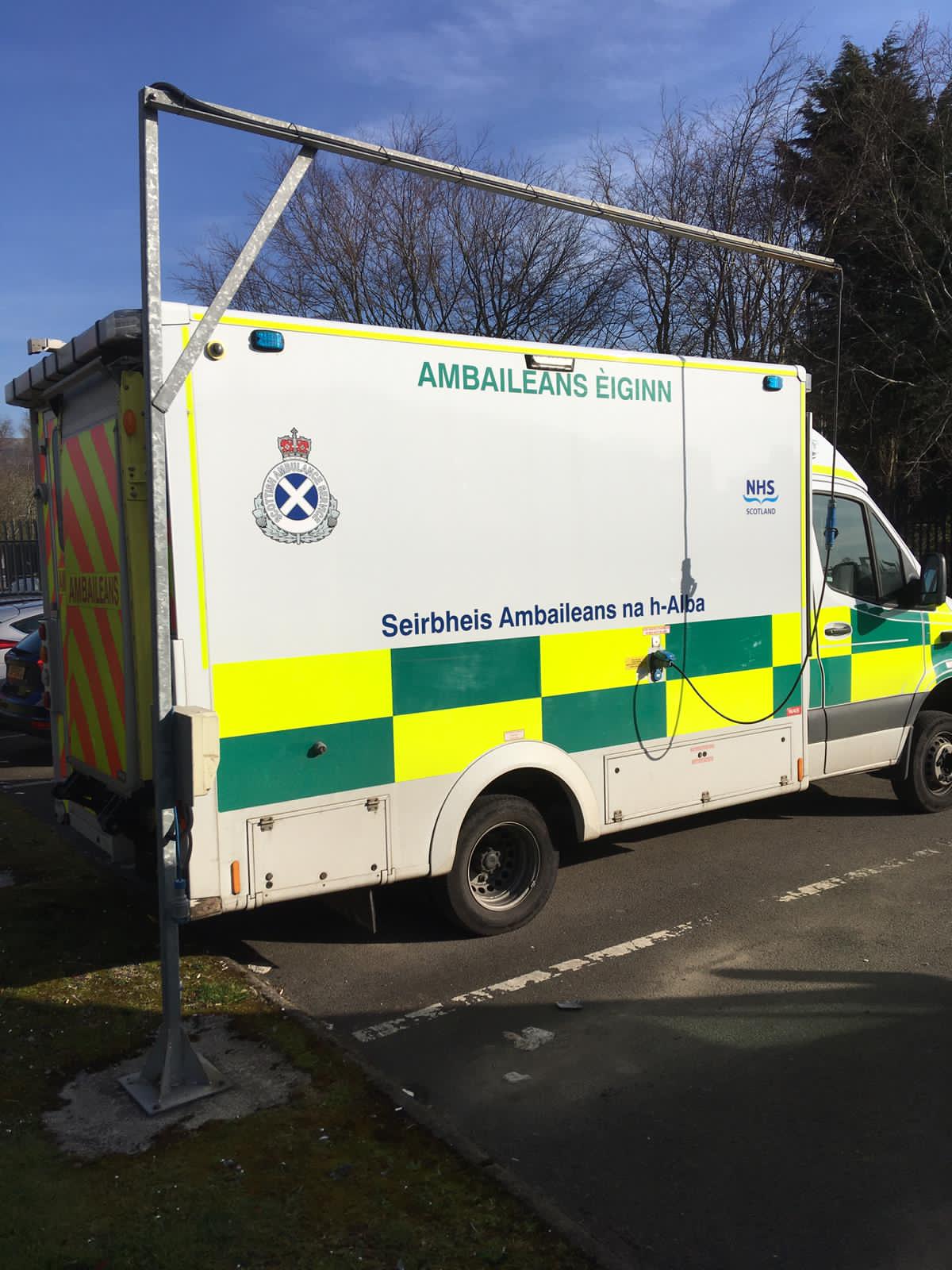
A relationship spanning more than three decades
The evidence comes from sustained support across a varied and geographically dispersed operational estate.
Since 1990
Ongoing client relationship
184+
Locations attended
12
Contract areas
Scotland-wide
Mainland, Highlands and Islands
The relationship
Electrical Support Across a National Operational Estate
WB Electrical has supported the Scottish Ambulance Service since 1990. The relationship covers planned installations, preventative maintenance, reactive repairs, statutory inspections and testing across a wide range of operational properties.
More than 184 locations have been attended across 12 contract areas. Coverage has extended throughout mainland Scotland, the Highlands and Islands, so the delivery model has to accommodate urban stations, remote locations, different site layouts and changing operational priorities.
Many locations combine ambulance charging and repair functions with workshops, staff welfare facilities, security systems and operational support spaces. The electrical infrastructure therefore supports people, vehicles and essential site services rather than one single building function.
Properties and operational areas supported
- Ambulance stations and operational support buildings
- Vehicle charging and repair facilities
- Workshops, gantries and external service areas
- Staff welfare and handwashing facilities
- Car parks, external lighting and access systems
The challenge
Keeping Work Practical Across Live and Dispersed Sites
A national emergency-service estate is not one repeated building. Each attendance can bring a different journey, access route, work area, local contact, isolation requirement and operational pressure.
Operational continuity
Stations and support facilities still need to function while access, isolations, work sequencing and safe handback are coordinated.
Geographic variation
Urban, rural, Highland and island locations require realistic planning for travel, materials, access and the appropriate response route.
Mixed environments
Work can involve workshops, vehicle areas, external equipment, staff facilities, working at height and occupied operational buildings.
Evolving infrastructure
Distribution, lighting, charging, welfare equipment and supporting systems need repair or improvement as requirements change.
The core requirement is consistency: understand the local task, protect the live operation, complete the agreed work and leave the site with a clear electrical handover.
The work delivered
Electrical Support Across the Estate
The relationship has covered day-to-day repairs, planned infrastructure work, vehicle and workshop services, testing and compliance activity.
01
Planned Electrical Infrastructure
- Phase 3 distribution board installations and repairs
- Panel changeovers, rewiring and new circuits
- Cable runs, containment and equipment supplies
- Power and data for video-conferencing facilities
- Car park and external lighting upgrades
02
Vehicle, Workshop and Site Services
- Vehicle charger system installations and repairs
- Three-phase industrial sockets for roller doors
- Gantry installations and repairs
- Power supplies for pressure-washing stations
- Extract ventilation, heaters and welfare equipment
03
Reactive Maintenance and Fault Response
- Electrical fault finding and general maintenance
- Distribution equipment and panel repairs
- Door-entry, sensor and associated electrical faults
- Lighting faults and replacement works
- Vehicle charger and supporting power issues
04
Inspection, Testing and Remedial Work
- Statutory electrical inspections and testing
- Portable appliance testing
- Remedial works identified through inspection activity
- Lighting surveys and maintenance
- Testing records and task-specific completion information
Important: 24/7 on-call attendance, including public holidays, formed part of the agreed Scottish Ambulance Service support model. Availability and response arrangements for another organisation would need to be defined separately rather than assumed from this case study.
The delivery approach
A Repeatable Method, Adapted to Each Location
01
Triage and Define
Establish the site, fault or planned requirement, operational priority and what information is already available.
02
Coordinate Locally
Confirm the site contact, access, permits, working area, travel and material requirements before attendance.
03
Control the Work
Plan isolations and sequencing around the live environment, then complete and test the agreed electrical scope.
04
Record and Hand Back
Issue relevant test or completion information and communicate any separate defects or follow-on recommendations clearly.
Multi-site coordination
One Estate, Many Different Local Requirements
A useful multi-site contractor needs enough consistency to make work easier to manage, but enough flexibility to respond to the actual building and operational context. Treating every station as identical would create avoidable risk and poor planning.
The site reference, local contact, access constraints, work order, materials, isolation needs and required records all need to follow the job from instruction through to completion. That becomes especially important when sites are geographically dispersed or an attendance leads to a separate remedial recommendation.
This case study demonstrates the organisational breadth of the relationship. It does not imply that every location receives the same scope, frequency or response arrangement.
Information that supports a better attendance
- Correct site name, address and local contact
- Clear description of the fault or planned task
- Photos, reports or circuit information where available
- Known access, isolation and operating constraints
- Required completion, testing and handover records
Testing and handover
A Clear Close to Each Attendance
The estate relationship is broad, but each attendance still needs a defined finish. The handover should show what was completed, what was tested and whether anything remains outside the agreed task.
- Inspection and testing appropriate to the completed work
- Circuit labelling and identification where included
- Relevant certificates, records or completion information
- Separate defects and follow-on recommendations identified
- Handover through the agreed site or contract contact
Verified relationship evidence
What This Case Study Demonstrates
Long-Term Continuity
A client relationship maintained since 1990 across changing buildings, equipment and estate priorities.
Geographic Reach
More than 184 locations attended across 12 contract areas, including mainland, Highland and island sites.
Breadth of Support
Planned installations, maintenance, reactive repairs, testing and remedial works within one continuing relationship.
Operational Awareness
Work planned around live stations, workshops, vehicle areas, staff facilities and site-specific constraints.
More evidence from operational sites
Explore Related Project Case Studies
Distillery and warehousing
North British Distillery
Planned, reactive, compliance and infrastructure support across live industrial sites.
Multi-site facilities
Scottish Opera
Electrical support across a varied cultural estate with occupied and operational environments.
Industrial site lifecycle
Bridon-Bekaert
Industrial electrical support spanning operation, improvement and decommissioning work.
Project questions
Frequently Asked Questions
What does electrical support across a multi-site operational estate involve?
It can combine planned installations, maintenance, reactive fault finding, statutory inspection and testing, remedial works and site improvements. The precise service model should define the properties covered, response arrangements, approval process, reporting requirements and what sits outside the contract.
Can WB support locations across mainland Scotland, the Highlands and Islands?
This relationship demonstrates experience of organising work across mainland, Highland and island locations. For a new estate, WB would still review the geography, site access, typical requirements, response expectations and available resources before agreeing the coverage model.
How is disruption controlled at live ambulance and support sites?
The local task is planned around the operating environment. That includes confirming access, permits, working area, isolation requirements, suitable timing and safe handover with the relevant site contact. The approach varies by property and electrical scope.
Does WB automatically provide 24/7 response to every client?
No. A 24/7 on-call arrangement, including public holidays, formed part of the Scottish Ambulance Service support model described on this page. Out-of-hours availability, priorities and response expectations for another organisation would need to be agreed separately.
What information should a facilities or estates team provide?
Useful information includes the correct site and local contact, a description of the fault or planned work, photographs or reports where available, known access and isolation constraints, the operational priority and any specific testing or handover records required.