
Commercial, fleet and industrial charging
Commercial EV Charging for Businesses and Organisations
From staff chargers and fleet depots to public, rural and industrial sites, WB Electrical plans the electrical infrastructure around how vehicles, people and premises actually operate.
- OZEV-authorised installer listed on GOV.UK
- Experience from early UK chargepoint roll-outs to current smart systems
- Multi-manufacturer installation, legacy support and planned expansion
WB Electrical appears on the GOV.UK EV chargepoint installer service for commercial and residential installations.
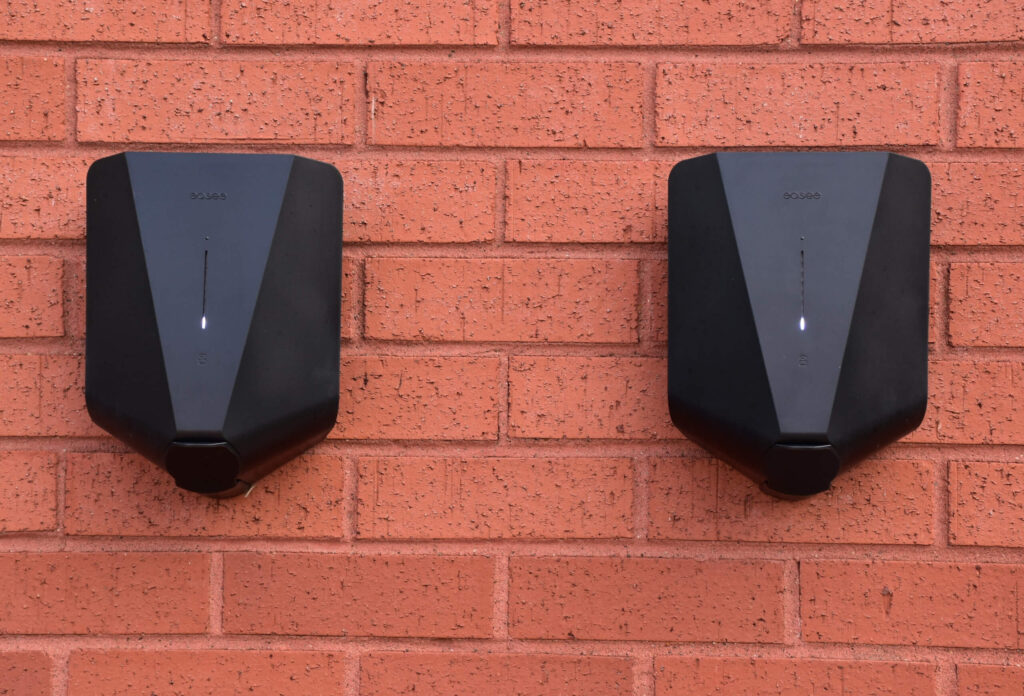
10-point workplace project
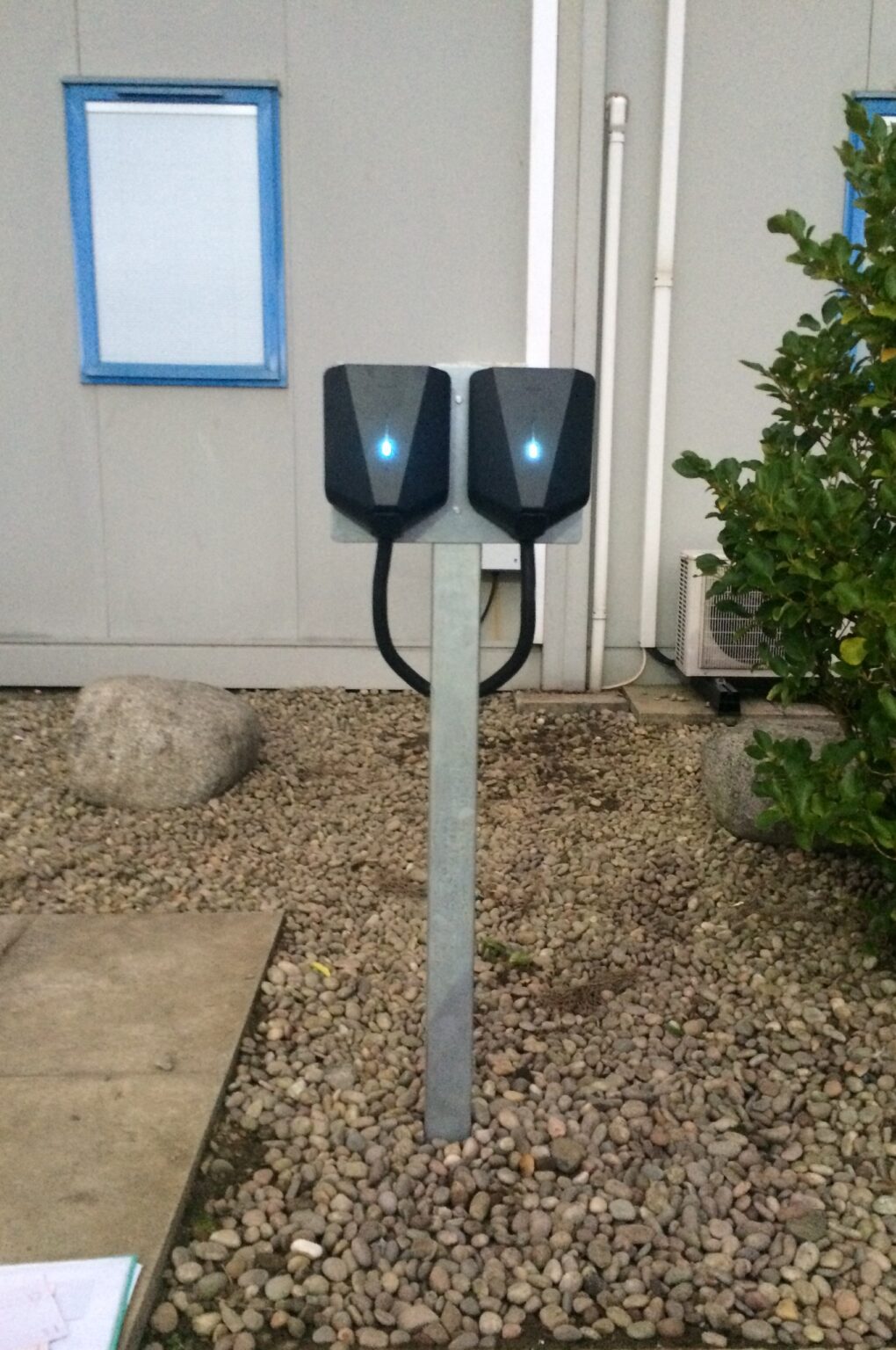
A coordinated bank of Easee chargepoints for Procladd in Hamilton, including electrical installation, setup, access arrangements and handover.
OZEV authorised
Listed on the official GOV.UK installer service
Electricians first
Capacity, distribution and protection considered
Multi-manufacturer
Current and legacy charging equipment
Scotland-wide delivery
Groundworks coordination for suitable projects
Electrical infrastructure before hardware
Start With the Site, Vehicles and Operating Plan
A charger can look suitable on a product sheet and still be the wrong answer for the premises. A useful plan connects vehicle demand, electrical capacity, parking, civils, communications, ownership and long-term support.
Questions the project should answer
- Which vehicles and users need to charge, and when are they parked?
- How many sockets are needed now and which future bays should be enabled?
- What can the supply and distribution support under real site demand?
- Where can cables, ducts, bases and impact protection be installed safely?
- How will users gain access, pay, report faults and receive support?
- Who owns the hardware, data, back office and maintenance responsibility?
The right chargepoint system is one the site can power, manage, maintain and expand. WB Electrical uses the answers to define a practical electrical scope before equipment is ordered.
Commercial EV service routes
Choose the EV Charging Support Closest to Your Requirement
Start with the immediate need, whether that is understanding capacity, installing a new system, supporting users, charging a fleet or resolving problems with existing equipment. Connected requirements can be reviewed as one electrical project.
Understand the site first
EV Site Surveys and Capacity Reviews
Establish what the existing supply, distribution, parking layout and communications can support before committing to hardware or bay numbers.
- Supply and distribution review
- Parking, route and civils considerations
- Capacity, phasing and next-step options
From distribution to commissioning
Commercial EV Design and Installation
A coordinated electrical installation covering distribution, containment, protection, isolation, chargepoints, communications, testing and handover.
- Single and multiple chargepoint projects
- Dedicated boards, circuits and containment
- Testing, commissioning and certification
Staff, visitors and company cars
Workplace and Multi-User Charging
Charging planned around staff demand, visitor bays, controlled access, usage reporting, cost allocation and the number of sockets the site may need later.
- Staff and visitor charging bays
- RFID, user access and reporting options
- Phased provision for future uptake
Road fleets and industrial vehicles
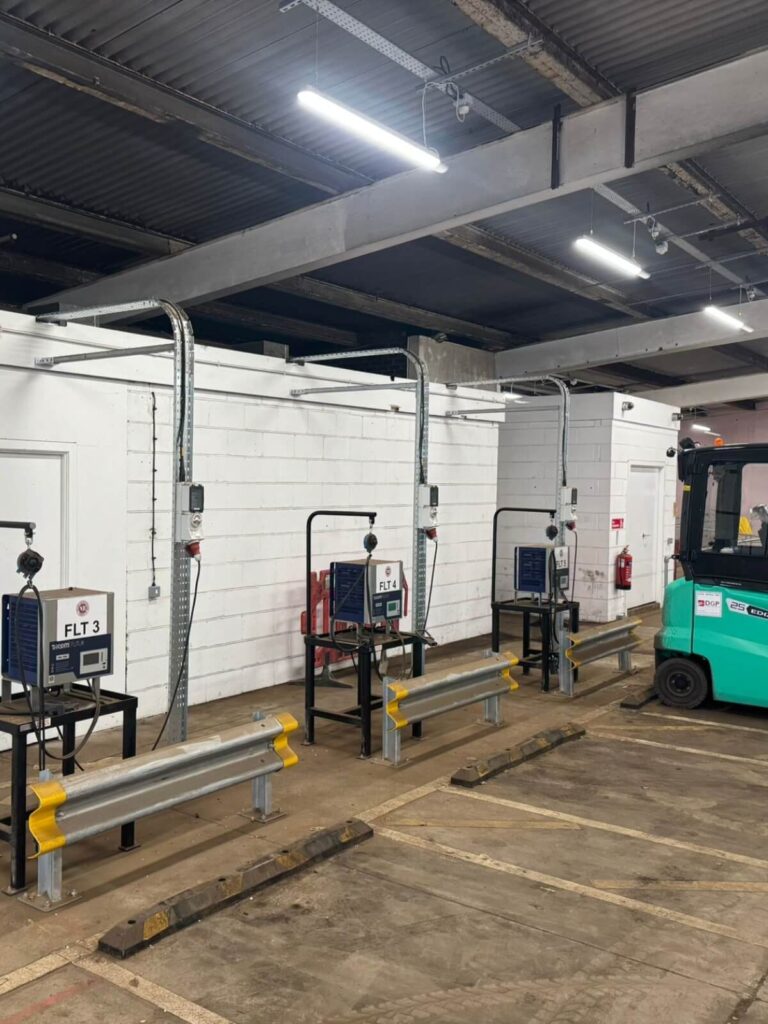
Fleet, Depot and FLT Charging
Road-vehicle charging and industrial battery-charging supplies planned around vehicle duty, dwell time, shifts, charger demand and operational availability.
- Van, fleet and depot charging
- Forklift and industrial vehicle charger supplies
- Shift-aware scheduling and distribution
Customers, visitors and public users
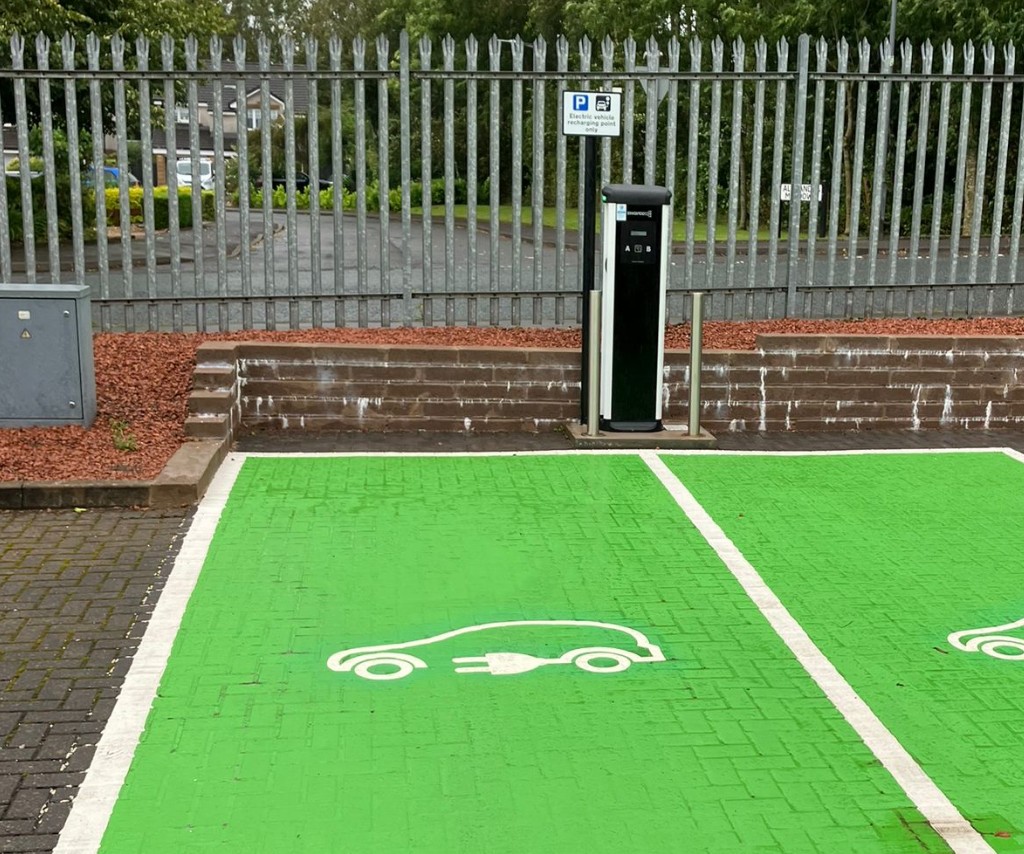
Public and Customer Charging
Electrical and site infrastructure for customer-facing charging, with payment, accessibility, signage, connectivity, ownership and operator duties considered early.
- Destination and customer car parks
- Public access and CPO coordination
- Payment, data and user-experience inputs
Keep useful infrastructure working
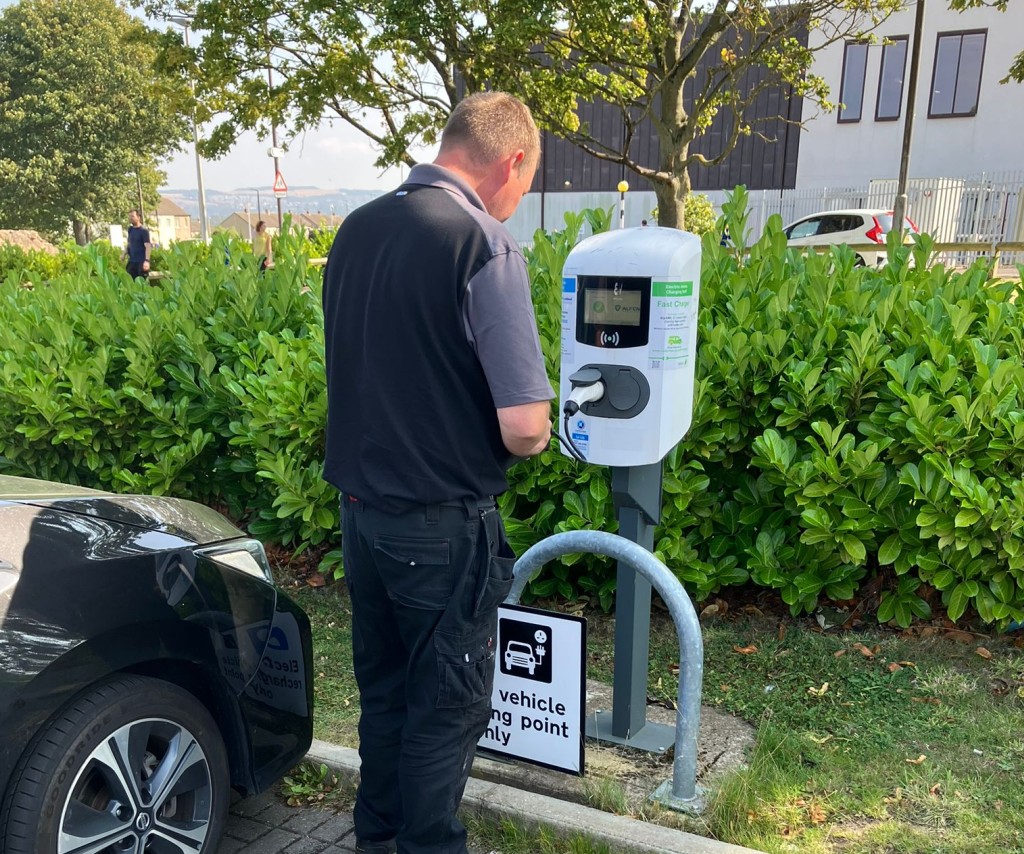
Maintenance, Repairs and Legacy Support
Assessment, fault finding, electrical repairs, charger replacement and upgrade planning for modern or older charging equipment, subject to parts and platform support.
- Multi-manufacturer fault investigation
- Electrical, communications and platform checks
- Repair, migration or replacement options
Connected requirements
Control Demand and Plan the Next Phase
Most multi-chargepoint projects also need a decision about how power will be shared and how the site will grow. These requirements should be considered with the initial infrastructure rather than added after capacity becomes a problem.
Use available power intelligently
Smart Charging and Load Management
Share an agreed power limit across several chargepoints, prioritise vehicles or time windows and reduce avoidable peaks. Compatibility, fail-safe behaviour, commissioning and the wider site load still need to be checked.
Reuse what remains serviceable
Infrastructure Upgrades and Expansion
Add bays, improve distribution, replace unsupported chargers, upgrade communications or introduce load control. Existing cables, boards and bases can only be retained where their condition, rating and compatibility are suitable.
Budget planning without false certainty
Four Practical Commercial EV Project Levels
A single online price rarely describes a commercial site honestly. These four levels show how the scope typically develops, helping you identify the likely starting point before a survey turns it into a defined quotation.
01
Site-Ready Starter
One or two AC sockets
Usually begins with a nearby usable supply, a short cable route and limited civils. The survey still confirms earthing, protection, capacity, mounting, communications and the intended users.
02
Workplace Charging Bank
Several staff or visitor sockets
Often introduces a dedicated distribution board, longer routes, posts or bases, access control, usage reporting, groundworks and dynamic load management.
03
Scalable Multi-Bay Site
Phased growth and smart control
Plans active chargers and enabled future bays together, with distribution headroom, ducts, communications, load priorities, DNO input where required and a clear expansion sequence.
04
Depot, Public or Specialist
High use or complex infrastructure
May include shift-critical fleets, DC charging, public payment, accessibility, substantial civils, remote sites, FLT charging or interfaces with specialist and hazardous environments.
After the site review, the quotation can separate chargepoint equipment, electrical infrastructure, civils, communications or back-office setup and optional maintenance, so the project team can see what is driving the investment.
An adjacent industrial charging capability
Forklift and Industrial Vehicle Charging Infrastructure
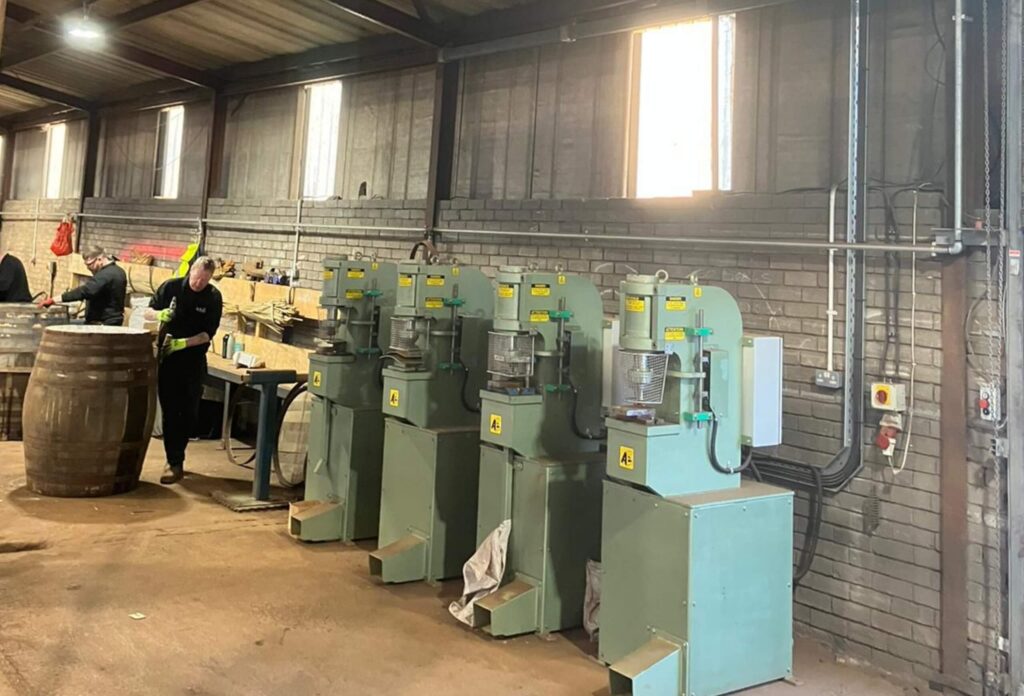
WB Electrical has delivered power supplies for FLT charging bays at North British Distillery and within other warehouse and factory environments.
This work is not treated as a standard wall-mounted road-EV charger. The battery technology, manufacturer instructions, charger duty, simultaneous demand, shifts, bay layout, ventilation, impact protection and the site fire and DSEAR arrangements can all affect the electrical scope.
- Dedicated supplies, isolation, distribution and containment
- Charger mounting, cable management and vehicle-impact protection
- Electrical input coordinated with bay, ventilation and safety arrangements
- Testing, labelling and handover for the accepted electrical scope
Electrical and civils planned together
One Plan for the Chargers, Cable Route and Ground Between Them
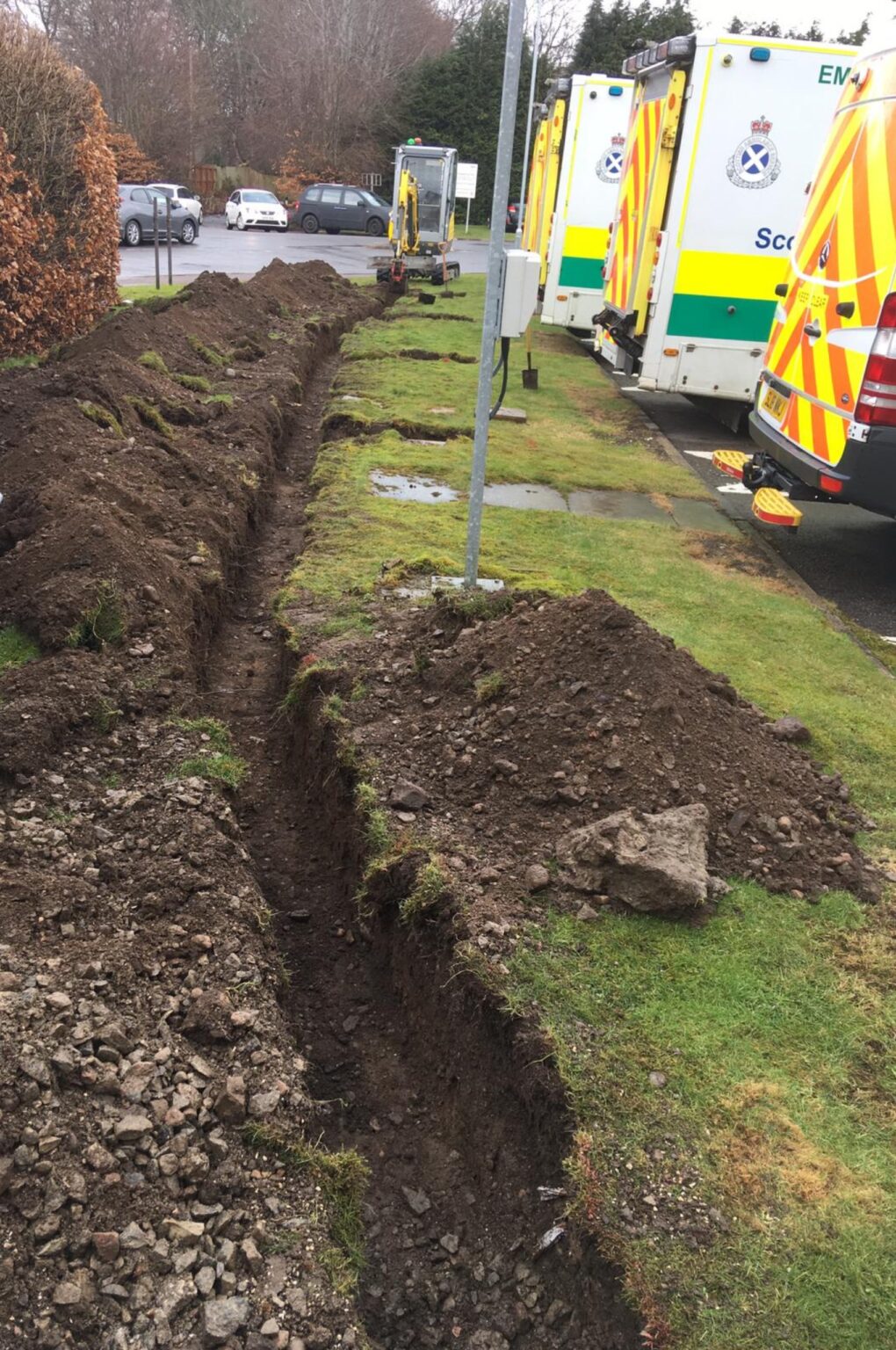
Remote parking, yards, farms and large industrial estates can make the route to the charger more demanding than the equipment itself. WB Electrical works with groundwork contractors across Scotland so the electrical and civils scopes can be developed together.
- Trenching, ducts, draw pits and cable routes
- Bases, posts, bollards, wheel stops and equipment protection
- Surface reinstatement, bay marking and agreed signage interfaces
- Vehicle, pedestrian, delivery and maintenance access
- Wi-Fi, mobile or hard-wired communications at remote locations
- Phasing that keeps usable parking and site access available
At fuel courts, distilleries, farms storing flammable products or other specialist premises, the client’s current DSEAR and hazardous-area information must inform charger location and cable routing. Charger equipment should not be placed in or routed through a classified area by assumption.
From need to usable charging
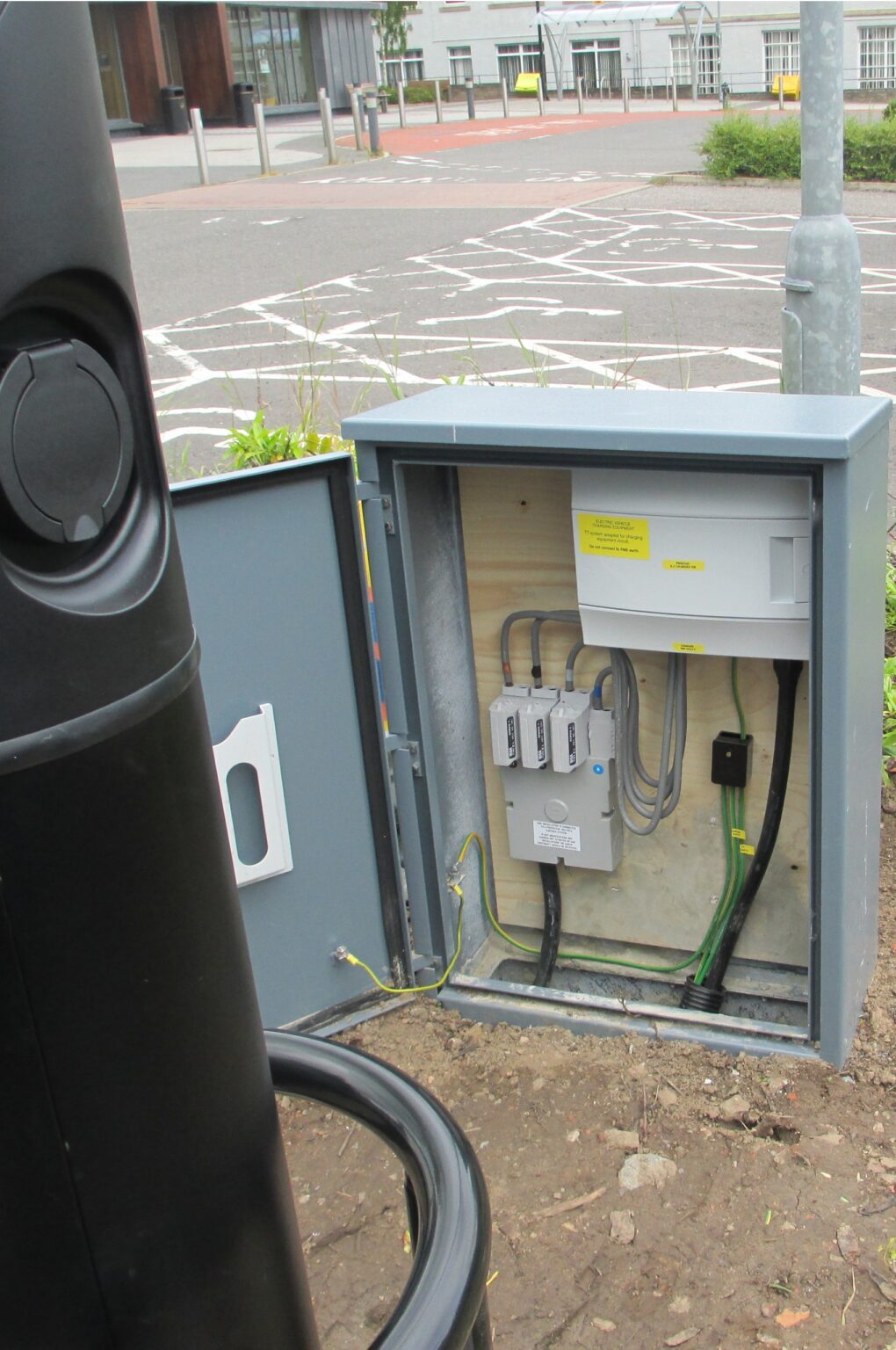
How a Commercial EV Charging Project Is Developed
The exact route varies with scale, ownership and site complexity. This six-stage process keeps the users, electrical infrastructure, civils, commissioning and long-term operation connected.
01
Define Users and Operating Need
Confirm who will charge, vehicle types, mileage, dwell times, shifts, active and future bays, access rules and whether the system will be private, shared or public.
02
Survey Capacity and Site Conditions
Review supply, distribution, maximum demand, parking, cable routes, civils, vehicle movements, communications, accessibility and any specialist site information.
03
Compare Practical Options
Set out charger types, ownership and back-office models, load management, future provision, legacy reuse, likely grant routes and information still required.
04
Coordinate Design and Delivery
Develop the electrical scope, distribution, protection, containment, groundworks, mounting, communications, DNO requirements and programme around the operating site.
05
Install, Test and Commission
Complete the agreed works, configure the chargers and load controls, test the electrical installation and confirm the operating behaviour relevant to the selected system.
06
Handover, Support and Expand
Provide applicable records, demonstrate everyday use and administration, explain isolation and fault routes, then agree maintenance or future expansion support where required.
Different users and operating environments
Commercial Charging Shaped Around the Site
A staff car park, distribution centre, public destination and rural industrial site can all need EV charging, but the right power, access, civils, communications and support model will be different for each.
Workplaces and Staff Facilities
Multiple staff, visitor and company-vehicle chargers with clear access rules, reporting, cost allocation, bay planning and a practical route for adding more users later.
Fleet, Warehouse and Factory Sites
Charging planned around shifts, dwell time, route mileage, van or car fleets, FLT battery chargers, robust containment, operational access and future vehicle replacement plans.
Public, Customer and Education Sites
Projects may need payment, public access, clear pricing, accessibility, signage, lighting, reliable communications and an agreed chargepoint operator or support model.
Rural, Agricultural and Specialist Sites
Working farms, estates, distilleries, fuel locations and remote premises can require longer routes, resilient communications, extensive civils and careful separation from classified gas or vapour areas.
Public projects should be reviewed against the Public Charge Point Regulations guidance. Scottish Government-funded public infrastructure must also demonstrate appropriate consideration of PAS 1899 accessibility requirements and recommendations.
Funding snapshot checked 21 August 2026
Current Commercial EV Charging Grants and Funding Routes
Funding can improve the business case, but it should support a suitable installation rather than determine the design. Scheme rules, approved equipment, installer eligibility, dates and available budgets must be checked before equipment is ordered or work begins.
Open until 31 March 2027
Workplace Charging Scheme
For eligible businesses, charities, public sector organisations and small accommodation businesses. It can cover up to 75% of purchase and installation costs, capped at £500 per socket and 40 sockets across all sites. The parking must be for staff or fleet use rather than customers.
Open until 31 March 2027
State-Funded Education Scheme
Eligible state-funded schools and education institutions can receive up to 75% of costs, capped at £2,000 per socket and 40 sockets across all sites. A successful voucher is normally valid for 180 days.
Open subject to available funding
Rural Scottish Business Charging
Qualifying microbusinesses, sole traders and third sector organisations in Scottish islands or eligible rural postcode categories can receive up to 100% of private staff or fleet charging costs, capped at £5,000. The scheme requires both Energy Saving Trust and OZEV installer approval.
Next window expected 28 October 2026
Depot Charging Scheme
For qualifying zero-emission HGV, van and coach fleet depots. The next published window is expected to run to 29 January 2027 and may fund 70% of eligible chargepoint and civil costs, up to £1 million across all sites.
Open subject to location and funding
Rural and Island Public Infrastructure
For landowning businesses or chargepoint operators installing publicly accessible charging in eligible Scottish rural and island locations. Support varies by location and charger power, with 75% or 100% funding caps and additional conditions for public access and operation.
Important: Grants are not guaranteed and most schemes exclude retrospective work. WB Electrical can provide a grant-aware scope and technical information, but the applicant remains responsible for eligibility and the scheme administrator makes the funding decision.
Evidence across road and industrial charging
Commercial Charging Work in Operational Environments
These examples show two different charging requirements: a multi-point workplace installation for cars and power supplies for industrial FLT charging bays within a long-term electrical support relationship.
Workplace charging in Hamilton
Ten Chargepoints for Procladd
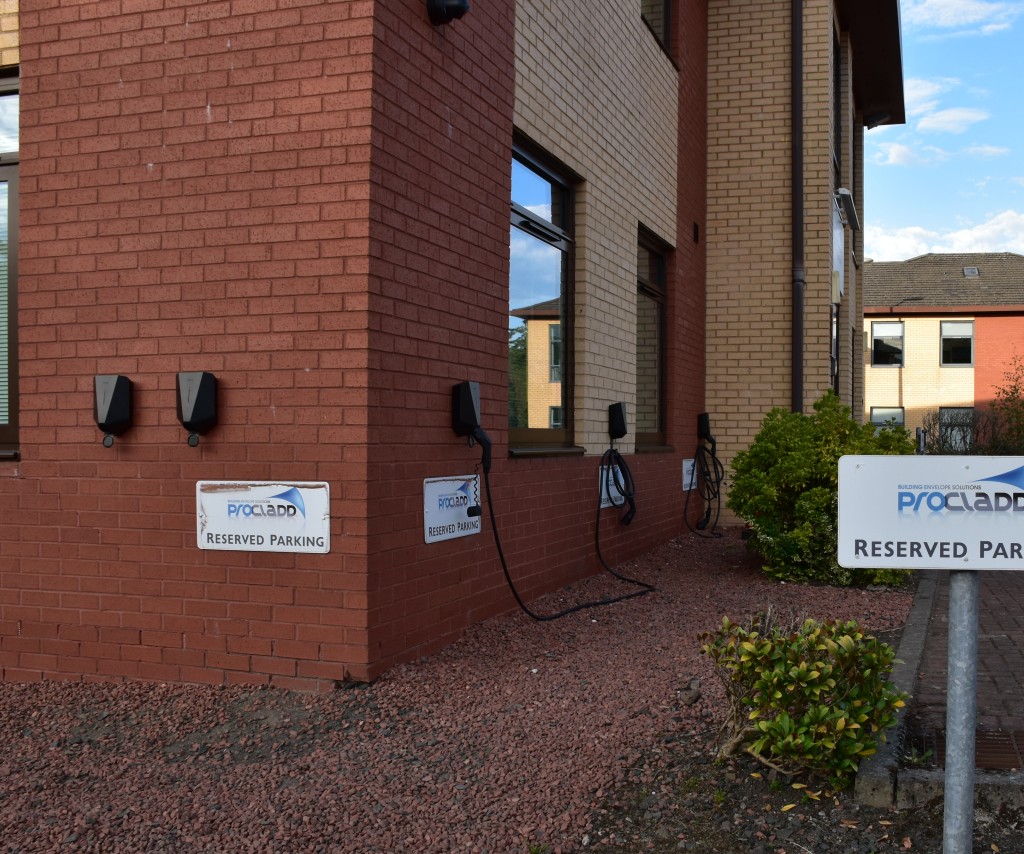
In 2025, an established client relationship developed into a coordinated 10-point workplace installation at Bothwell Bridge Business Park. The recorded work included the associated electrical installation, setup, testing, controlled user access using Easee Keys and handover.
Industrial charging within a long-term relationship
FLT Charging Support at North British Distillery
WB Electrical’s recorded support for North British Distillery includes power supplies for FLT charging bays alongside distribution, lighting, containment and wider plant requirements. The work is coordinated around operational distillery and warehousing environments rather than treated as an isolated charger purchase.
Experience across generations of charging equipment
Repair the Fault, Retain the Infrastructure or Plan a Sensible Migration
WB Electrical has been involved with EV charging since the early UK market and has worked across different chargepoint manufacturers, control arrangements and equipment generations. That history is valuable when an older estate starts producing faults or loses manufacturer and platform support.
- Identify charger, circuit, protection, communications and platform issues
- Check whether manufacturer support, warranty or replacement parts remain available
- Assess whether existing cables, boards, bases or containment can be retained
- Compare repair, replacement, platform migration and phased upgrade options
- Record the agreed changes and explain the new operating or support route
A measured recommendation matters: not every legacy charger is repairable or economical to retain. WB reviews the equipment and supporting installation before recommending the next step, rather than assuming every fault needs a complete new system.
Common questions
Questions About Commercial EV and Industrial Vehicle Charging
These answers cover the decisions that most often affect cost, performance, grant eligibility and long-term support. Send the site details where the requirement is more specific.
How many commercial EV chargepoints should we install?
Begin with vehicles, users, dwell time, daily mileage and likely uptake rather than an arbitrary bay percentage. Many sites install the active sockets they need now while providing ducts, distribution space or bases for later phases. The survey should also consider how power will be shared at peak times.
Will a 22 kW chargepoint always charge a vehicle at 22 kW?
No. The delivered rate depends on the vehicle, chargepoint, phases available, electrical design, site capacity and any load-management setting. A higher unit rating does not by itself guarantee faster charging for every vehicle or at every time.
What if the site does not have enough spare electrical capacity?
Options may include dynamic load management, scheduled charging, phased installation, prioritising fleet vehicles, distribution changes or a supply upgrade. WB Electrical can review the practical options before the project commits to a larger connection.
Can WB Electrical repair chargers installed by another company?
Potentially. We first identify the charger, platform, fault history, electrical supply, communications, warranty position and availability of manufacturer support or parts. The appropriate outcome may be a repair, configuration change, component replacement, platform migration or charger replacement.
Do you only work with one EV chargepoint manufacturer?
No. WB Electrical has experience across different manufacturers and generations of charging equipment. Selection should reflect the users, vehicles, required power, access, reporting, payment, load management, communications, support and future expansion rather than a single preferred badge.
Can you install forklift and industrial battery-charging supplies?
Yes. WB Electrical has delivered power supplies for FLT charging bays in industrial and warehouse environments. The scope is separate from a normal road-EV charger and depends on battery chemistry, charger duty, shifts, bay layout, ventilation, collision protection, fire arrangements and the site risk assessments.
Can WB coordinate the groundworks for EV charging?
Yes. WB works with groundwork contractors across Scotland and can coordinate trenching, ducts, draw pits, bases, posts, impact protection and reinstatement as part of an agreed project. Surveys should establish underground-service information, access, traffic management and who owns each part of the civils scope.
Can EV charging be installed at farms, distilleries or fuel sites?
It can be considered, but the location and route need site-specific review. At premises with flammable gas or vapour risks, the client’s DSEAR and hazardous-area information must inform charger siting and electrical work. WB can provide relevant CompEx electrical input where the defined task falls within its current gas and vapour competence scope.
What support is available for public-facing chargepoints?
The project should address ownership, chargepoint-operator responsibilities, payment, pricing information, helpline provision, data, connectivity, accessibility and maintenance. New Scottish public projects should also consider PAS 1899 accessibility guidance, while legal and operating duties remain with the appropriate owner or operator.
What do we receive at handover?
Depending on scope, handover can include electrical certification, charger commissioning information, distribution and circuit labels, as-installed information, user or administrator setup, RFID or access guidance, load-management confirmation and an explanation of routine use, isolation and fault-reporting routes.
Are commercial EV charging grants still available?
Yes, several routes were open when this page was reviewed on 21 August 2026. Eligibility, installer requirements, funding levels and closing dates vary and can change. Check the official scheme before ordering equipment or starting work, because retrospective applications are commonly excluded.
Can you give a fixed commercial EV charging price online?
A credible price depends on the number and rating of chargers, cable route, groundworks, distribution, supply capacity, load control, communications, payment or back-office requirements, mounting, impact protection and handover. The four project levels on this page help frame the likely scope, then a survey supports a defined quotation.
A useful route into the project
Discuss Commercial EV Charging for Your Site
Tell us who needs to charge, where the vehicles park and what you already know about the site. WB Electrical can identify the survey, electrical information and delivery route needed to move the project forward.
Call: 01698 883232 EV enquiries: ev@wbelectrical.co.uk
A useful first message can include
- Site address, parking area and nominated contact
- Vehicle types, daily mileage, dwell time and shifts
- Number of active and future charging bays
- Available supply, drawings, photographs or previous reports
- Groundworks, access, communications or shutdown constraints
- Existing charger make, model, platform and fault information
- Programme and any grant or procurement deadline