
Reviewed 25 August 2026 | Scotland-first funding guide
EV Charging Grants and Funding for Scottish Organisations
Find the current route for workplaces, industrial sites, public bodies, education, landlords, housing providers, property factors and multi-property projects. WB Electrical can support the site review, electrical scope, eligible installer quotation and delivery planning while the applicant retains responsibility for the funding application.
- Current UK-wide and Scotland-only routes separated clearly
- Closed grants identified before they waste project time
- Electrical capacity, civils, permissions and future expansion considered with the funding plan
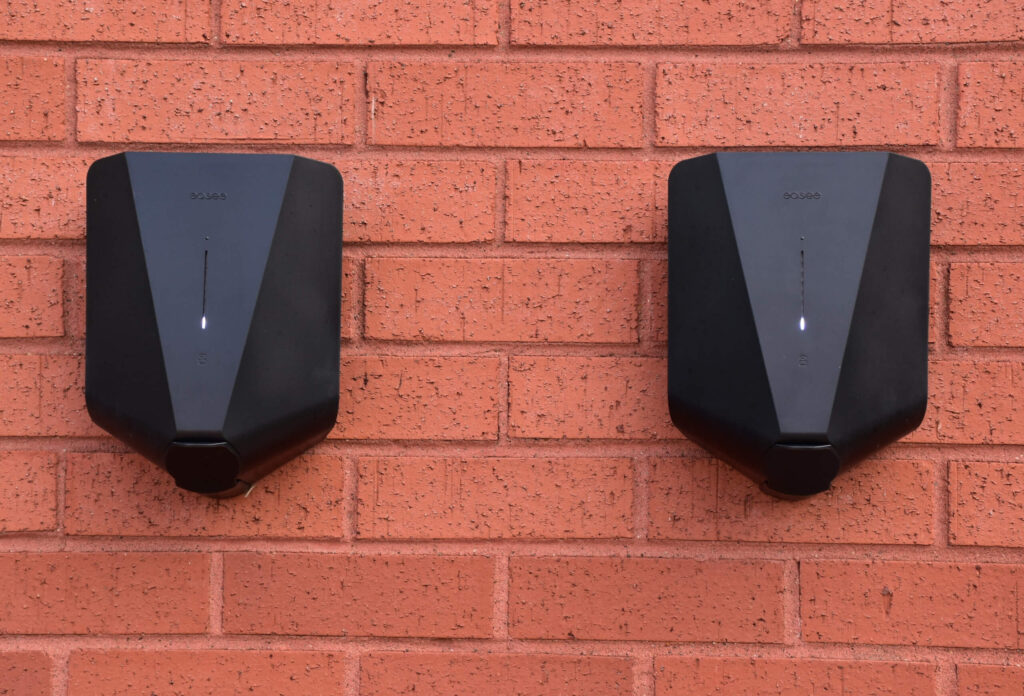
OZEV-authorised installation support
WB Electrical is listed on the GOV.UK installer service for commercial and residential chargepoint installations. Scotland-only Energy Saving Trust funds use an additional installer eligibility route that must also be checked.
CURRENT WCS
Up to £500 per socket
The former £350 figure is out of date. The standard Workplace Charging Scheme changed on 1 April 2026.
CLOSED ROUTE
Staff and fleets infrastructure grant
This grant closed to new customer applications on 31 March 2026 and should no longer be promoted as an available route.
Start with the applicant and the property
Which EV Charging Funding Route Fits the Project?
The correct route depends on who is applying, what type of property is involved, who will use the chargepoints and whether the work is already required by regulation or planning. Check the live official criteria before ordering equipment or starting installation.
OPEN UNTIL 31 MARCH 2027
Business, Industrial, Charity and Public-Sector Workplaces
The Workplace Charging Scheme can support eligible organisations installing chargepoints for staff or fleet use at dedicated off-road parking.
- 75% of eligible purchase and installation costs, including VAT
- Up to £500 per socket
- Up to 40 sockets across all sites for one applicant
OPEN UNTIL 31 MARCH 2027
State-Funded Education
A separate Workplace Charging Scheme route is available to eligible state-funded schools and education institutions across the UK, including Scotland.
- 75% of eligible purchase and installation costs
- Up to £2,000 per socket
- Up to 40 sockets across all sites, with scheme-specific trust rules
OPEN UNTIL 31 MARCH 2027
Residential Landlords and Housing Providers
The residential landlord chargepoint grant may support eligible landlords, social housing providers and property managers acting for a landlord at residential properties.
- 75% of eligible purchase and installation costs
- Up to £500 per socket
- Current annual limit of up to 200 sockets per applicant
SCOTLAND ONLY – OPEN SUBJECT TO FUNDS
Rural and Island Workplaces
Transport Scotland funding, administered by Energy Saving Trust, can support eligible rural and island microbusinesses, sole traders and third-sector organisations.
- Up to 100% of eligible purchase and installation costs
- Maximum £5,000 per location and up to two locations
- Private staff or fleet charging, with location and organisation tests
SCOTLAND ONLY – OPEN SUBJECT TO FUNDS
Property Factors and Communal Residential Parking
The Factored Development Charge Point Fund is designed for eligible registered property factors and managers delivering charging at communal residential parking.
- Up to 100% of eligible purchase and installation costs
- Maximum £20,000 per project
- Can include housing associations, retirement communities and student halls
NEXT WINDOW EXPECTED
Fleet Depots for Vans, HGVs and Coaches
The first Depot Charging Scheme window is closed. Government currently expects a further application window for projects delivered in the 2027/28 financial year.
- Expected application window: 28 October 2026 to 29 January 2027
- Future grant terms and rates are not yet confirmed
- Do not base a project budget on the previous funding rate
Eligibility starts with responsibility
Workplaces, Landlords, Housing Providers and Multiple Properties
A strong application identifies the legal applicant, the site rights and the intended users before selecting equipment. This is particularly important where an organisation occupies leased premises or a factor represents several owners.
WORKPLACE CHARGING SCHEME
What the Standard WCS Can Support
The scheme is intended to help eligible organisations provide charging at workplaces and other qualifying premises. The applicant applies for a voucher, appoints an authorised installer and must complete the project within the voucher period.
- Applicant: eligible business, charity, public-sector organisation or small accommodation business
- Parking: dedicated off-road parking associated with the premises
- Use: business staff or fleet use for most businesses; different user rules can apply to public authorities, charities and small accommodation businesses
- Property: the applicant must have the required ownership, lease or landlord permission
- Multi-site limit: 40 sockets in total across all sites for one applicant
- Timing: a voucher is normally valid for 180 days and work should not begin before it is issued
Read the current official Workplace Charging Scheme listing →
LANDLORDS, FACTORS AND MULTI-PROPERTY PROJECTS
Separate the Applicant From the Site Owner
A property owner, tenant, factor, housing provider and facilities manager may all be involved in the same project, but they do not automatically use the same funding route.
- Commercial tenant: may be able to use WCS with the required landlord consent and qualifying parking
- Commercial landlord: the dedicated commercial landlord chargepoint grant is closed
- Residential landlord or social housing provider: may qualify for the residential landlord chargepoint grant
- Property manager acting for a landlord: may qualify under the residential landlord route where the scheme conditions are met
- Registered Scottish property factor: may qualify for the Factored Development Charge Point Fund for communal residential parking
- Several properties: apply the cap and evidence rules of the chosen scheme before dividing the programme into phases
Do not assume the same cost can be claimed under two grants. The application should identify the chosen route, eligible cost split and any combined funding allowed by the live rules.
Scottish requirements and targeted support
Apply the Scotland-Specific Rules Before Treating a Cost as Grant Eligible
UK-wide OZEV grants apply in Scotland, but Scottish funding, building standards, planning rules and property-factor arrangements create additional checks. A scheme may be open while a particular cost or site is still ineligible.
- Mandatory provision: WCS cannot fund chargepoints required by the Building (Scotland) Regulations from 5 June 2023 or by a planning condition
- Planning: some chargepoints and associated equipment may fall within Scottish permitted development rights, but location, size and site conditions still need review
- Rural and island fund: uses location, organisation size, vehicle and charger criteria and its own installer eligibility route
- Factored developments: require a registered property factor or eligible manager with authority to act for the development
- Public charging: can introduce operating, accessibility, payment and information duties beyond the electrical installation
Official references: Scottish non-domestic building standards and Scottish EV chargepoint permitted development guidance.
Scottish Funding Checks Before Quotation
- Confirm the applicant category and postcode eligibility
- Check whether the project is voluntary or mandatory
- Confirm ownership, lease, landlord or factor authority
- Check the live OZEV and Energy Saving Trust installer requirements
- Identify whether public access or resident billing is intended
- Do not commission work until the required grant offer or voucher is in place
Installer point: the two Scotland-only Energy Saving Trust funds require an installer that satisfies their live list as well as OZEV authorisation. OZEV listing alone is not enough for those funds.
Public money still needs a defined operating model
Public Sector, Education and Publicly Accessible Charging
Public bodies and state-funded education can have worthwhile funding routes, but the charging users, procurement path, operational ownership and public-access duties should be agreed before a grant application fixes the scope.
Public-Sector Workplaces
Eligible public authorities can use WCS for qualifying sites. Public procurement, estate approvals, data protection, accessibility, asset ownership and maintenance responsibilities still sit outside the grant award and should be recorded in the project plan.
- Confirm staff, fleet, visitor or public use
- Identify the contracting and asset-owning body
- Define payment and operating responsibilities if public access is planned
- Coordinate any multi-site cap and delivery programme
State-Funded Education
The education route has a higher maximum contribution than standard WCS. It still requires qualifying parking, demonstrated need, an authorised installer, a successful application and delivery within the voucher period.
- Up to £2,000 per socket and 75% of eligible costs
- Up to 40 sockets across all sites, subject to the current academy-trust rules
- A site survey is recommended before the application
- Public access introduces additional operator duties
Scottish Public Charging: Rates Relief Is Not an Installation Grant
Scotland introduced a ten-year non-domestic rates relief for eligible public EV charging sites from April 2026. This can affect the operating case for a public site, but it does not pay the installation invoice. The owner should confirm eligibility and valuation treatment with the relevant rating authority or professional adviser.
Prevent obsolete funding from shaping the project
Closed and Changed Routes to Remove From Old Proposals
Grant pages, archived articles and old quotations can remain visible after a scheme changes. Treat the application date and the live official page as the source of truth.
- WCS £350 maximum: replaced by the £500-per-socket rate for the final scheme year from 1 April 2026
- Staff and fleets infrastructure grant: closed to new customer applications on 31 March 2026
- Commercial landlord chargepoint grant: closed to new customer applications on 31 March 2026
- Residential landlord infrastructure grant: closed to new customer applications on 31 March 2026
- Dedicated EV chargepoint first-year tax allowance: ended for expenditure after 31 March 2026; ask an accountant about any current general capital-allowance treatment

A grant is only one input
Build the Funding Application Around a Deliverable Electrical Project
A £500 socket contribution does not tell you whether the site can support the chargers, what groundworks are needed or how users will be managed. The proposal should define the whole installation and then identify which costs the chosen scheme may accept.
- Existing supply, maximum demand, distribution and possible network-operator input
- Vehicle types, mileage, dwell time, shifts and future charging demand
- Cable routes, trenching, ducts, bases, bollards, reinstatement and drainage interfaces
- Charger rating, load management, communications, access control and back-office needs
- Landlord, factor, owner, planning, building-standard and procurement approvals
- Testing, commissioning, electrical certification, administrator setup and user handover
- Maintenance, warranty, software subscriptions and legacy-equipment strategy
WB can coordinate electrical installation and, where agreed, plan the interface with groundwork contractors across Scotland. The quotation should state which civils, network, specialist-system and operating responsibilities are included or retained by others.
Protect the application before work begins
A Practical Route From Funding Check to Handover
The exact process varies by scheme, but the sequence below avoids the most common eligibility and delivery mistakes. Do not treat a likely grant as an award until the scheme administrator confirms it.
01
Identify the Applicant
Confirm who is applying, the property rights, site type, intended users, number of sites and whether the work is voluntary or already mandatory.
02
Review the Site
Assess parking, supply, distribution, cable routes, civils, communications, access, approvals and the active and future charging requirement.
03
Choose the Live Route
Check the official eligibility, cap, closing date, installer rules, evidence and costs that can be claimed. Do not rely on an archived summary.
04
Obtain the Right Quote
Use a scope that identifies chargepoints, electrical work, groundworks, exclusions, VAT and any grant contribution in the format the scheme requires.
05
Apply Before Ordering
Submit the application and wait for the voucher or grant offer before authorising eligible work. Monitor expiry dates and project conditions.
06
Install, Record and Claim
Complete the agreed installation, testing, commissioning and handover, then provide the records needed for the installer claim or applicant evidence.
Electrical-project experience, not only charger supply
An OZEV-Authorised Installer With Experience Across Charger Generations
WB Electrical is listed by GOV.UK for commercial and residential chargepoint installations and has worked with EV charging equipment from the early UK market through to current smart systems. That wider experience helps when a project combines new sockets, existing infrastructure, several properties or older equipment that may need repair, replacement or migration.
- Commercial, industrial, public-sector and multi-user electrical experience
- Site capacity, distribution, containment, protection and testing considered together
- Coordination of suitable civils and groundwork interfaces across Scotland
- User and administrator handover for agreed chargepoint systems
- Legacy charger assessment and multi-manufacturer support where parts and platforms allow
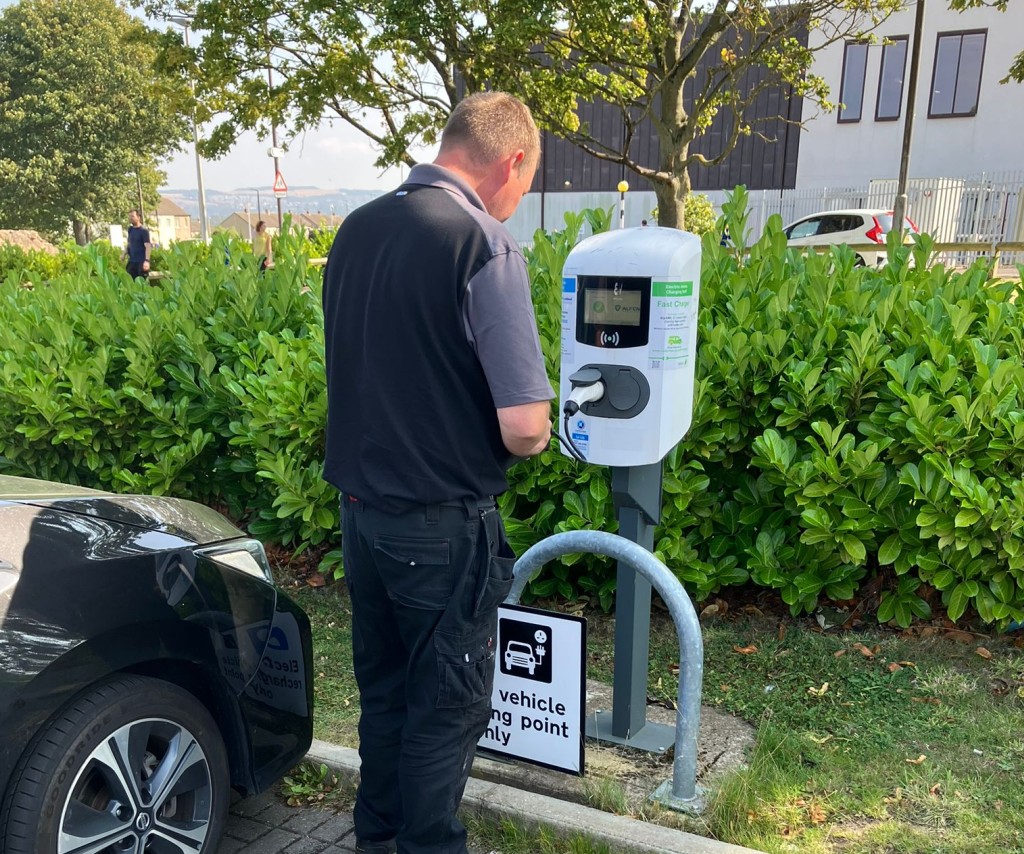
Published Workplace EV Evidence
The Procladd case study documents a ten-point workplace installation in Hamilton, including electrical installation, chargepoint setup, access arrangements and client handover.
LAST REVIEWED
25 August 2026
WB reviews this guide quarterly and after material grant announcements. Funding can close early, pause or change between reviews, especially where a scheme is subject to a finite budget.
CHECK BEFORE COMMITTING
Use the Official Page at Application Time
The links on this page lead to the current government or Energy Saving Trust source. Recheck the relevant page before ordering equipment, starting work or relying on a funding amount in a business case.
Keep This Page for Future Funding Checks
Bookmark this guide for the next quarterly review and use the official links whenever a project becomes active. If you are planning a later phase across one or several properties, send the outline now and WB can identify the electrical information worth preparing before the next funding decision.
Common funding questions
Questions About EV Charging Grants in Scotland
These answers reflect the official position on 25 August 2026. The live scheme rules and the decision of the scheme administrator take priority over any summary.
How much is the Workplace Charging Scheme worth now?
For vouchers issued under the scheme from 1 April 2026, WCS can cover 75% of eligible purchase and installation costs, including VAT, up to £500 per socket. The maximum is 40 sockets across all sites for one applicant, and the current scheme is due to close on 31 March 2027.
Is the old £350 figure still correct?
No. The standard WCS maximum increased from £350 to £500 per socket on 1 April 2026. Older guidance and search results can still show the former amount, so check the live official grant page before applying.
Can a company use WCS across several properties?
Yes, where each site and the applicant meet the rules, but the 40-socket limit applies across all sites for the applicant rather than separately to every property. A multi-site plan should therefore prioritise the first locations and allow for later unfunded or differently funded phases.
Can a commercial landlord claim an EV chargepoint grant?
The commercial landlord chargepoint grant closed to new customer applications on 31 March 2026. An eligible occupying business or organisation may still be able to use WCS where the current conditions and landlord permission are met. Residential landlords have a separate live route.
Can Scottish property factors or housing associations apply?
Potentially. The Scottish Factored Development Charge Point Fund is aimed at registered property factors and managers of communal residential parking and can include housing associations, retirement communities and student halls. The applicant, property, authority to act, parking arrangement and installer must all satisfy the current rules.
Does a grant cover work required by Scottish building regulations or planning?
Not automatically. WCS cannot fund chargepoints that are mandatory under the Building (Scotland) Regulations from 5 June 2023 or required by a planning condition. Some installations may fall within Scottish permitted development rights, but size, position and site conditions still need to be checked.
Can work begin before the grant is approved?
Usually not. WCS uses a voucher process and the Scottish funds require a grant offer before eligible work starts. Obtain the required survey and quotation, apply through the official route and wait for the relevant approval before placing an installation order.
Does WB decide whether an application is eligible?
No. WB Electrical can help define the electrical scope, site information and installer quotation, but the applicant is responsible for its application and the scheme administrator decides eligibility and funding. Grant support should never be treated as guaranteed.
Can a publicly accessible charger use workplace funding?
Public authorities, charities and small accommodation businesses can have different user rules under WCS. If chargepoints are offered to the public, the owner or operator also needs to consider the Public Charge Point Regulations, accessibility, payment, pricing, data, helpline and operating responsibilities.
How can I check whether a grant has changed?
Use the review date on this guide and follow the official link for the relevant scheme before committing to a project. WB checks this page quarterly and after material announcements, but a scheme can still close early or change between reviews.
Tell us about the applicant, site and charging plan
Request an EV Funding and Installation Review
Share the applicant type, location, number of sites, intended users and charging requirement. WB Electrical can review the electrical and installation information, identify the official funding routes worth checking and advise whether the next step should be a site survey or quotation. Eligibility and awards remain with the relevant scheme administrator.
- Applicant or organisation type and Scottish site location
- Number of sites, parking spaces and expected charging sockets
- Staff, fleet, resident, visitor or public charging use
- Lease, landlord, factor, housing or property-management position
- Grant deadline, supply information, plans, photographs or quotations
Prefer to talk first? Call 01698 883232 or email info@wbelectrical.co.uk. For general EV installation support, visit the commercial EV charging service.
Your information will be used to review and respond to this enquiry. Read the WB Electrical Privacy Policy.