
For commercial, industrial and project cable routes
Commercial Electrical Containment & Conduit Installation in Scotland
Cable tray, ladder, basket, trunking and conduit routes for commercial and industrial premises. WB Electrical plans the containment around the cables, environment, access, other services and the way the installation will need to be maintained.
From our Larkhall base, we support containment projects across Glasgow, Lanarkshire and the Central Belt, with larger project-led work elsewhere in Scotland considered by agreement.
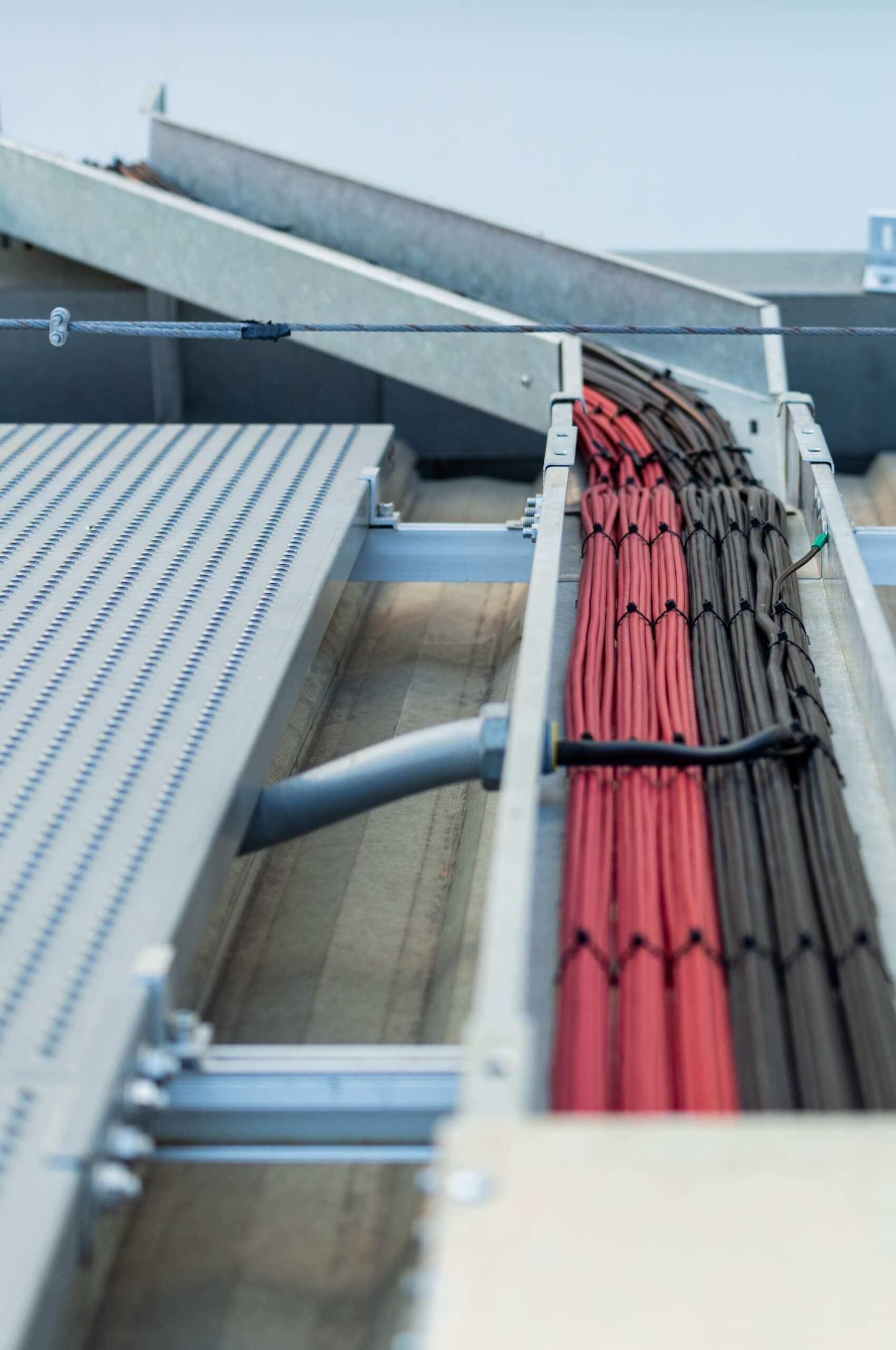
Plan the route. Coordinate the interfaces. Leave it maintainable.
A defined cable-support package
When a dedicated containment package makes sense
Containment can be a standalone work package or one part of a wider installation. It is the right route when the cable-support system itself needs to be surveyed, extended, replaced or installed to a defined drawing, route or project requirement.

You need a new main cable route
Create horizontal or vertical routes for suitable power, control, data or other cable systems, with the containment and support arrangement agreed for the actual installation.

An existing route needs to change
Extend, reroute or replace defined sections after a layout change, equipment move, refurbishment or expansion, subject to the condition and suitability of the existing system.

Containment is a separate project package
Provide the agreed tray, ladder, basket, trunking or conduit route for a main contractor, M&E package, data installation or specialist system, with responsibilities stated clearly before work starts.
If containment is only one part of a complete electrical installation, use Commercial Electrical Fit-Outs.
Tray, basket, trunking and conduit
What containment and conduit work can include
No single containment type is right for every route. The selection depends on the cables, loading, environment, access, required protection, appearance, future changes and any project specification.
Tray, ladder and basket routes
Suitable open cable-support systems for main runs, high-level routes, risers and areas where access, cable loading and future changes need to be considered.

Trunking and conduit systems
Steel or PVC trunking and conduit for suitable perimeter, plant-room, local and protected routes, selected around the intended cables, location and required finish.
Supports, drops and route extensions
Unistrut and other suitable supports, changes of level, local drops, risers and extensions developed around the route, fixing surface, access method and installation environment.
Cable installation, terminations, electrical design, specialist-system commissioning, structural approval, builders work and fire-stopping can sit outside a containment-only package. The quotation should state which of those interfaces WB owns and which remain with others.
Cables, route, access and other services
Plan the containment before the route closes up
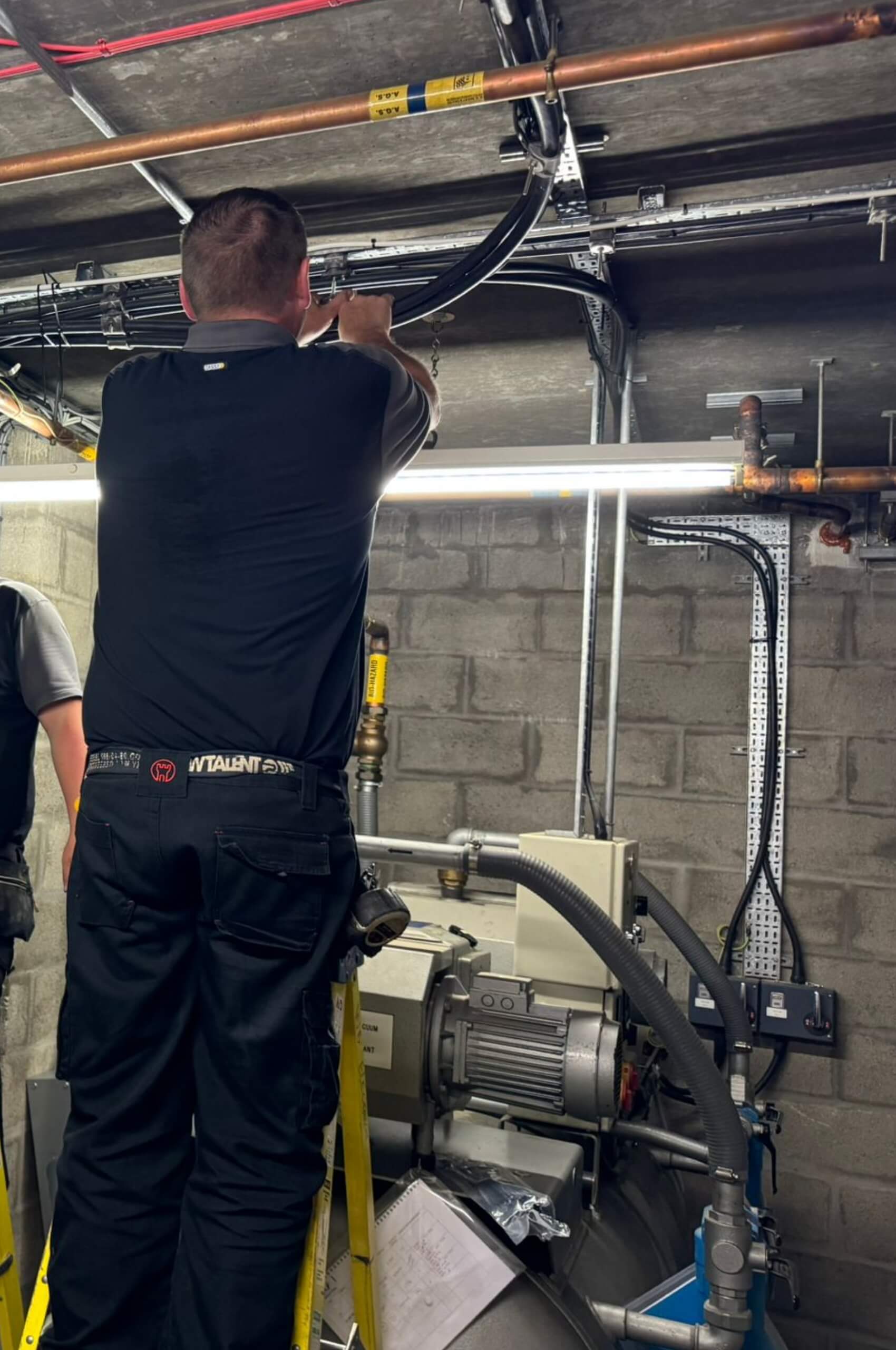
Early route information helps avoid rework. The supported cables or system, start and finish points, levels, substrate, environment and other services all affect the practical containment solution.Where available, provide cable schedules, drawings, route sketches, required separation, spare-capacity expectations, client specifications and known high-level access constraints.
01
Define the route and responsibilities
We confirm what the containment supports, the proposed route, the information already available and who owns cabling, penetrations, fire stopping and connected-system work.
02
Survey access, support and interfaces
The route, fixing surfaces, levels, access method, environment and conflicts with other services are reviewed before the final system is agreed.
03
Agree the system and installation sequence
Containment type, size, support arrangement, route changes and work sequence are defined around the agreed package, with follow-on cabling included only where specified.
Photographs and drawings can start the review, but route dimensions, fixing surfaces, high-level access, penetrations and clashes with other services may still need to be verified on site before the final scope is priced.
Have drawings, a cable schedule or a marked-up route? Send the containment requirement to WB.
A route that can be understood and maintained
Checks, identification and handover
Close out the agreed containment package
- Installed sections, joints, supports, fixings, covers and accessible finish checked as appropriate to the selected system and scope.
- Route, section or supported-system identification provided where required by the project or agreed installation.
- Applicable continuity, bonding or associated electrical checks recorded where they form part of the actual electrical design and WB scope.
- Marked-up drawings, as-fitted notes or product information supplied where they are included in the agreed handover.
A containment-only package does not automatically include cable installation, terminations, electrical testing or an Electrical Installation Certificate. Where WB also completes associated electrical installation work, the relevant testing and certification are handled under that wider scope.
Keep project interfaces explicit
- Cabling:who selects, installs, terminates and tests the cables supported by the containment.
- Penetrations and fire stopping:who forms openings and provides the required sealing or specialist fire-stopping system.
- Structure and building fabric:who confirms suitable fixing surfaces, structural constraints and weather-exposed details.
- Specialist systems:who owns data, fire, security, controls or other system design and commissioning.
Recording these responsibilities early reduces gaps between trades and keeps a containment package from being mistaken for complete ownership of every system using the route.
Need the containment and electrical installation together? WB can combine containment with the relevant cabling, circuits and electrical work where agreed. See Specialist Power Supplies.
Direct proof from industrial environments
Containment that has changed with a working site
Bridon-Bekaert
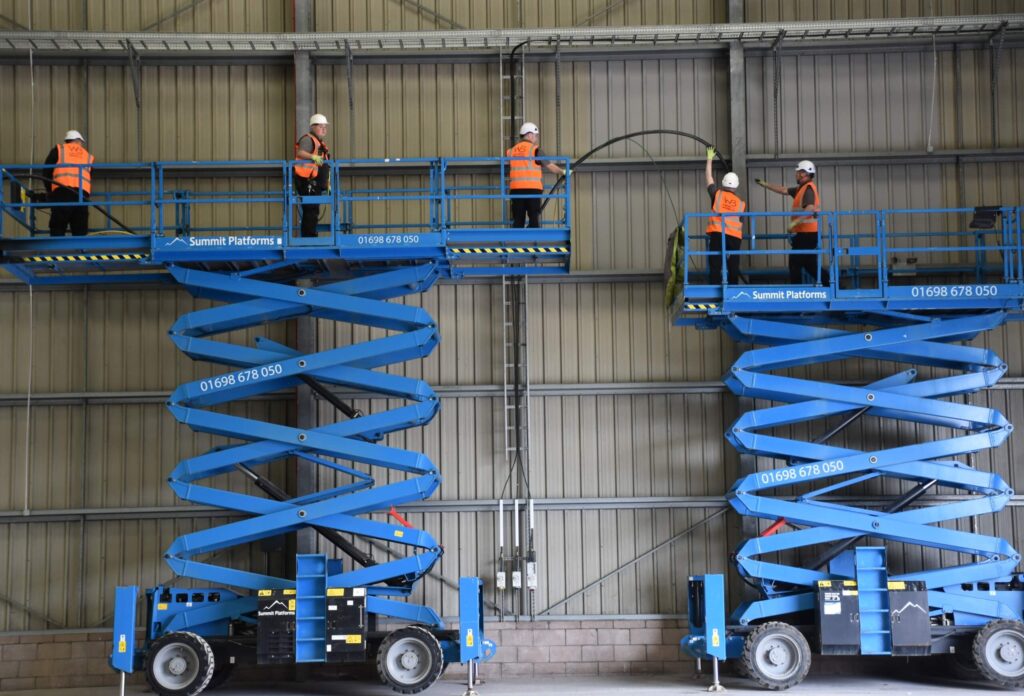
WB Electrical has supported Bridon-Bekaert since 2014 across manufacturing and warehouse facilities in Coatbridge and Grangemouth. The published project scope includes cable routes, containment, ladder and support systems alongside distribution, machinery supplies and later decommissioning work.
This is direct proof of containment and support-system work within changing industrial premises. The project also shows the importance of high-level access, route coordination and leaving infrastructure clear as equipment and layouts evolve.
Supplier assurance
Review WB’s electrical contractor membership, management-system certificates and current accreditation evidence when assessing us for containment and wider installation work.
Practical answers before the route is agreed
Containment and conduit questions
What is electrical containment?
Electrical containment is the route and support system used to carry, organise or protect suitable cables. Common systems include cable tray, ladder, wire basket, trunking and conduit, selected for the cables, environment and installation requirements.
Which is best: tray, basket, trunking or conduit?
There is no universal best option. Cable loading, mechanical protection, environment, access, appearance, separation requirements, future changes and the project specification all influence the choice, and one route may use more than one system.
Can WB install containment without installing the cables?
Yes, where the package is clearly defined. The scope should identify who supplies the cable information, who approves the route and who is responsible for cabling, terminations, testing and commissioning afterwards.
Can existing containment be extended or modified?
Potentially. WB reviews the existing route, supports, condition, access, available space and compatibility before confirming whether an extension, alteration, partial replacement or separate new route is appropriate.
Who is responsible for penetrations and fire stopping?
The agreed project scope should identify who forms or approves openings and who supplies and installs the required sealing or fire-stopping system. WB can coordinate these interfaces, but specialist work is not assumed to be included unless the quotation states that it is.
Choose the route that matches the wider requirement
Connected services around containment work

The route is part of a full premises package
Use the fit-out route when containment sits within a coordinated package covering distribution, power, lighting and handover.
The containment serves machinery, plant or equipment
Use the specialist-power route when the main buyer task is the supply and connection for a defined load.

The project includes data or distribution infrastructure
Use the relevant route where containment supports a wider network or distribution requirement.
Tell us what the route needs to support
Request a containment and conduit review
Send the route and cable information you already have. WB can advise whether the next step should be a drawing review, site survey, defined containment quotation or a wider connected electrical package.
Information for your quotation
- Site address, work area and the environment the containment will pass through.
- Cable or system to be supported, including sizes, quantities or a schedule if available.
- Route start and finish points, levels, drawings, photographs or a marked-up sketch.
- Known specification, separation, spare-capacity, fixing-surface or penetration requirements.
- Access method, programme, live-site constraints and any areas that cannot be closed or obstructed.
Mention any drawings, schedules or photographs in the form. The office will confirm a suitable way to share larger files. Do not enter restricted areas or work at height simply to obtain quotation photographs.
What affects containment and conduit cost?
System type and size, route length and changes of level, support method, fixing surfaces, access equipment, penetrations, working environment, programme, associated cabling and handover requirements all affect price. A site review may be needed before the scope can be priced firmly.
The next step may be a drawing review, survey or quotation. Associated electrical installation, specialist-system work, builders work and fire stopping are scoped separately where that keeps responsibility and pricing clear.
Based in Larkhall, we support suitable commercial, industrial and public-sector containment work across Glasgow, Lanarkshire and the Central Belt. Larger and project-led requirements elsewhere in Scotland are considered by agreement.