
External mobile connectivity for operational sites
Commercial 4G & 5G Antenna Installation Across Scotland
External antenna mounting, weather-resistant routes, router connections, local power, agreed signal readings and completion records for commercial, industrial, utility and remote sites.
WB Electrical delivers the physical installation around an approved 4G or 5G connectivity solution. The client or appointed provider retains carrier and SIM selection, RF design, hardware approval, configuration, cybersecurity and final network-performance acceptance.
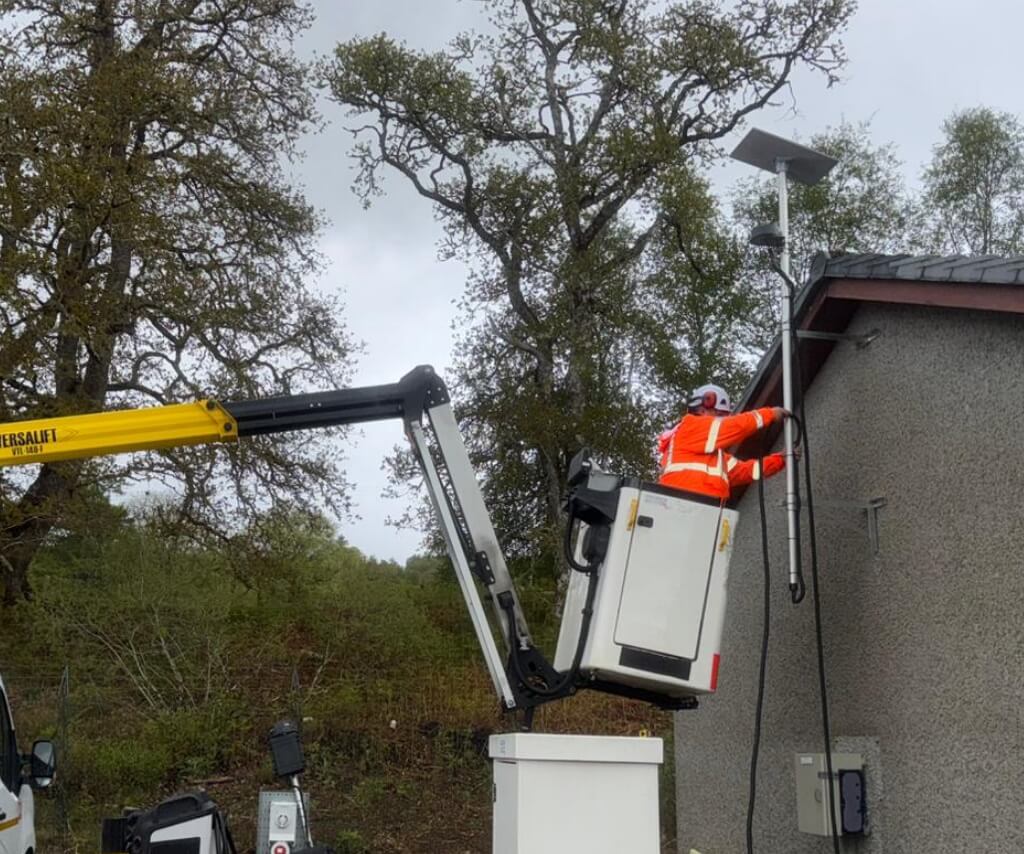
The approved connectivity plan, installed at the site
Access, mounting, cable entries, router or cabinet interfaces, power, readings and records can be coordinated as one physical package.
Scotland-wide delivery
Central Belt, rural, remote, mainland and island sites assessed
One physical package
Access, mounting, routes, equipment, power and records coordinated
High-level work planned
Task-specific access, weather controls and rescue needs reviewed
Clear technical boundary
Provider retains RF design, configuration and network acceptance
Mobile connectivity with a defined purpose
Where Commercial 4G and 5G Antennas Fit
An external antenna should support a stated operational requirement, not simply add more equipment to the roof. The provider-led solution may serve a primary connection, resilience path, remote device or repeatable rollout.
Where fixed connectivity is limited
Primary Mobile Broadband
External antenna, router and physical infrastructure for a provider-approved mobile connection at commercial, rural or operational premises.
A second physical route
Business Failover Connectivity
A separately powered and physically installed 4G or 5G path that the appointed network specialist can configure as part of a resilience or failover design.
Telemetry and connected assets
Remote Monitoring and IoT
External antennas, gateways, cabinets, power and cable routes for issued monitoring, telemetry, control or connected-equipment solutions at dispersed sites.
Sites without a practical fixed line
CCTV and Security Backhaul
Physical mobile-connectivity infrastructure for remote cameras, access systems or security equipment where the specialist owns bandwidth, configuration and cybersecurity.
Short or changing programmes
Construction and Temporary Sites
Mounting, cable routes, power and router infrastructure for temporary offices, compounds, projects and relocatable equipment, subject to the issued connectivity solution.
Repeatable field deployment
Multi-Site and Provider Rollouts
Pilot installations, standard site packs and consistent physical delivery across commercial, public, utility, rural, mainland and island locations.
A complete external installation package
What WB Can Deliver Around the Antenna Solution
The quotation records the exact physical scope and the provider-owned interfaces. This is especially important where mounting, radio equipment, power, weather protection, high-level access and final network acceptance are split between different parties.
Proposed Positions and Site Readings
Practical checks at issued or candidate locations before permanent mounting.
- Existing coverage and equipment information
- Agreed signal readings at proposed positions
- Obstructions, surfaces and maintenance access
- Photographs and exceptions for provider review
Mounts, Poles and Fixings
Issued antenna equipment secured to a suitable building or supporting structure.
- Wall, pole, mast or equipment-frame interfaces
- Manufacturer mounting orientation and clearances
- Substrate, wind exposure and fixing assessment
- Access for later inspection or replacement
External Cables and Entries
Supported routes that protect the antenna connection and the building envelope.
- Coaxial, Ethernet or manufacturer cable assemblies
- Containment, supports and bend-radius controls
- Drip loops and weather-resistant entries
- Internal routes to router or cabinet positions
Routers, Cabinets and Equipment
The physical interfaces around issued active equipment and gateways.
- Router, gateway and enclosure mounting
- Cabinet, patching and local data connections
- Equipment labels and cable identification
- Provider access and maintainable equipment positions
Electrical Supplies and Protection
A coordinated electrical package where the external solution needs local power.
- Dedicated or local electrical supplies
- Protection, isolation and equipment connections
- PoE interfaces where specified
- Surge, bonding and lightning interfaces assessed
Readings, Photographs and Handover
Completion information prepared for the provider or client technical team.
- Installed positions and equipment references
- Agreed before-and-after signal readings
- Cable routes, labels and photographs
- Snags, departures and outstanding specialist actions
Use the arrangement approved for the equipment
Directional, Omnidirectional and Outdoor Router Solutions
Antenna type cannot be chosen from gain alone. Frequency coverage, network direction, MIMO ports, polarisation, cable length, connectors, router compatibility, mounting environment and the provider’s acceptance method all shape the issued solution.
Focused towards an approved target
Directional Antennas
A directional arrangement may be issued where the provider has identified a suitable network direction and needs a focused installation. Alignment, polarisation, MIMO arrangement, cable type and acceptance method must follow the approved design and manufacturer instructions.
Coverage from multiple directions
Omnidirectional Antennas
An omnidirectional antenna can suit branch, failover, mobile-network or multi-operator requirements where the approved solution does not rely on precise directional alignment. Clearances, vertical orientation, mounting surface and cable routing remain important.
Reduce long radio-frequency cable runs
Outdoor Router or CPE Arrangements
Some solutions place the router or modem within an outdoor enclosure close to the antenna and use Ethernet or fibre back to the internal network. The provider must approve equipment, environmental rating, remote power, configuration and service responsibility.
Longer radio-frequency cable runs introduce loss, while mounts and poles must suit antenna weight and wind exposure. Cable length, cable type, connectors, enclosure, fixings and supporting structure should therefore be approved as one installation arrangement.
Useful evidence with a stated method
Signal Readings Support the Decision, but Do Not Guarantee the Service
Mobile conditions change. Readings are most useful when the same network, SIM, router, antenna, device state and method are used to compare positions, and when the provider defines what it will accept.
Before permanent mounting
Baseline and Candidate Locations
WB can record readings from the agreed device or application at the existing point and at practical candidate positions. The provider should define which network, SIM, router, antenna and measurement method are to be used.
Compare like with like
Position and Alignment Checks
Readings can support a comparison between proposed positions or directional alignments when the hardware, network, device state and timing are controlled. Relevant metrics may include RSSI, RSRP, RSRQ and SINR where the equipment exposes them.
Physical completion evidence
Installed-State Record
The handover can record the final location, orientation, equipment references, readings, photographs, cable route and exceptions. Final throughput, resilience and application acceptance remain with the responsible connectivity party.
Throughput and stability can change with network coverage, cell loading, provider changes, spectrum, hardware, configuration, cable loss, buildings, terrain, foliage and weather. The installation can be completed against an agreed reading method, but WB does not promise a permanent speed or coverage outcome controlled by the mobile network.
Choose the lawful solution category
An External Antenna Is Not the Same as a Mobile Repeater
The word booster is often used loosely, but the equipment categories carry different technical and legal responsibilities. WB must know what is being installed before accepting the physical work.
Passive interface to compatible equipment
External Router Antenna
An external antenna connects to a compatible router, modem or gateway using the specified ports, cable assemblies and MIMO arrangement. It does not independently retransmit mobile spectrum throughout the building.
Active radio-frequency equipment
Mobile Signal Repeater
A repeater receives and retransmits mobile frequencies. Only equipment that meets the applicable Ofcom licence-exemption requirements, or is otherwise lawfully authorised, may be used. An arbitrary online signal booster is not an acceptable substitute.
Specialist network infrastructure
Small Cell or Private Mobile Network
Small cells, distributed antenna systems and private 4G or 5G networks require specialist radio design, spectrum and operator arrangements, equipment approval, commissioning and ongoing technical ownership beyond this standard installation service.
Ofcom confirms that only mobile repeaters meeting its technical licence-exemption requirements may be used without a licence, and that non-compliant repeaters remain illegal. Review the current Ofcom mobile repeater guidance before specifying active booster equipment.
The antenna is only one part of the site decision
Safe Access, Weather Exposure and Scottish Permissions
External work must remain secure, weather-resistant and maintainable after the installation team leaves. Access, structure, radio-equipment instructions, planning status and estate approvals are therefore reviewed before mobilisation.
Work at Height and Rescue
The access method follows the task, duration and site rather than defaulting to a ladder.
- Avoid work at height where reasonably practicable
- Use suitable collective protection and access equipment
- Assess fragile surfaces, overhead services and falling objects
- Plan weather limits, exclusion zones and rescue arrangements
Mounting, Weather and Lightning Interfaces
The complete external arrangement must remain secure and protect the route into the building.
- Mount, fixings, substrate, wind and corrosion exposure
- Manufacturer orientation, clearances and cable requirements
- Sealed entries, drip loops and maintainable routing
- Lightning, surge, earthing and bonding responsibility
Planning, Ownership and Radio Requirements
Permission and technical authorisation depend on the actual equipment and site.
- Landowner, landlord, lease and estate approval
- Scottish planning and permitted-development position
- Conservation, listed-building and roof-warranty constraints
- Provider instructions, equipment compliance and exposure limits
WB’s work-at-height planning follows HSE guidance. Scottish permitted-development rights are conditional, so the client should confirm the planning position using current Scottish Government digital-telecommunications planning guidance or the relevant planning authority.
Define the interface before the survey
A Clear Boundary Between Physical Installation and RF Design
The field team needs approved equipment and a route for technical decisions. The provider needs accurate site information and completion evidence. A responsibility matrix connects those two requirements.
WB physical installation scope
What WB Can Deliver at the Site
The agreed package can include:
- Access, surfaces, routes and candidate-position review
- Issued mounts, antennas, cables, entries and enclosures
- Routers, cabinets, local data connections and power
- Agreed signal readings, labels and photographs
- Site packs, snags, exceptions and completion records
- Repeat physical delivery across Scottish sites
Provider or client technical scope
What Normally Remains With the Network Party
The appointed specialist normally retains:
- Coverage strategy, RF survey and propagation design
- Carrier, SIM, service, spectrum and antenna selection
- Router, modem, gateway and connector approval
- Configuration, cybersecurity, monitoring and support
- EMF or radio authorisation evidence where applicable
- Final throughput, resilience and application acceptance
Responsibilities can change when they are expressly included and supported by competent specialists. The issued design, technical authority, acceptance method and change-control route should be confirmed before permanent equipment is installed.
From issued solution to provider acceptance
How a Commercial Antenna Installation Is Delivered
The process keeps the client, provider, field team and site contact working from the same approved information, with technical queries resolved before they become permanent installation problems.
01
Define the Technical Owner
Confirm the provider, intended application, carrier or SIM responsibility, issued router and antenna, configuration owner, acceptance criteria and client contacts.
02
Review the Site Information
Check the address, coverage information, drawings, candidate positions, proposed cable route, power, access, building permissions, environment and operating constraints.
03
Survey Positions and Access
Capture the agreed readings, inspect mounting surfaces and routes, assess high-level access and identify penetrations, weather exposure, overhead services and maintenance needs.
04
Approve the Installation Pack
Agree the equipment, mounts, fixings, cables, labels, entry detail, access method, RAMS, readings, photographs, exception route and any planning or landlord approvals.
05
Install and Record
Mount the issued equipment, form and seal routes, connect the router or cabinet interfaces, complete electrical work and capture the agreed installation evidence.
06
Handover for Acceptance
Return readings, photographs, labels, equipment references and exceptions so the provider can configure, commission and accept the network service.
Installation changes with the site
4G and 5G Infrastructure for Operational Environments
The same antenna may require a very different delivery plan on a branch office, factory roof, public estate or remote utility site. Access, permissions, physical protection and completion records must reflect the operating environment.
Utilities and Remote Infrastructure
Rural access, island travel, weather exposure, limited local resources, operational controls and repeat records are planned into the site pack rather than treated as last-minute complications.
Industrial and Process Sites
Plant, high-level routes, metal structures, controlled areas, permits, shutdown constraints and electromagnetic conditions can affect the approved position and installation method.
Commercial and Multi-Site Estates
Branch, office, retail, leisure and managed-property installations may support primary connectivity, failover, connected equipment or standardised upgrades across several premises.
Public, Healthcare and Education Sites
Public access, safeguarding, operational continuity, estate approvals, multiple stakeholders and consistent completion information shape delivery in controlled environments.
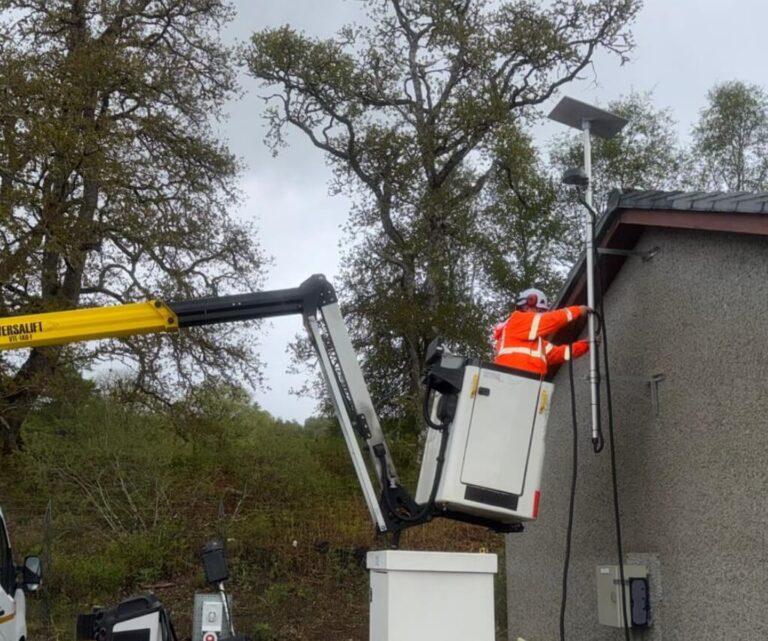
Current Scotland-wide delivery evidence
External 4G and 5G Antennas Across Operational Utility Sites
WB is supporting a specialist connectivity provider across operational sites throughout Scotland, including island locations. The recorded physical scope has included access-equipment coordination, checks at proposed positions, agreed signal readings, external 4G and 5G antennas, mounting systems, weather-resistant routes and entries, routers, cabinets, access points, electrical supplies and completion records.
The connectivity provider retains the digital solution, hardware selection, carrier decisions, configuration and network-performance responsibilities. WB delivers the agreed field installation and site evidence.
Related physical connectivity services
Connect the Antenna to the Wider Site Infrastructure
Use this page for direct external mobile-antenna installations. The wider Data & Connectivity and partner routes cover complete physical programmes, while Structured Data Cabling covers the passive network infrastructure within the premises.
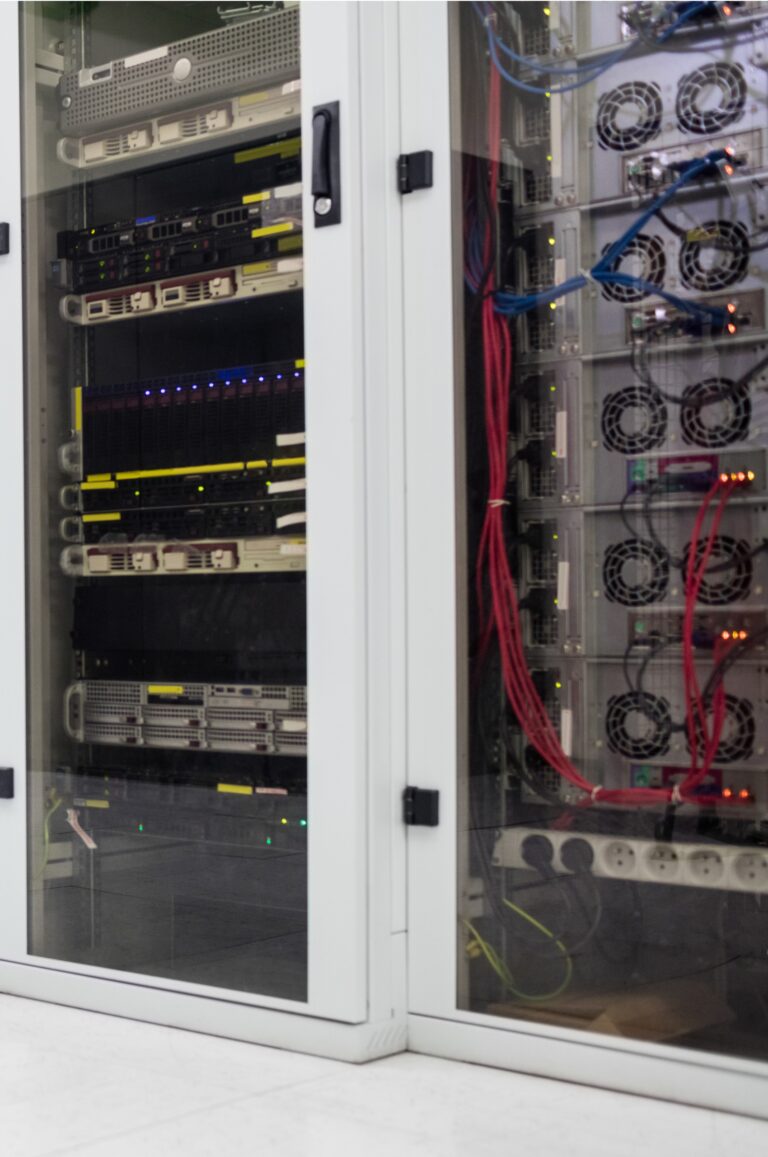
Connectivity Installation Partner
Physical field delivery for MSPs, telecoms, IoT and connectivity providers, including pilots and multi-site programmes across Scotland.

Commercial Structured Data Cabling
CAT6, CAT6A, data points, cabinets, containment, agreed testing and handover records for the internal physical network.
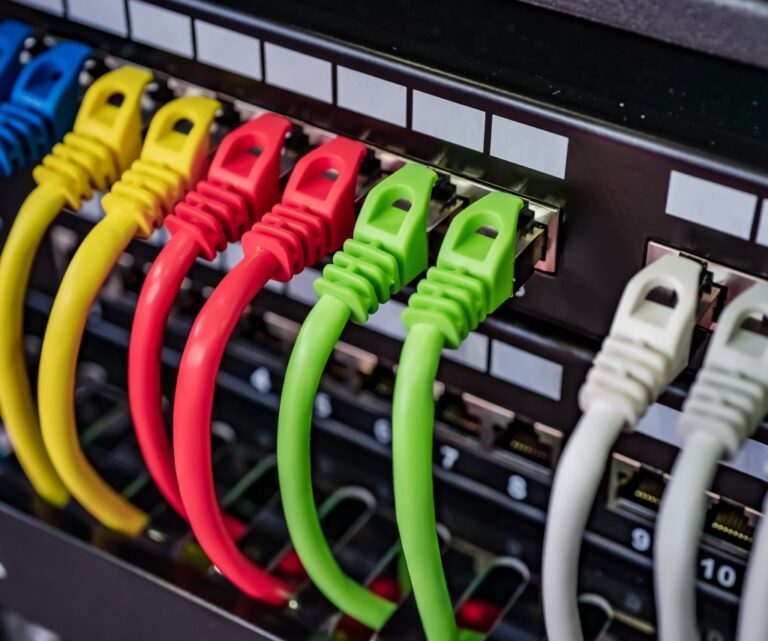
Data & Connectivity Infrastructure
Review how cabling, cabinets, Wi-Fi infrastructure, mobile antennas, satellite equipment, power and site delivery fit together.
Common commercial antenna questions
Questions About 4G and 5G Antenna Installation
These answers explain the physical scope, signal-reading limits, legal equipment distinction and site information needed before WB can assess an installation or rollout.
What 4G and 5G antenna work can WB Electrical provide?
WB can provide the agreed physical installation, including proposed-location checks, access planning, wall or pole mounting, external and internal cable routes, weather-resistant entries, router or cabinet mounting, electrical supplies, labels, readings, photographs and completion records.
Is an external antenna the same as a mobile signal repeater?
No. An external antenna is normally connected directly to a compatible router, modem or gateway. A repeater is active equipment that receives and retransmits mobile frequencies. Ofcom licence-exemption conditions apply to repeaters, and non-compliant equipment remains unlawful to use.
Can WB choose the mobile network, SIM, router and antenna?
WB can contribute practical site and installation information, but the appointed connectivity specialist or client technical authority should approve the carrier, SIM, service, router, antenna, frequency coverage, MIMO arrangement, connectors and performance requirement.
Can you guarantee a particular speed or signal improvement?
No responsible installer can guarantee future mobile-network speed from a physical antenna installation alone. Results can change with network coverage, cell loading, provider changes, spectrum, hardware, cable losses, obstructions, foliage, weather and the final configuration. The agreed acceptance method should be defined before work.
Does WB carry out an RF survey?
WB can capture agreed site signal readings and compare practical positions using the specified equipment and method. That is not automatically a full RF survey, propagation design, spectrum analysis or guarantee of performance. A specialist provider should own those tasks where required.
Can WB install directional and omnidirectional antennas?
WB can install either arrangement when it is compatible with the issued equipment and approved by the responsible specialist. Mounting orientation, alignment, MIMO connections, cable type, clearances and readings should follow the approved design and manufacturer instructions.
How is antenna work at height planned?
The access method is assessed for the task, height, duration, equipment, surface, weather, falling-object risk and rescue requirement. Depending on the site, this may involve a suitable MEWP, scaffold, tower or other planned access system used by trained and competent people.
Does an external antenna need planning permission in Scotland?
It depends on the site, equipment, building, location, ownership and the development rights that apply. Landowner or landlord permission, planning status, conservation or listed-building constraints and other estate approvals should be checked before installation. WB does not assume that every antenna is permitted development.
Do lightning and surge risks need to be considered?
Yes. The equipment location, roofline, exposure, existing lightning-protection system, earthing or bonding arrangements, cable entry and manufacturer instructions should be reviewed. Where specialist lightning-protection assessment or design is required, that responsibility must be assigned before installation.
Can WB support remote, island or multi-site antenna programmes?
Yes. WB can assess mainland, rural, remote and island programmes across Scotland. A standard site pack, approved equipment list, access plan, reading method, photograph schedule and exception process make repeat installations easier to control.
What information helps WB assess an antenna installation?
Useful information includes the site address or schedule, intended application, current connectivity issue, provider, SIM and hardware details, issued antenna and router, proposed locations, coverage information, access and height, cable route, power, permissions, required readings, records and programme.
Share the site and issued solution
Discuss a Commercial 4G or 5G Antenna Installation
Send the equipment, proposed site and provider information you already have. WB will review the physical scope, identify missing access, mounting, power, permission or reading details and help define a practical next step.
A Useful First Brief Can Include
- Company, provider and named technical contact
- Site address or complete multi-site schedule
- Primary, failover, IoT, security or temporary use case
- Carrier, SIM, router and issued antenna details
- Coverage information and proposed positions
- Mounting height, surface, access and weather exposure
- External and internal cable route and entry point
- Cabinet, router, containment and electrical requirements
- Planning, landlord and estate approval status
- Required readings, photographs and completion records
- Pilot, rollout programme or target installation date
Prefer to talk first? Call 01698 883232 or email info@wbelectrical.co.uk. Equipment schedules, site photographs and provider packs can be sent by email after initial contact.
Your information will be used to review and respond to this enquiry. Read the WB Electrical Privacy Policy.