
For failed fittings, signs, batteries and system faults
Emergency Lighting Remedials Across Scotland
Repairs and replacement for known emergency-lighting defects identified through testing, maintenance or site reports. WB Electrical reviews the failure, completes the agreed remedial work, re-tests the affected items and leaves a clear record of what was closed out.
From our Larkhall base, we support emergency-lighting remedials across Glasgow, Edinburgh, Lanarkshire and the Central Belt, with larger and multi-site requirements elsewhere in Scotland considered by agreement.
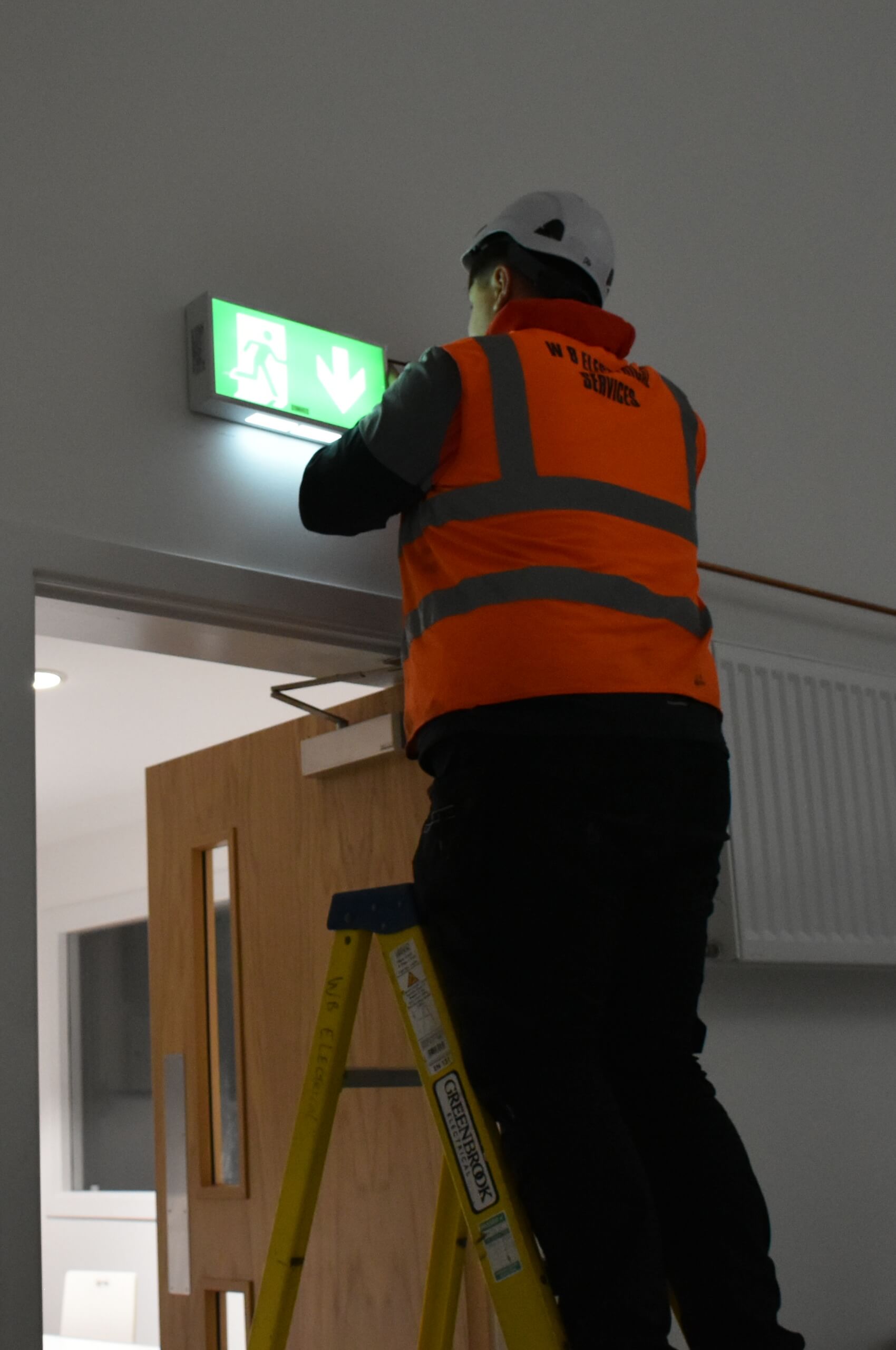
Identify the failure. Repair the right thing. Re-test the affected item.
Start from the known defect
When Emergency Lighting Remedials is the right route
This component is for faults that have already been identified within an emergency-lighting system. The starting point may be an annual duration test, monthly functional check, self-test warning, maintenance visit, damaged fitting or a known battery, circuit, sign or control fault.

A fitting or sign has failed a test
Review the recorded failure, fitting reference and available system information before deciding whether the right action is repair, component replacement, full fitting replacement or further investigation.

A fault has appeared between planned tests
Investigate a known emergency-lighting fault such as a failed indicator, damaged luminaire, non-operating sign, charging issue or local circuit problem, then complete the agreed repair and verification.

Repeated failures suggest the system needs more than a quick fix
Where age, compatibility, layout changes, obsolete equipment or recurring defects point beyond an isolated repair, route the requirement into a planned upgrade or wider system review.
If the main question is whether the system passes its scheduled test, start withEmergency Lighting Testing.
Repair, replace and re-test known failures
What emergency-lighting remedial work can include
The final scope depends on the recorded failure, installed system, manufacturer information, fire-safety design basis and condition of the surrounding installation. WB repairs the agreed defect without assuming that one failed component explains every system issue.
Failed luminaires, exit signs and batteries
Repair or replace suitable emergency fittings, illuminated signs, batteries or internal components where the product, condition and manufacturer information support that route.

Circuits, test controls and local electrical faults
Investigate and repair agreed supply, charging, test-switch, local circuit or connection faults that prevent emergency-lighting equipment operating as intended.
Re-test and remedial close-out
Re-test the affected items or area as appropriate to the repair, update the agreed records and identify any separate design, coverage, access or wider-system issue that remains open.
A remedial visit does not replace the premises fire risk assessment, re-design the entire emergency-lighting system or certify unaffected parts of the installation. New coverage, changed layouts, central-system alterations and broader upgrades are scoped separately where required.
Failure record, system type and safe access
Plan the remedial around the building and the system
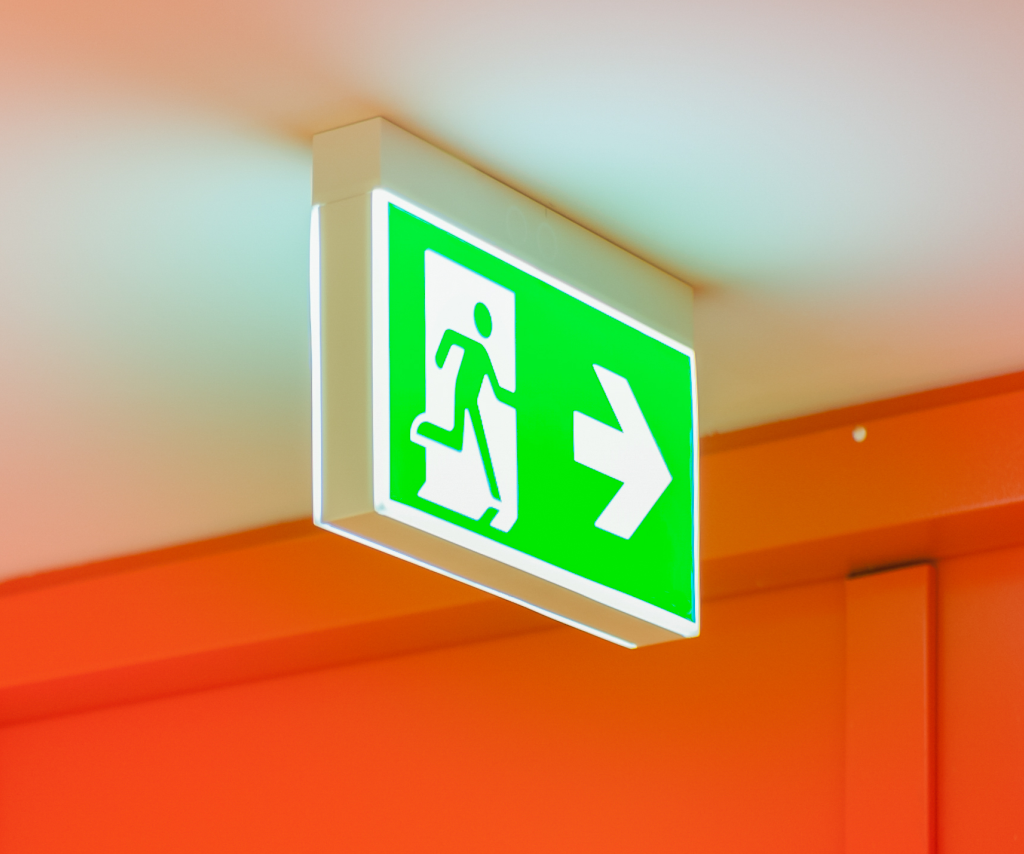
A useful starting point is the latest test report or logbook entry, the asset or fitting reference, what failed, when it failed and whether the fault affects an occupied escape route or other important area.Tell us if the system is self-contained, automatic self-test or centrally supplied where known, and include any manufacturer, battery or control information already available. High-level fittings, secure areas and live operational premises can change the access and work plan.
01
Review the recorded failure
Confirm the site, fitting or asset reference, test result or fault description, previous repairs, available system information and any fire-safety or operational concern already raised.
02
Verify the fault and agree the repair
Check the affected equipment and relevant electrical supply, establish whether repair, component replacement, fitting replacement or further investigation is appropriate, and confirm access and isolation requirements.
03
Complete, re-test and record
Carry out the agreed remedial work, restore the system, re-test the affected equipment as appropriate and update the completion information so the defect is either closed out or clearly left open for further action.
Where a failure affects safe occupation or leaves an important escape route without suitable emergency lighting, the dutyholder should arrange appropriate interim fire-safety measures with competent advice until the defect is resolved.
Have the latest test report or logbook entry?Send the emergency-lighting defect to WB.
From failed item to traceable close-out
Testing and records after the repair
Show what was repaired and what was re-tested
- The affected fitting, sign, circuit, control or system reference linked back to the original failure.
- The repair or replacement completed, including relevant new product or battery information where applicable.
- The result of the agreed re-test or verification after the remedial work.
- Any separate limitation, design concern, coverage issue or wider upgrade recommendation that remains outside the completed scope.
A repair record should not imply that the whole emergency-lighting system has been newly designed, commissioned or certified if only selected defects were addressed. Scheduled testing and wider system reviews remain separate tasks.
Keep the ownership boundaries clear
- Scheduled testing:monthly functional checks, annual duration testing, logbook management and identification of failures belong to Emergency Lighting Testing.
- New design or changed coverage:new systems, extensions, layout changes, additional escape-route coverage and planned system upgrades belong to Emergency Lighting Installation & Upgrades.
- Ongoing maintenance:repeat servicing, grouped lighting defects and planned estate-wide electrical maintenance can sit within the wider maintenance service.
- Hazardous areas:emergency-lighting equipment within confirmed hazardous zones needs the relevant DSEAR and classification information plus the appropriate CompEx route.
Keeping those boundaries visible stops a failed fitting from being treated as proof that the whole system needs replacing, and stops a local repair from being mistaken for a complete system review.
Need several electrical findings closed out together?Use the broader Electrical Remedial Works route when the list spans emergency lighting and other electrical systems. Otherwise continue withEmergency Lighting Testing.
Direct emergency-lighting remedial evidence
Inspection, remedial activity and lighting work across a live estate
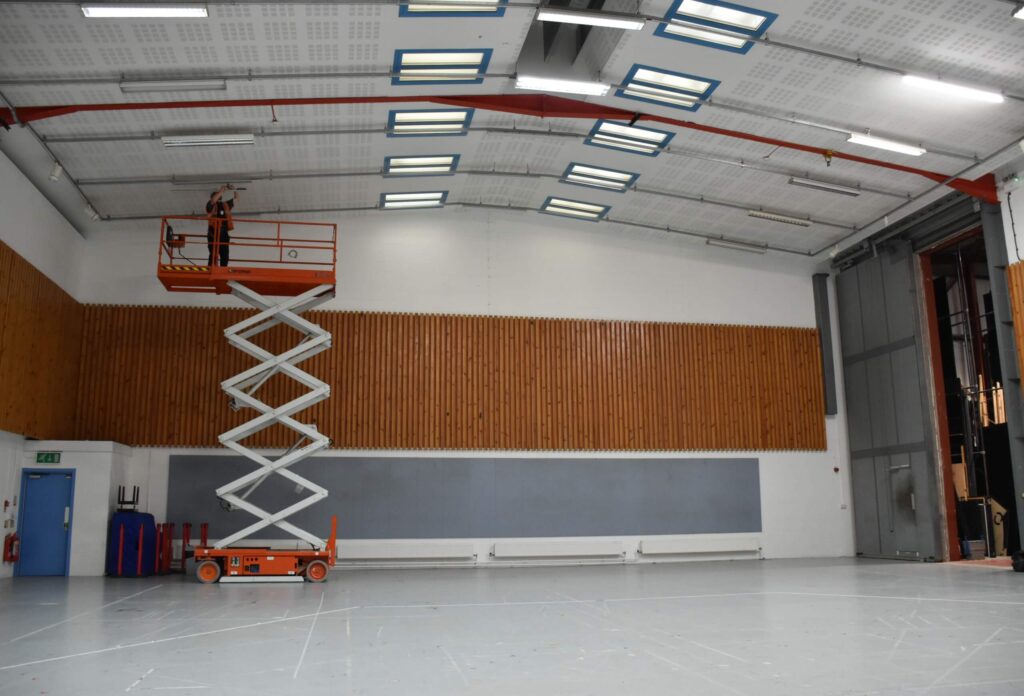
Scottish Opera
WB Electrical has supported Scottish Opera since 2015 across four Glasgow locations. The published case study records emergency and exit-lighting installations, emergency-lighting inspection and remedial activity, alongside wider lighting, maintenance, testing and electrical support.
This is direct evidence of emergency-lighting remedial activity within occupied rehearsal, production, workshop, storage and support spaces. Each new defect still needs its own system information, access plan and agreed repair scope.
Supplier assurance
Review WB’s electrical contractor membership, management-system certificates and current accreditation evidence when assessing us for emergency-lighting and wider electrical work.
Practical answers after a failure is found
Emergency lighting remedial questions
Can WB repair failures identified by another contractor’s emergency-lighting test?
Yes. Send the test report, logbook entry, fitting references and site information. WB can review the recorded failures, verify the affected equipment and quote the agreed remedial work without claiming to have carried out the original test.
Does a failed duration test always mean the battery needs replacing?
No. Battery condition can be one cause, but the fault may involve the luminaire, charger, control gear, supply, central equipment or another issue. The affected equipment should be checked before the repair route is assumed.
Can WB replace individual failed emergency lights with LED fittings?
Yes, where a suitable replacement can be agreed for the existing system and location. Compatibility, operating mode, rated duration, environment, controls and the current emergency-lighting requirement need to be considered before substitution.
Will remedial work make the whole emergency-lighting system compliant?
The agreed remedial work closes out the defects that are repaired and re-tested. It does not automatically certify the entire system, fire risk assessment, escape strategy or lighting design. A wider survey or upgrade may be needed where coverage or design is in question.
Can emergency-lighting remedials be phased around an occupied building?
Often. Access, test and isolation requirements, recharge time, occupied escape routes and any interim fire-safety measures need to be considered before the work is planned. High-level or restricted areas may require additional access arrangements.
Choose the route that matches the next requirement
Connected emergency-lighting services

You need the regular test or a re-test programme
Use the Testing route for monthly checks, annual duration testing, logbook records and planned re-tests after remedial work.
The system needs new coverage or a broader upgrade
Use the installation route for new fittings, extensions, changed layouts, system replacement and design-led upgrades.

The defects are part of a wider maintenance programme
Use the maintenance route where emergency-lighting faults sit alongside recurring electrical servicing, repairs and planned site support.
Preventative & Reactive Maintenance
Electrical Remedial Works
Tell us what failed and where
Request an emergency-lighting remedial quotation
Send the report or logbook entry and the system information you already have. WB can advise whether the next step is a defined repair quotation, site visit, further investigation, re-test or wider emergency-lighting upgrade.
Information for your quotation
- Site address and the area or escape route affected.
- Latest emergency-lighting test report, logbook entry or self-test fault information.
- Fitting, sign or asset references and photographs where available.
- System type, rated duration, product, battery or central-system information if known.
- Operating hours, occupancy, access height, local fire-safety contact and any urgent interim arrangements already in place.
Mention any reports, asset schedules or photographs in the quote form. The office will confirm a suitable way to share larger files. Please do not remove electrical covers or dismantle emergency fittings to obtain quotation information.
What affects emergency-lighting remedial cost?
Number and type of failures, equipment availability, system type, access height, investigation, circuit or control faults, working hours, replacement products, re-testing and whether a wider upgrade is needed all affect price. Some defects can be quoted from a clear report; others need a site visit first.
The next step may be repair, further investigation, re-test or a wider installation review. WB will not treat every failed battery, fitting or test result as an automatic reason to replace the whole system.
Based in Larkhall, we support suitable commercial, industrial and public-sector emergency-lighting remedials across Glasgow, Edinburgh, Lanarkshire and the Central Belt. Larger and multi-site requirements elsewhere in Scotland are considered by agreement.