
For commercial, industrial and managed premises
Emergency Lighting Testing Across Scotland
Arrange annual emergency lighting testing, monthly checks or a repeat programme with WB Electrical. Know what was tested, which fittings need attention and what to keep in your site records.
Supporting Glasgow, Edinburgh, Lanarkshire and the Central Belt from our Larkhall base, with visits planned around your building and operating hours.
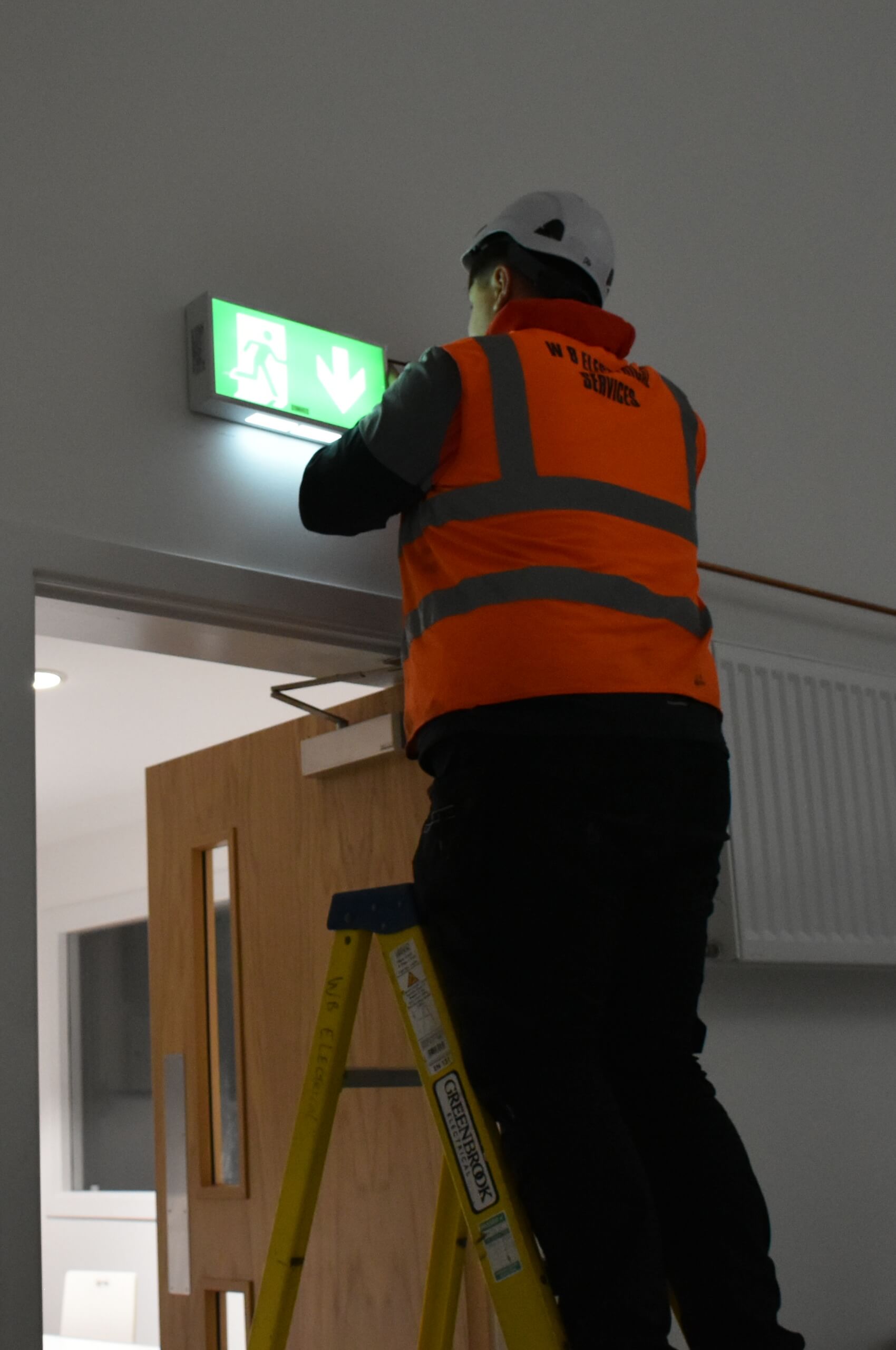
Planned tests. Clear results. Practical follow-up.
Start with the next due date or a gap in the records
Choose the right emergency lighting test
Scottish Government guidance for existing non-residential premises calls for monthly functional checks and annual maintenance with a full discharge test. We help plan the right visit for your building and system.

Annual test due?
Check that each included fitting continues to operate for the system’s full rated duration. Confirm the duration, maintenance scope and test window before the visit.

Monthly checks to arrange?
A short functional test checks that the emergency lights operate when the normal supply fails. WB can provide monthly visits where you want this routine outsourced.

Missing or inherited records?
Start with a baseline survey and asset schedule. Identify the fittings, system and test facilities so future visits have a consistent starting point.
Define the premises, equipment and test method
What the agreed visit covers
We confirm the areas and fittings to include, available records and any access restrictions. The method follows the installed equipment and manufacturer instructions.

Fittings and exit signs
Identify the included emergency luminaires and illuminated signs, check accessible condition and record their operation under the agreed test conditions.

Supplies and test controls
Establish whether the system uses individual batteries, a central supply or automatic testing. Specialist controls or restricted access are considered before confirming the scope.

Maintenance and verification
Agree the annual maintenance and test work, identify defects and record unverified items. Repair or replacement work and any subsequent re-test are scoped separately.
A functional or duration test assesses the included equipment. Checking illumination levels, escape-route coverage or a design changed by new partitions or racking requires a separate review. Tell us about building changes when enquiring.
Agree the timing and the period afterwards
Plan the test around your working site
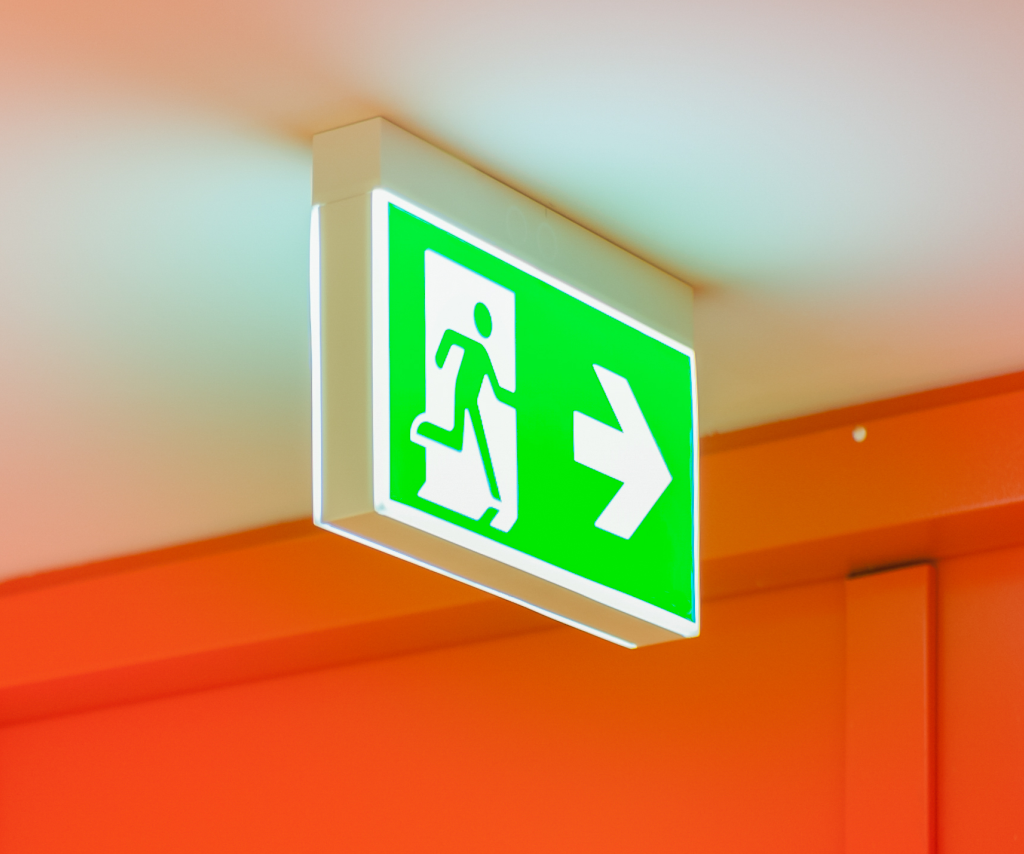
Allow for battery recharge after a duration test. Stored capacity is reduced by discharge. Agree a suitable test time and any interim precautions with the site’s fire safety lead before starting.
01
Confirm the test and system
Review the last report, fitting references, available design information and required duration. Agree the local contact and how to access the test facilities.
02
Agree a workable test window
Consider occupancy, night working and people who may need assistance. Establish whether phasing, out-of-hours attendance or additional precautions are needed.
03
Restore, record and hand back
Restore normal supplies and controls, check charging indications and explain failures or restrictions. Record the test outcome and arrangements for the recharge period.
Tell us about high-level warehouse fittings, secure rooms, shared landlord areas, public access or shift patterns. The plan needs to reflect who uses each area during testing and recharge.
Need to fit an annual test around occupancy? Discuss your testing window with WB.
Useful records and a clear route into action
Know what passed and what needs attention
A traceable test record
- Site, date, test type and person carrying out the work.
- Fitting references or clearly defined areas and duration tested.
- Results, faults, inaccessible and not-tested items.
- Restoration, recharge arrangements and follow-up actions.
Keep the record with your fire precautions logbook and existing system information.
Failures and follow-up
We identify the affected fittings and communicate significant losses promptly. Investigation, repairs or replacements are agreed before additional work proceeds, then the affected items are re-tested.
Where a failure affects safe occupation, the dutyholder needs suitable interim fire safety measures with competent advice. An open defect stays visible until resolved.
For repeat visits or several premises, agree the next annual date, consistent asset references and local contacts. Confirm who owns the monthly checks and the action list between contractor visits.
Relevant experience across occupied working spaces
Emergency-lighting experience on working sites
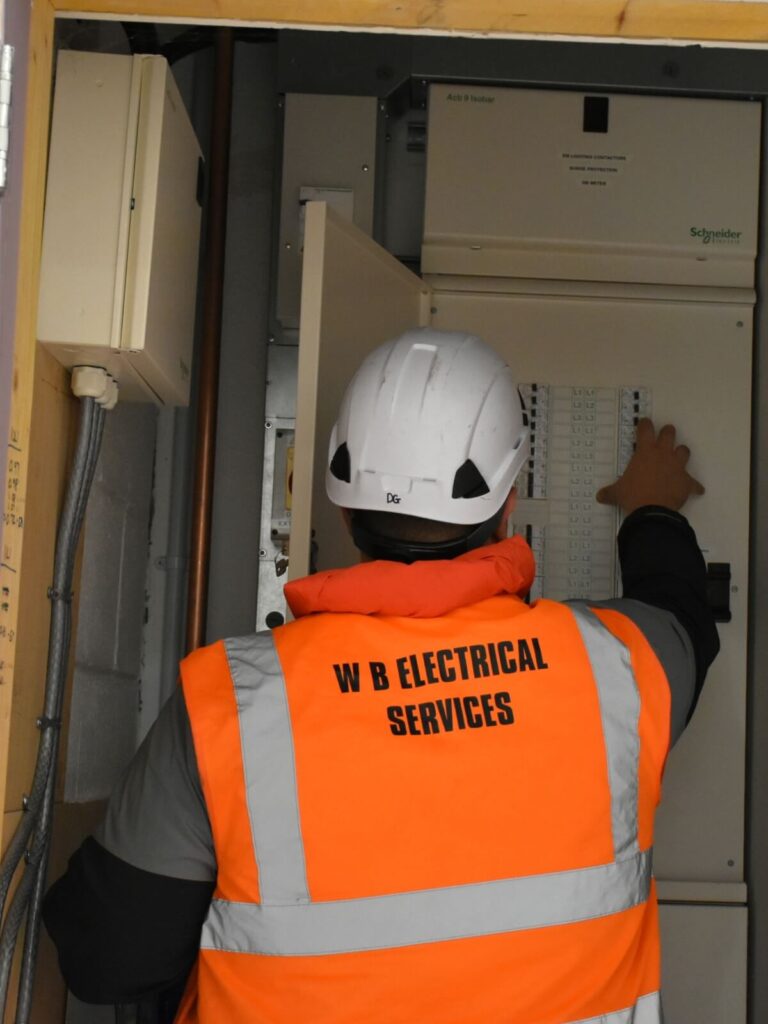
Scottish Opera
WB’s Scottish Opera case study records emergency and exit-lighting installations, emergency-lighting inspection and remedial activity across its Glasgow estate.
Coordination with the onsite maintenance team helps establish the room, access and operating constraints. That experience is relevant to testing programmes across rehearsal spaces, workshops, stores and offices where each area has different demands.
Supplier assurance
Review WB’s current electrical, contractor and management-system evidence. If your organisation requires a named certificate format or a specific third-party scheme, send that requirement before quotation.
Practical answers before arranging the visit
Emergency lighting testing questions
Can our staff carry out the monthly check?
Often, yes, where a competent nominated person understands the system, the test routine, restoration and records. WB can provide the annual visit and help define the programme, or quote for monthly attendance where you want it outsourced.
Does the annual test always take three hours?
Three hours is common, but the test must match the full rated duration required for the installed system. Confirm this from the system and premises information. The visit also needs time for access, checks, restoration and records.
Do self-test systems still need managing?
Yes. Automatic tests still produce results, warnings and exceptions that someone must review and act on. Maintenance, records and any additional checks follow the system requirements; self-test does not mean failed fittings can be ignored.
Will we receive an emergency lighting certificate?
We provide the agreed test report or record showing the scope and results. If a client, insurer or auditor requests a particular certificate, share its wording before booking. A test record does not certify the entire fire risk assessment or emergency-lighting design.
Do newer standards mean our fittings must be replaced?
A new edition alone does not determine the replacement scope. Consider the current fire risk assessment, system records, test findings and building changes with competent advice. Maintenance, a design review or an upgrade may be the appropriate next step.
Connected services for the next requirement
Related electrical services
New fittings or changed layouts?
Use the installation route for replacements, additional coverage or a wider emergency-lighting upgrade.
A wider maintenance programme?
Coordinate testing with planned electrical maintenance across the equipment and sites you manage.
Fixed wiring also due?
An EICR assesses the fixed installation. It is a separate inspection and does not replace emergency-lighting testing.
Share the premises, fittings and next due date
Request an emergency lighting quotation
Tell us which test you need, what records are available and when the building can accommodate it. We will review the information and confirm the next step.
Information that helps us quote
- Company and site address, or the list of premises.
- Monthly, annual, baseline survey or re-test requirement.
- Approximate fitting count, system type and duration if known.
- Last report, logbook, known failures and next due date.
- Operating hours, occupancy, access restrictions and site contact.
Send what you have; an exact asset list is not needed to start an enquiry. Mention existing reports and the office will confirm how to share them.
What affects emergency lighting testing cost?
Fitting numbers, system type, existing records, access, test duration, working hours and travel all affect price. Phased visits, high-level access and a multi-site reporting requirement can change the scope.
The quotation identifies the testing and maintenance included. Investigation, repairs and re-tests are agreed as appropriate to the findings.
Larger or multi-site requirements elsewhere in Scotland are considered by agreement. For general electrical work in your home, use the domestic quote route.