
For business premises and managed car parks
Commercial EV Charger Installation in Scotland
Bring your charging plans into use with the electrical infrastructure, installation and handover arranged together. WB Electrical designs and installs commercial EV chargepoints around your supply, parking layout and intended users.
From our Larkhall base, we support business sites across Glasgow, Lanarkshire and the Central Belt, with larger Scottish projects and multi-site programmes considered by agreement.
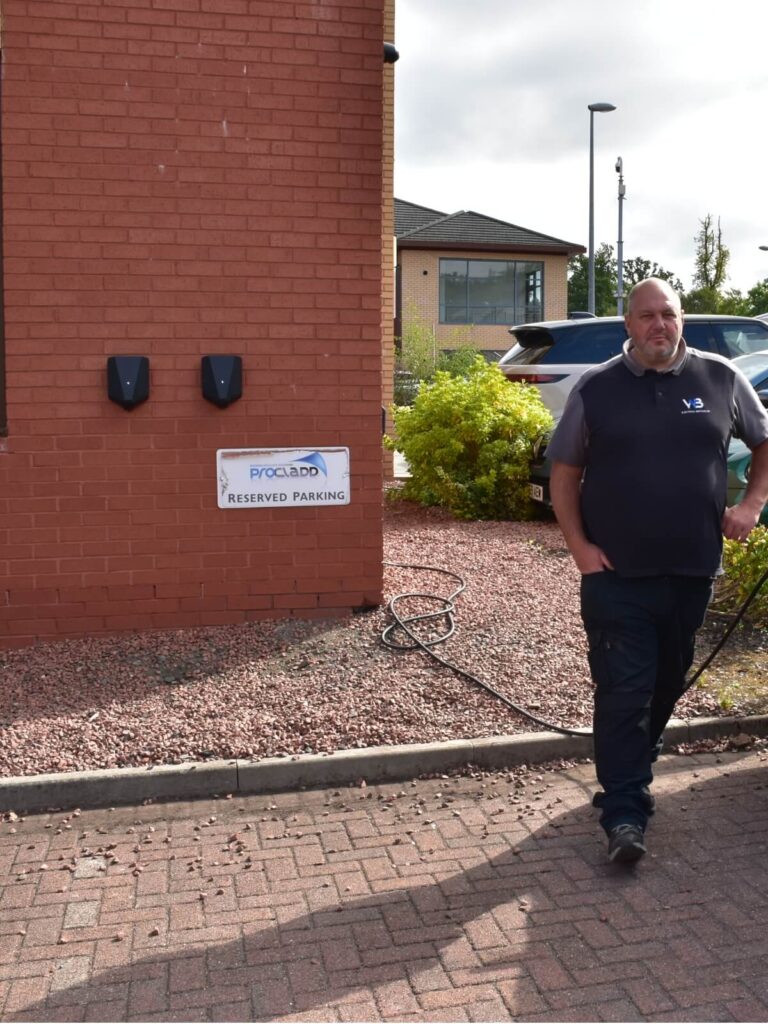
Planned for your site. Set up for your users.
A usable charging system starts with the right brief
Match the installation to how vehicles are used
Whether you need a first chargepoint or several charging bays, the starting point is who will use them, when vehicles are parked and how much energy they need before leaving.

Charging windows
Staff cars parked for a working day have different needs from vehicles making short stops. Choose the charging rate and number of sockets around vehicle capability and available charging time.

Available power
Review existing site demand, supply and distribution before selecting hardware. Load management can share available power, but cannot create additional supply capacity.

People and parking
Agree bay locations, pedestrian access, cable management and who can use each charger. Consider current users and a realistic next phase together.
For a brief shaped around staff access or vehicle shifts, explore workplace charging or fleet and logistics charging.
A defined package from the supply to the chargepoint
What your EV installation can include
We set out the equipment, electrical work and site interfaces in the proposal, so you can compare the complete installation scope.
Electrical infrastructure
Dedicated circuits, distribution changes, cabling, containment, earthing, protection and isolation appropriate to the design. Existing equipment is assessed before it is reused.
Chargepoints and controls
Suitable mounting, charger installation and configuration, with agreed access controls, communications and load management. Equipment and platform compatibility are checked.

Groundworks and site layout
Coordinate trenching, ducts, bases, impact protection and reinstatement with the groundwork contractor where needed. Agree responsibilities for bays, signage and access before work starts.
Identify network, landlord, planning or building-standards requirements early. For public access, also agree the chargepoint operator and their payment, driver-support and operating responsibilities.
Already have equipment or a consultant’s design? Share the specification so we can confirm compatibility, design responsibility, commissioning and warranty arrangements.
Coordinate the parking area and the premises
Plan installation around a working site
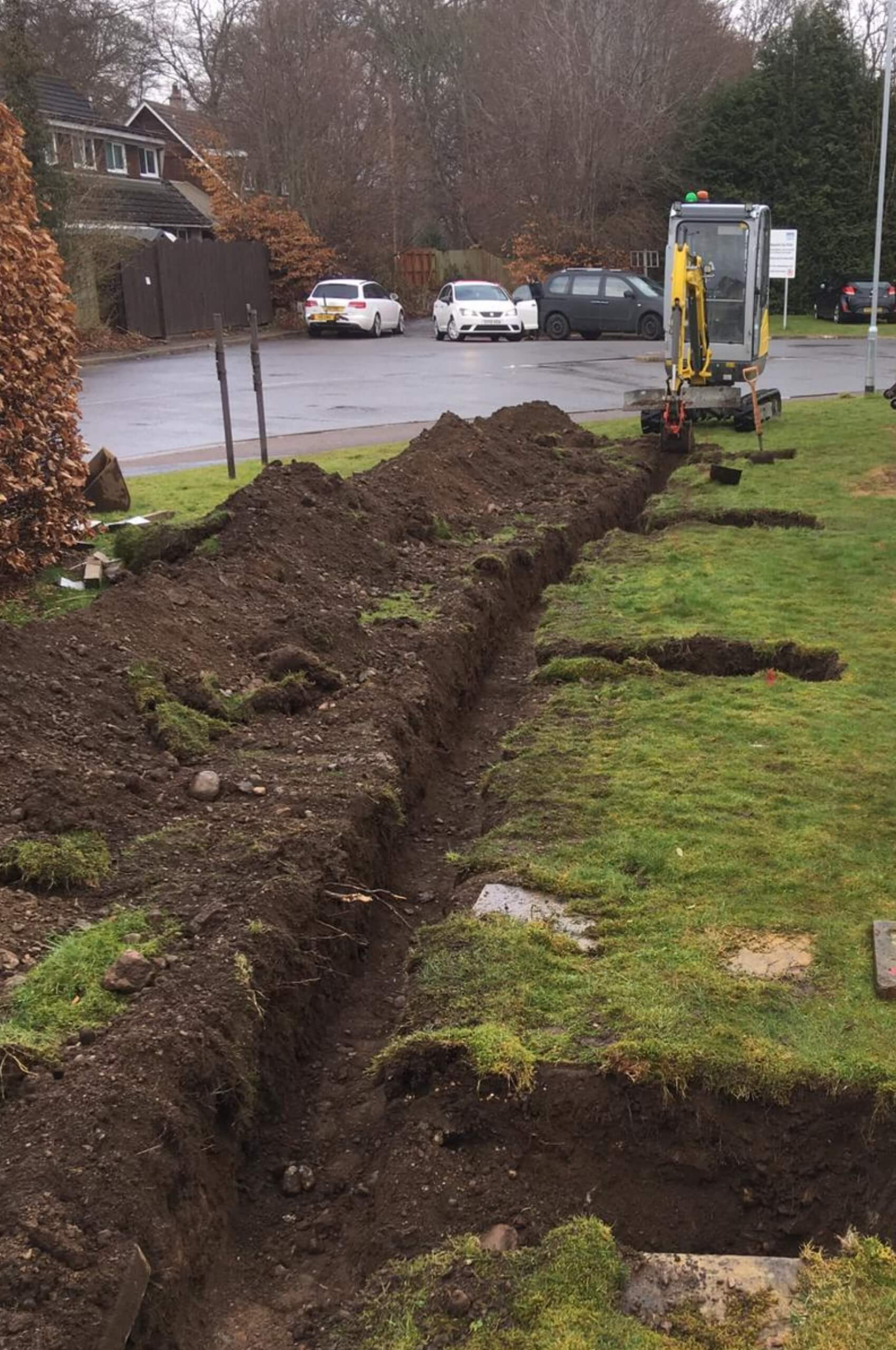
Some connections require the power to be switched off. Agree the affected circuits and a suitable work window, including any shutdown and restart needs for IT, refrigeration or production equipment.
01
Review the site and permissions
Confirm the supply, proposed bays, cable routes and communications. Establish the relevant distribution network operator (DNO) application or notification route and who will handle it.
02
Agree the design and programme
Set the included work, future provision and responsibilities. Plan parking restrictions, deliveries, excavation and electrical connections with your site contact. Phased or out-of-hours work is considered by agreement.
03
Install, test and commission
Complete the agreed electrical work, inspect and test it, and check the selected charging, access and control functions. Confirm the system’s status and any outstanding items before handover.
Have a layout or charger specification already? Discuss your installation plans with WB.
Make the system straightforward to manage
A handover your team can use

Installation and commissioning records
- Applicable electrical certification and test results.
- Charger locations, circuit references and configured power limits.
- Agreed commissioning checks and network correspondence.
- Operating guidance, warranty information and outstanding actions.

Access, ownership and support
Agree who holds the administrator account, controls users and receives fault reports. Identify any software, data or payment-service subscriptions, along with the manufacturer and maintenance support routes.
Confirm the selected system’s behaviour if communications are lost. Day-to-day operation and third-party platform services should have clear owners after installation.
Relevant work at an existing Scottish business
Workplace charging delivered for Procladd
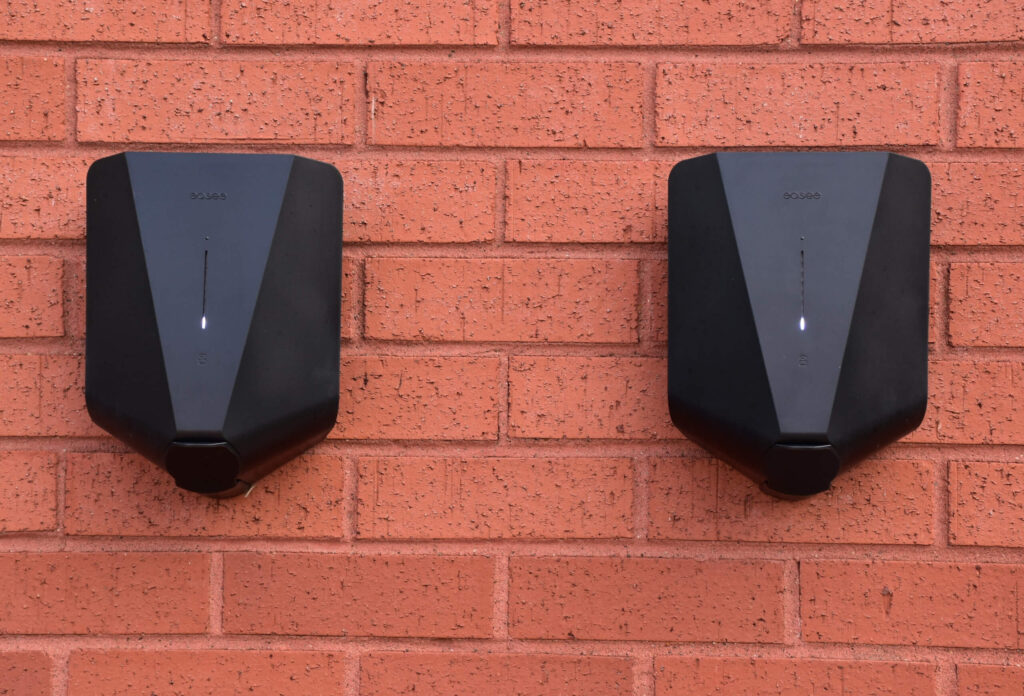
Ten chargepoints in Hamilton
In 2025, WB Electrical installed ten Easee chargepoints at Procladd’s Hamilton premises. The project included associated electrical work, testing, charger setup, Easee Keys for authorised users and handover.
The installation built on an electrical support relationship dating from 2018. It brought charging infrastructure and user access together at an occupied workplace, alongside ongoing maintenance and small works.
Supplier assurance
Review WB’s SELECT, OZEV and wider contractor evidence for your procurement requirements. Grant-funded work still depends on the applicant, site, equipment and current scheme conditions.
Practical answers before committing to equipment
Commercial EV installation questions
Do we need 7 kW, 11 kW or 22 kW chargers?
Choose around the vehicles, time parked, energy required and available supply. A 22 kW AC chargepoint will not make a vehicle charge at 22 kW if its onboard charger accepts less. Short charging windows or higher energy needs may justify a different solution.
Can load management avoid a supply upgrade?
Sometimes it can make a planned installation workable within an agreed supply limit, but this depends on site demand and charging needs. If the vehicles still cannot receive enough energy in their available time, a revised plan or supply upgrade may be needed. Explore smart charging and load management.
Can we install chargers at leased premises?
Landlord or landowner consent, parking rights and cable routes need to be clear. We identify the relevant network process and any planning or building-standards checks for the proposal. Do not assume that fitting chargers removes the need for permissions or approvals.
Can we recover charging costs from users?
Compatible systems can support controlled access and billing, subject to the selected platform, contracts and charges. Public or customer use brings additional operating considerations, so agree the intended use before choosing equipment. See public and customer charging for that route.
Is grant funding available for commercial installation?
A qualifying project may receive support, but eligibility and timing must be checked before work proceeds. Do not assume every business car park, charger or mandatory installation qualifies. We can help identify the relevant route; see EV grant and funding guidance.
Related support for the stage you are at
Take the next step with your EV infrastructure

Need to establish feasibility?
Understand the supply, capacity, layout and practical options before committing to equipment.
Expanding an existing system?
Review additional bays, distribution changes and what existing infrastructure can usefully support.
Need ongoing support?
Plan checks, fault investigation and repair support around the equipment and available manufacturer or platform services.
Turn the requirement into a defined proposal
Request a commercial EV installation quote
Tell us what you want the chargers to do and where they will be installed. We can establish whether the next step is a site review or a quotation against an existing brief.
Information that helps us quote
- Company, site address and your relationship to the premises.
- Intended users, vehicle types and typical charging windows.
- Number of chargers now and any planned later phase.
- Parking layout, known supply information and existing drawings.
- Target dates, access restrictions and any equipment already selected.
You do not need a complete technical specification to enquire. Mention available plans or photographs and the office will confirm how to share them.
What affects installation cost?
Charger quantity and rating, cable distances, distribution work, groundworks, communications and working hours all affect the price. Network work or changes to an existing system may add cost and programme time.
Compare equipment, electrical installation, civils, commissioning and ongoing service fees separately. A site-specific quotation makes the included work and assumptions clear.
Looking for a charger at home? Use the domestic enquiry route.