
For businesses planning new or expanded EV charging
Commercial EV Site Surveys & Capacity Reviews in Scotland
Find out what your premises can support before committing to chargers. WB Electrical reviews the charging requirement, existing electrical infrastructure and practical site constraints, then helps you identify options and the next steps.
From our Larkhall base, we assess sites across Lanarkshire, Glasgow, Edinburgh and the Central Belt. Larger or multi-site projects elsewhere in Scotland are considered by agreement.
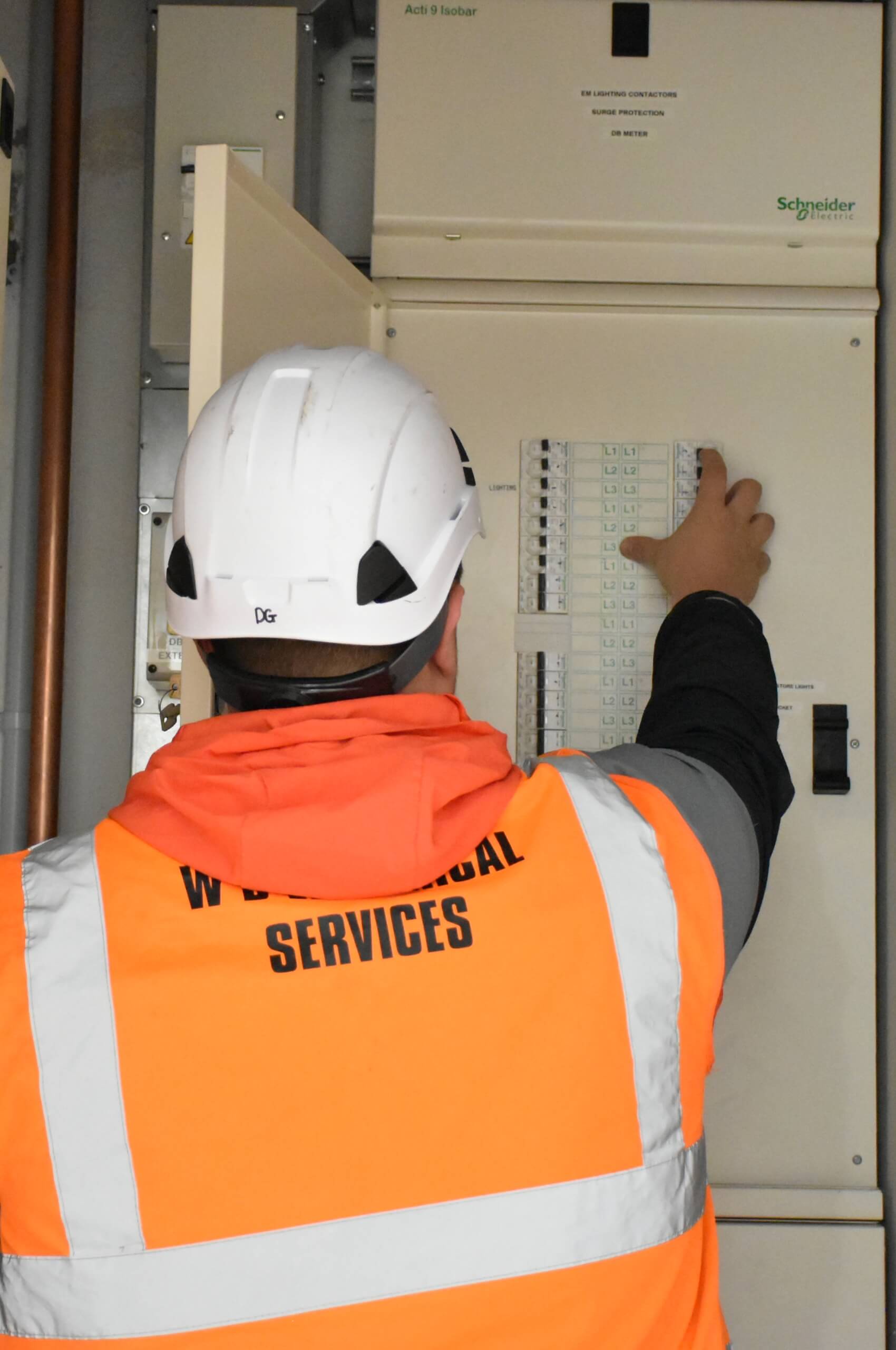
Understand the site. Plan the next step.
An informed starting point for the investment
Know what is practical before you commit

Your first chargepoints
Agree sensible charging locations, electrical requirements and practical installation routes before ordering equipment or committing to a bay layout.

More vehicles or new users
Review what a second phase could involve, from additional workplace chargers to different fleet return times, shared access or new vehicle types.

Uncertain supply capacity
Identify what existing records and site demand can tell you, and where monitoring or further assessment may be needed before making a firm commitment.
The aim is to establish a workable direction, not to sell you the largest charger or a supply upgrade before the site has been assessed.
Agree the questions and depth of review
What an EV site survey can cover
Supply, distribution and demand
- Review existing supply information, distribution boards and relevant electrical records.
- Consider business operating peaks, phase loading, planned equipment and additional electrical demand.
- Identify information gaps and whether representative load monitoring or network input is needed.
Parking, routes and charging operation
Consider bay locations, cable distances, containment, groundworks and reinstatement alongside access, vehicle movement and practical maintenance. Review users, charging windows, communications and any landlord or operator interfaces.
A spare way in a distribution board does not necessarily mean spare electrical capacity. We consider the supply, existing demand and proposed charging load together.
We agree whether this is an initial survey, a more detailed capacity review or a staged feasibility exercise. Extra investigation, design or network applications are identified separately.
Fit the review to the working premises
Plan the survey around your site
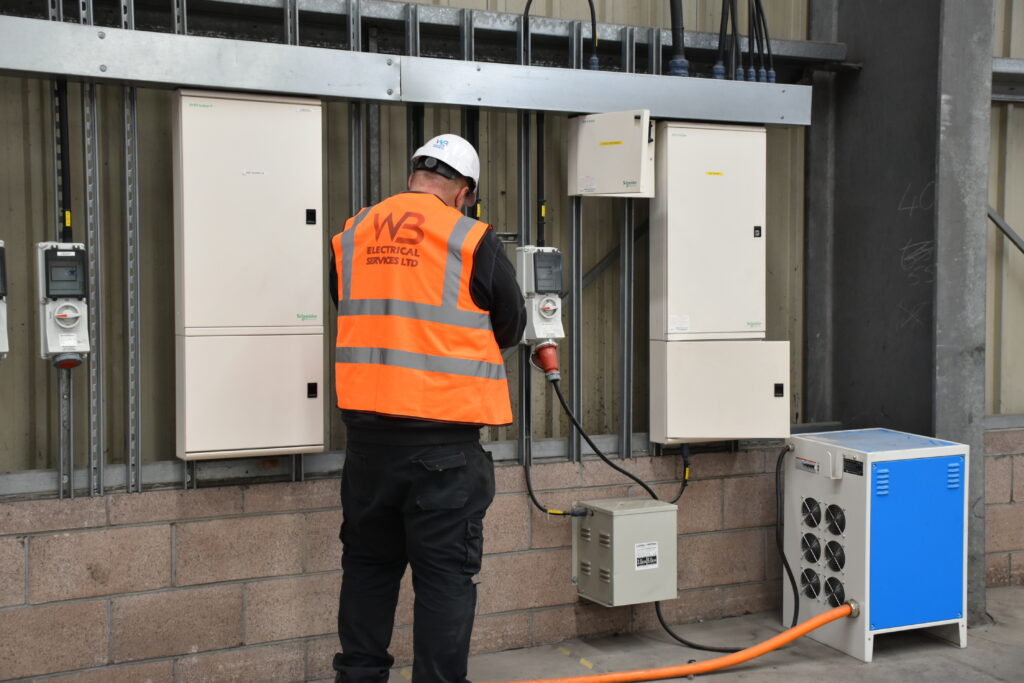
A short visit during a quiet period may not show the highest electrical demand. Tell us about busy shifts, seasonal plant and planned equipment so that the review reflects how your business operates.
01
Define what charging must achieve
Share who needs to charge, vehicle types, expected bay numbers and how long vehicles remain parked. We agree the decision the review needs to support and which records are available.
02
Review the premises and routes
Arrange access to relevant electrical areas and parking with your site contact. Assess visible equipment, suitable locations and cable routes; agree any access, isolation or specialist requirements beforehand.
03
Explain the options and information gaps
Summarise feasible directions and the next steps for design, load monitoring, network discussions, costing or a phased rollout, distinguishing what is established from what still needs confirmation.
Do not yet have drawings or electrical records? Tell us about your site and we can agree a sensible starting point.
A useful basis for the next decision
Clear findings and practical next steps

A record of the review
Agree the format and detail in advance. Findings may cover the proposed charging requirement, existing supply information, site layout, possible cable routes, constraints, assumptions and further information needed.
A feasibility survey is not a detailed electrical design, a confirmed connection offer or a reservation of network capacity. Any additional work will be clearly identified.

Options you can take forward
The review might identify an installation using existing capacity, managed charging, a phased scheme, distribution improvements or a network application. We explain the technical and practical trade-offs relevant to your site.
Considering grants? See our EV charging funding guide. Scheme eligibility and the point at which work can begin should be checked before an application or order.
Relevant experience at working business premises
Practical EV experience behind the review
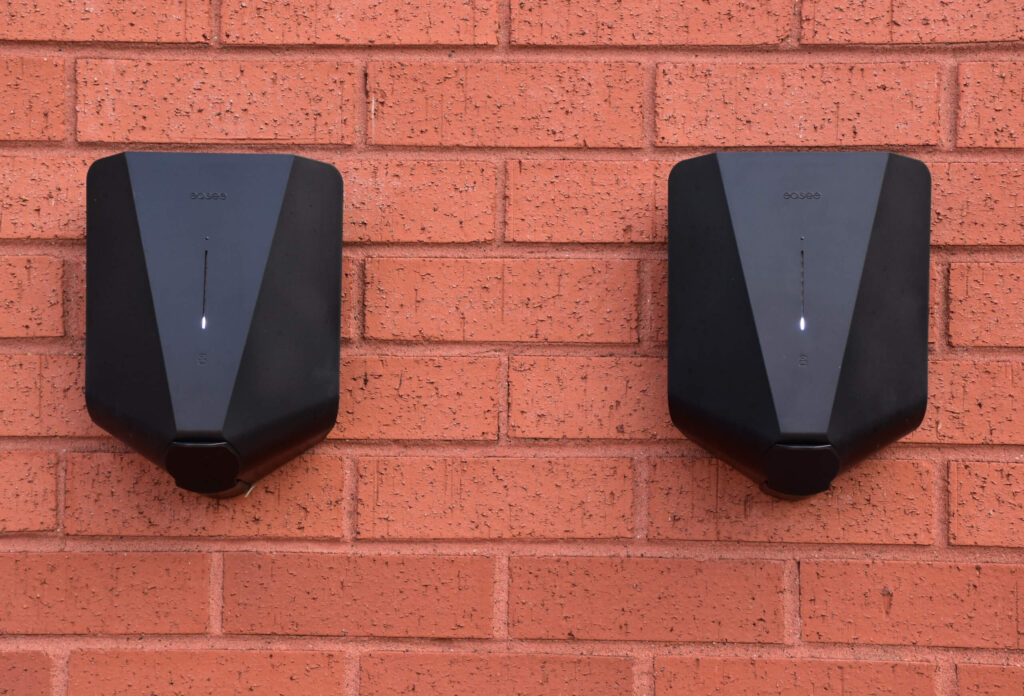
From site questions to workplace charging
In 2025, WB Electrical installed ten Easee chargepoints for Procladd in Hamilton. The published project records how the charging requirement, distribution, routes and access were considered alongside installation, testing and controlled user setup.
It is a practical example of linking early site decisions to electrical work and a charging arrangement that serves an occupied business premises.
Supplier assurance
WB Electrical is an established commercial electrical contractor with published SELECT membership and wider accreditations. Ask the office for the evidence relevant to your project or procurement requirements.
Useful answers before booking a visit
EV site survey questions
Can you tell us how many chargers our site can support?
We review the site evidence against the number of vehicles, charging windows and existing demand. Where records are incomplete, further monitoring or network confirmation may be needed before a final charger quantity or design can be agreed.
Can you start with drawings or photographs?
Yes. Plans, electricity bills and safely accessible photographs can help us understand the site and propose a next step. They cannot verify concealed cable routes or actual electrical loading on their own. Please do not open electrical enclosures to gather photographs.
Is an EV site survey the same as an EICR?
No. A charging feasibility review considers the proposed charging use, supply and infrastructure. An EICR assesses the condition of an electrical installation within its agreed inspection and testing scope. Any additional condition inspection is discussed separately.
Will load monitoring or a DNO application be included?
Only if it forms part of the agreed scope. We first identify what information is missing and whether monitoring, design or distribution network operator (DNO) involvement is needed, then agree the responsibility and any associated cost.
Is the first survey free?
An initial conversation helps us understand the requirement. An introductory site visit may form part of a quotation process where appropriate. Detailed feasibility work, monitoring, design, extra visits and network applications are separately scoped and priced before proceeding.
How long will the review take?
The timescale depends on the site size, available records, access and the decision required. Monitoring periods and third-party responses may add time. Tell us your project deadline so that the appropriate stages can be planned.
Choose the next appropriate step
Related commercial EV services

Ready for installation?
Take the agreed charging requirement into electrical installation, commissioning and handover.
Need infrastructure improvements?
Plan distribution, longer cable routes and phased expansion when the existing site needs more work.

Need to share available power?
Explore dynamic or scheduled charging when several vehicles depend on the same supply.
Explore the Commercial EV Charging hub for the full service offering.
Start with the information you have
Discuss an EV site survey
Useful information for your enquiry
- Organisation, site address and the person responsible for the project.
- Who will charge, approximate vehicle numbers and usual parking times.
- Charger numbers being considered now and possible future phases.
- Existing chargers, busy periods, access constraints and target dates.
- Site drawings, electricity demand data or electrical records, if available.
You can enquire before choosing charger hardware. Mention any documents you have and the office will confirm what is useful to share.
What affects the survey cost?
The site area, number of supplies or boards, record quality, access and required level of reporting influence the work involved. Monitoring, specialist design, additional visits or connection applications may need a separate allowance.
We agree the scope, fee and intended output before chargeable work begins. The eventual installation quotation and third-party charges are treated separately.
Looking for charging at your own home? Use our home EV charging service.