
For workplaces, fleets and shared commercial sites
Smart EV Charging & Load Management in Scotland
Make more of your available electrical capacity. WB Electrical plans and installs charging controls around your building demand, vehicle priorities and future bays, with the supporting electrical work, commissioning and handover agreed together.
From Larkhall, we support commercial sites across Lanarkshire, Glasgow and the Central Belt. Larger projects elsewhere in Scotland are considered by agreement.
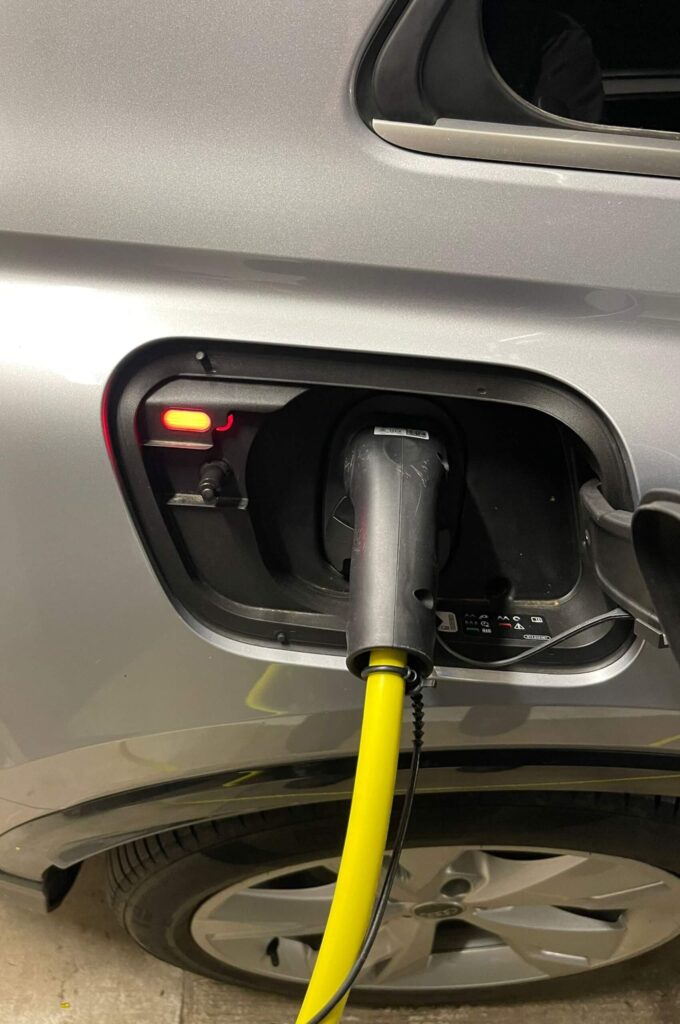
Plan charging around the building and the vehicles.
More vehicles, limited power or changing demand
Keep charging aligned with your operations
EV load management controls how available power is allocated to chargepoints. It is useful when charging must share a supply with the rest of the premises.

More charging bays
Share an agreed charging allowance as staff, tenants or visitors need more sockets. Review the time vehicles remain parked before deciding how many bays the supply can support.

Variable building demand
Factories, warehouses and business parks may have large changing loads. Dynamic controls can reduce charging as site demand rises and release more power when it falls.

Fleet charging priorities
Plan around departures, shifts and the energy vehicles need. Supported controls can prioritise agreed vehicles or charging windows, with the effect on other users made clear.
See workplace charging and fleet and logistics charging for the wider operating requirements.
Choose the control that addresses the constraint
Power sharing, site monitoring and schedules
Load management is often called load balancing. The right arrangement depends on your supply, existing chargers and site use. Sharing power between chargers does not automatically monitor the whole building.
| Control | What it does |
|---|---|
| Static power sharing | Divides a fixed charging allowance between connected vehicles. The allowance must suit the electrical design; it does not automatically increase when building demand falls. |
| Dynamic load management | Uses suitable site metering for dynamic load balancing as other demand changes, within the agreed supply, distribution and phase limits. |
| Scheduling and priorities | Controls when charging runs and which sessions receive priority, where supported. Cheaper charging depends on your tariff and usable charging windows. |
Our agreed scope can include metering and controllers, compatible charger configuration, communications cabling, distribution, protection and isolation. We confirm product support and responsibilities with your charger operator, IT team or energy-system provider where needed.
Access control, usage reporting and billing are separate features to specify. If physical expansion is needed, see EV infrastructure upgrades.
Assess, agree and commission
Build the controls around the working site

Power sharing can mean slower charging or temporary pauses. We assess the energy vehicles need within their parking time, alongside the electrical limits. Load management cannot make an undersized supply meet every charging requirement.
01
Review capacity and use
Assess supply information, distribution, existing loads, charger details and charging windows. A site survey and capacity review can establish the starting point where records are incomplete.
02
Agree limits and priorities
Define monitoring points, charging limits, vehicle priorities, connectivity and behaviour if a meter or communications signal is lost. Check supported equipment and software before committing to a retrofit.
03
Install and verify the response
Plan access and any isolation around operations. Install the agreed electrical and control work, then carry out appropriate testing and functional checks against the agreed limits and manufacturer instructions.
Need vehicles ready for a particular shift? Tell us your charging windows and priorities.
Useful records and clear responsibilities
Understand the settings and ongoing support

Commissioning and records
- Electrical certification appropriate to the installation work.
- Agreed limits, metering arrangement and charging priorities.
- Functional-check results and documented fallback behaviour.
- Circuit identification, operating instructions and limitations.
Agree the document set before work starts, including what has been checked and any outstanding action.

Ownership and future changes
Confirm who administers the system, manages subscriptions and responds to charging or communications faults. Agree user access and reporting requirements without assuming every platform provides the same features.
Additional chargers, new plant or changed shifts can affect the original settings. Review the arrangement before expansion, and agree suitable maintenance and support.
Commercial charging backed by electrical experience
Relevant workplace EV charging experience
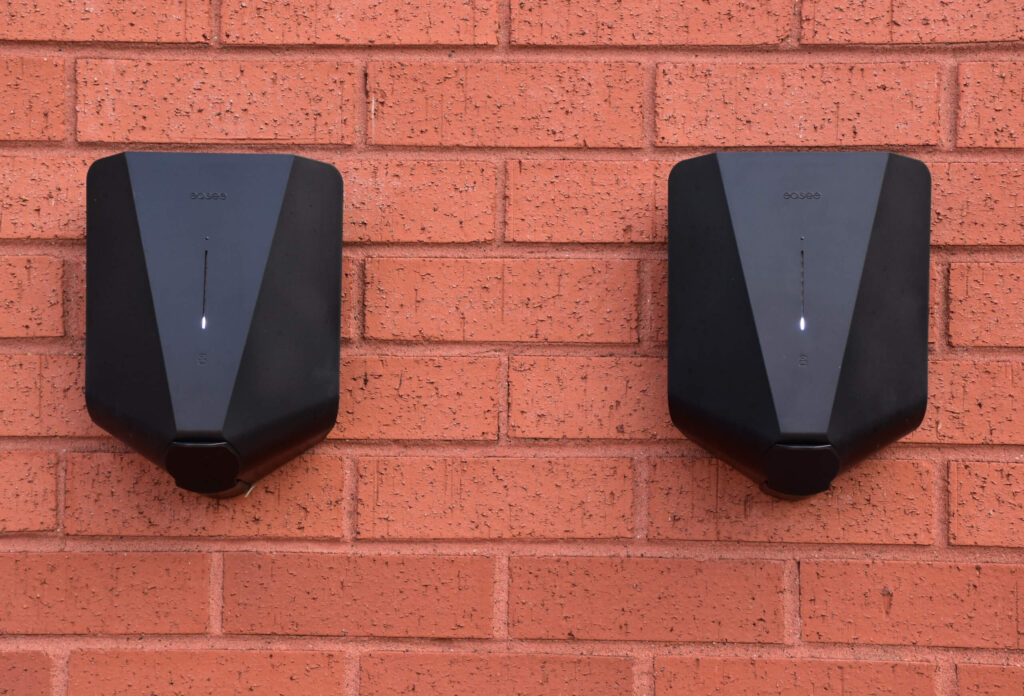
Ten chargepoints at Procladd
WB installed ten Easee chargepoints at Procladd’s Hamilton premises in 2025. The work brought together circuits, protection, containment, isolation, testing, controlled user access and handover.
The project shows our experience coordinating multiple chargers at an occupied workplace. The load-management arrangement for your site would be assessed against its own supply, equipment and operating needs.
Supplier assurance
Our published credentials include SELECT membership. Tell us which supplier documents and technical responsibilities your project requires so these can be confirmed for the work.
Practical answers before choosing a system
Smart charging and load management questions
Can load management avoid a DNO supply upgrade?
Sometimes it can reduce or defer the need for a larger supply. The available power must still deliver enough energy within the charging windows. We check the applicable distribution network operator (DNO) process; load management does not remove the need for notification or approval where required.
Can it be added to chargers we already have?
Potentially. We check the makes, models, firmware, metering and current operator arrangement before agreeing the work. Configuration access and product support matter. Open Charge Point Protocol (OCPP) compatibility alone does not confirm that the required load-control functions will work together.
Will charging be slower, and can fleet vehicles take priority?
Charging rates can fall or sessions may pause when available power is limited. Supported systems can give priority to agreed vehicles or time windows. Actual charging also depends on the vehicle and its battery; a departure target needs enough energy and time to be feasible.
Does load management work without the internet?
Some local systems can continue balancing without an internet connection if their local communications remain available. Cloud functions may use a restricted fallback when disconnected. We confirm the selected system’s behaviour for internet, local-network and metering faults; remote reporting, payments and access functions may behave differently.
Can charging work with solar panels or battery storage?
Compatible controls may coordinate charging with generation or storage. This needs the correct metering, supported interfaces and agreement with the existing system provider. We confirm the electrical and control scope for the project; solar or battery ownership alone does not establish compatibility or a saving.
Do smart chargepoint regulations apply in Scotland?
The Great Britain smart chargepoint rules cover relevant chargepoints sold for private domestic or workplace use, with exclusions including public and rapid chargepoints. These are device requirements; they do not replace the site’s electrical design. Public access has a separate regulatory framework, so public and customer charging needs its own operating review.
Choose the next step for the installation
Related EV charging services

Check site capacity
Establish supply, existing demand and charging requirements before deciding on controls.
Expand the infrastructure
Plan additional bays, distribution changes, cable routes or replacement equipment.
Arrange a new system
Bring chargers, supporting electrical work and commissioning together in a complete installation.
Explore Commercial EV Charging for the full service group and buyer routes.
Start with your site and charging requirement
Discuss smart charging for your site
Tell us what is installed, what is changing and when vehicles need to charge. We will review your enquiry and agree the information or site assessment needed for the next step.
Useful information for your enquiry
- Organisation and site location.
- Existing charger makes, quantities and operator, if known.
- Bays needed now and later; vehicle use and parking times.
- Available electrical records and demand information.
- Known charging problems, site changes and target dates.
Incomplete information is fine. Mention any records you hold; the office will confirm how to share them.

What affects the cost?
Metering, controllers, charger compatibility, cable routes, distribution changes, configuration access and working hours affect the quotation. Confirm any separate software, connectivity, operator or network costs.
We agree the supported functions, electrical work, commissioning and handover scope before proceeding.
For charging at your own home, use the separate domestic enquiry route.