
For construction, refurbishment and temporary operational areas
Commercial Temporary Lighting Installations in Scotland
Keep routes, work areas and temporary buildings properly lit while a project changes around them. WB Electrical plans, installs, adapts and removes temporary lighting for construction, fit-out, refurbishment and planned works, coordinated with temporary power where required.
From our Larkhall base, we support temporary lighting projects across Glasgow, Lanarkshire and the Central Belt. Suitable larger or longer programmes elsewhere in Scotland are considered by agreement.
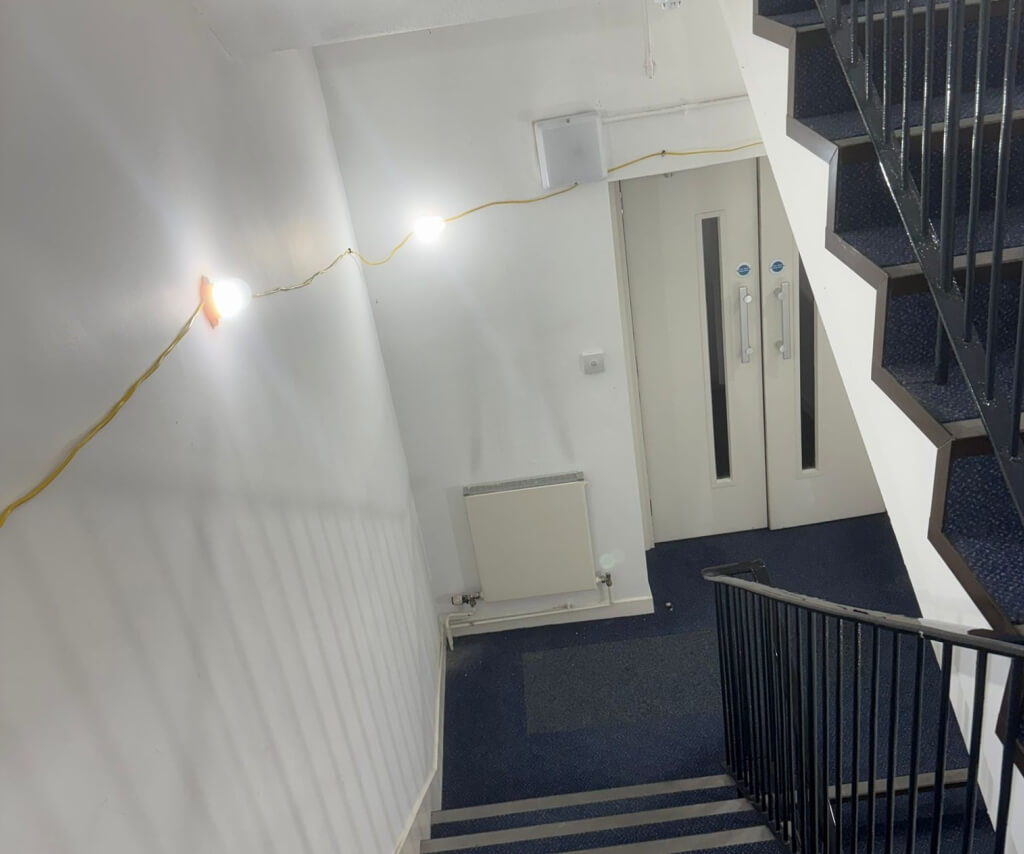
Plan the routes. Light the work. Adapt as phases change.
Changing projects, temporary areas or permanent lighting unavailable
When Temporary Lighting Is the Right Route
Temporary lighting is useful when permanent lighting is unavailable, isolated, incomplete or no longer positioned for the work taking place. The scope should follow the actual routes, tasks, temporary buildings and programme rather than simply adding portable lamps wherever a dark area appears.

Permanent lighting is unavailable or isolated
Fit-outs, refurbishments, shutdowns and early construction phases may need safe general, access or task lighting before the permanent installation is ready or while existing circuits are isolated for work.

Routes and work areas change as the programme moves
Stair cores, corridors, plant areas, compounds and active work zones can open, close or move during a project. Temporary lighting can be extended, relocated or reduced through controlled changes as the site develops.

Temporary buildings and short-term occupied areas need lighting
Site offices, welfare cabins, temporary classrooms, stores and modular spaces may need internal and external lighting for a defined period, together with clearly agreed supply and removal arrangements.
If the requirement also includes temporary boards, transformers, outlets, load planning or wider distribution, use Temporary Power Solutions. Permanent emergency-lighting installations and routine emergency-lighting testing remain separate service routes.
Access, task and temporary-area lighting
What Commercial Temporary Lighting Can Include
The final package depends on the available supply, site layout, task, duration, environment and programme. A lighting-only requirement can be planned around a suitable existing supply, or coordinated with a wider temporary-power installation when distribution is part of the need.
Access, route and general site lighting
Provide practical illumination for corridors, stairways, walkways, work zones, entrances, compounds and other areas that need to remain usable while permanent arrangements are incomplete or changing.

Task lighting for active work areas
Position temporary fittings around fit-out areas, plant rooms, service spaces, installation work and other tasks where local light, shadow control and clear visibility matter to the work being carried out.
Temporary buildings, external areas and programme changes
Light site offices, welfare cabins, temporary classrooms and modular spaces, together with agreed external approaches. The installation can include planned moves, extensions, checks, repairs and later removal where these are part of the quotation.
Temporary lighting is not automatically a substitute for a permanent lighting design, a permanent emergency-lighting system or the client and principal contractor’s wider site risk controls. Generator hire, battery systems, structural supports, specialist fire strategy and hazardous-area requirements may also sit outside the lighting package unless expressly agreed.
Supply, cable routes, access and the changing programme
Plan Temporary Lighting Around the Working Site
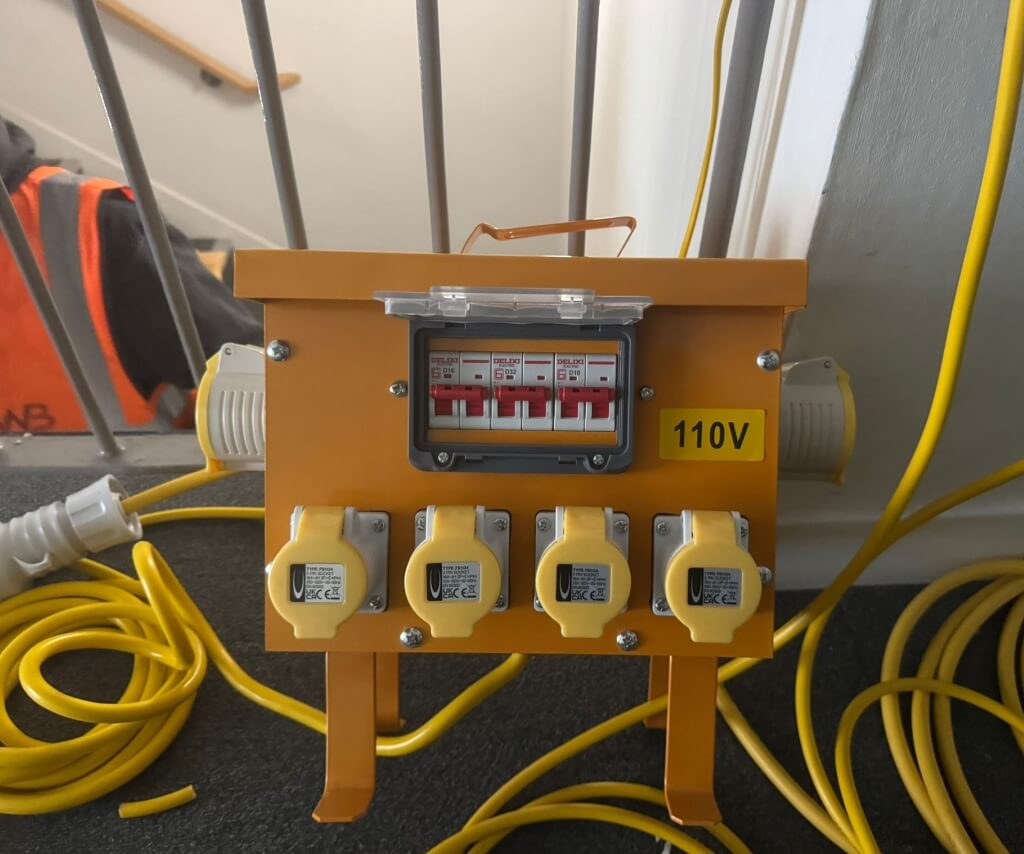
Temporary systems are exposed to changing layouts, trades, materials, traffic and access restrictions. The lighting plan should therefore consider where power comes from, where cables can run, what must stay lit, how fittings will be supported and who can authorise later moves or alterations.
01
Define the areas, tasks and period of use
Confirm project dates, working hours, access routes, task areas, temporary buildings, external spaces, permanent-lighting availability and any locations where loss of the primary lighting could create an additional safety concern.
02
Review supply, routes and site conditions
Check the available electrical source, proposed lighting voltage and fittings, cable routes, distribution points, exposure, vehicle and pedestrian movement, supports, access equipment, permits and interfaces with other temporary works.
03
Install, verify, hand over and control changes
Install and check the agreed system, identify isolation and supply arrangements, explain permitted use and reporting, then manage any agreed relocations, repairs, inspections and final removal as the programme progresses.
HSE construction guidance says artificial lighting should be provided where natural light is inadequate, shadows that obscure hazards may need additional lighting, and suitable emergency lighting is needed where failure of primary artificial lighting would create a health or safety risk. The project risk assessment and site arrangements still determine the actual temporary-lighting requirement.
Need lighting only, or lighting plus temporary distribution? Discuss your temporary lighting requirement with WB.
Keep lighting scope, power distribution and permanent works clearly separated
Separate the Lighting Need From the Temporary Power Package

A useful temporary-lighting scope should make the boundaries clear
- Areas, access routes, task zones, temporary buildings, external spaces, working hours and programme stages included.
- Fitting types, voltage, supply points, circuits, cable routes, supports, protection, switching and isolation included within the agreed lighting package.
- Access equipment, traffic or work-zone controls, environmental exposure, planned moves, emergency provision, permits and specialist interfaces.
- Initial verification, user information, inspection or change responsibilities, defect reporting, records and final removal where included.
HSE guidance for construction sites treats electrical safety as a connected planning, installation, commissioning, maintenance and operating responsibility. Temporary lighting should therefore be managed as part of the site electrical arrangement, with unauthorised alterations avoided and responsibilities for checks and changes made clear at handover.
Lighting-only, combined temporary power or permanent solution
- Use a lighting-only route where a suitable verified supply and distribution arrangement already exists and the main need is access, task, route or temporary-building lighting.
- Use a combined temporary-power package where the project also needs temporary boards, transformers, protected outlets, wider cable distribution, load planning or a separately defined source.
- Use a longer-programme support plan where the temporary system will remain in service for months and may need agreed checks, repairs, relocations or extensions as the site changes.
- Move to permanent Lighting Upgrades when the final layout, permanent circuits and finished-space requirements are ready to replace the temporary arrangement.
The first review should identify which parts belong to temporary lighting, which belong to temporary power, and which responsibilities remain with the client, principal contractor, equipment provider or other project specialists.
If wider distribution is required: route the source, load, transformers, boards, outlets and distribution design through Temporary Power Solutions, with the lighting package coordinated rather than duplicated.
Direct service evidence from WB’s published temporary-lighting installations
Temporary Lighting Installed During Refurbishment Work
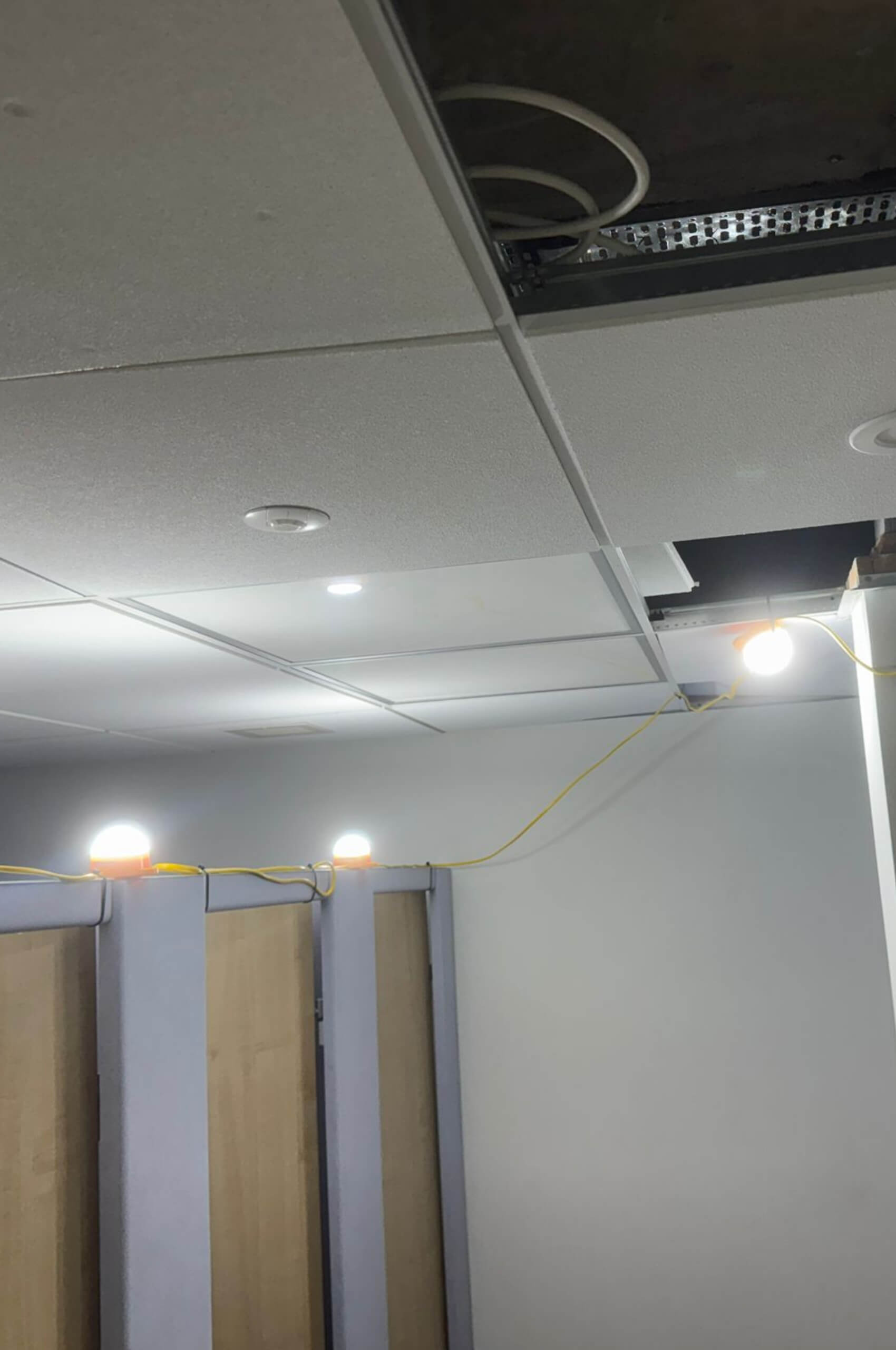
Published WB installation imagery
WB Electrical’s current Temporary Lighting page publishes photographs showing temporary lighting installed along an internal stairwell and within a fit-out area while ceiling works were in progress. The images demonstrate practical access and task lighting during changing works, rather than a generic stock illustration.
This is direct evidence of the temporary-lighting service, but the published material does not identify the client or establish that every future project uses the same voltage, supply method, fittings, duration, inspection plan or emergency-lighting arrangement.
Supplier assurance
Review WB’s current electrical contractor memberships, management-system certificates and accreditation evidence as part of your supplier assessment. For temporary systems, also make sure responsibilities for the electrical source, hired equipment, site distribution, inspections, authorised changes and removal are clearly assigned for the actual project.
Practical answers before the temporary setup is agreed
Commercial Temporary Lighting Questions
What can a commercial temporary lighting package include?
It can include access and route lighting, task lighting, lighting for temporary buildings or external areas, agreed switching and isolation, installation checks, labels or handover information, planned relocations, repairs and later removal. The quotation should state the supply boundary and whether wider temporary distribution is included.
Can temporary lighting be moved as the project changes?
Yes, where changes are planned and controlled. Work areas, routes and temporary buildings often move during a project, so the arrangement can be extended, relocated or reduced by competent authorised people after the supply, cable routes, supports and new risks have been checked.
Do you also provide temporary power and site distribution?
Yes. Where lighting is only one part of the temporary electrical requirement, WB can coordinate it with Temporary Power Solutions covering the agreed source, boards, transformers, outlets and distribution. The two pages remain separate so the electrical supply package is not hidden inside a lighting quotation.
Can temporary lighting be installed in a live or occupied building?
Yes, where the work, access and electrical arrangements make it practical. Refurbishments in occupied premises may need phased installation, protected cable routes, safe isolation, communication with the site team and lighting maintained around occupants and contractors.
Does temporary lighting automatically include emergency lighting?
No. The project risk assessment, fire arrangements and site layout determine whether temporary emergency provision is needed if the primary lighting fails or along escape routes. Where it is required, the temporary provision and responsibilities should be defined explicitly. Permanent emergency-lighting installation and routine testing remain separate services.
Connected routes for temporary power, permanent lighting and project support
Related Temporary Lighting and Electrical Services
Temporary power and site distribution
Use the temporary-power route when the requirement includes source assessment, boards, transformers, outlets, distribution, load planning or wider electrical supplies as well as lighting.
Permanent lighting and controls
When the temporary phase ends, route finished-space lighting renewal and more advanced control requirements into the permanent LED components rather than extending the temporary setup indefinitely.
Emergency lighting and broader project works
Keep permanent emergency-lighting installations and wider electrical construction or alteration work with the correct service owner, while coordinating interfaces at project level.
Share the site, programme and areas that need temporary lighting
Request a Temporary Lighting Review
Tell us what is being built, refurbished, isolated or occupied temporarily, when the lighting is required and how the site will change. We can identify whether the next step is a lighting-only survey, a combined temporary-power review or a quotation from the information already available.
Information for your quotation
- Company or organisation, site address, project type, required start date and expected duration.
- Areas, routes, tasks, temporary buildings and external spaces that need lighting, including working hours or night work.
- Available mains or temporary supply information, existing distribution, voltage requirements and whether temporary power is also required.
- Cable routes, mounting or support points, access restrictions, vehicle and pedestrian movement, weather exposure, permits and planned programme changes.
- Emergency-lighting needs, inspection or maintenance expectations, planned relocations, hire-equipment interfaces and removal responsibilities that need separate definition.
Mention drawings, site plans, photographs, programme information, load details or temporary-power information in the quote form. The office can confirm a suitable way to share them. Please do not access electrical equipment, roof areas or high-level positions just to gather details.
What affects commercial temporary lighting cost?
Site size, number and type of fittings, duration, voltage and supply arrangement, temporary distribution, cable routes, supports, access equipment, working hours, environmental protection, moves between phases, inspections, repairs and final removal can all affect the price.
The next step may be a lighting-only installation, a combined temporary-power package, a survey or a staged programme. Permanent lighting upgrades, permanent emergency-lighting systems, specialist temporary works and hazardous-area requirements should be scoped separately unless expressly included.
Based in Larkhall, we support suitable commercial, industrial, public-sector and construction temporary-lighting requirements across Glasgow, Lanarkshire and the Central Belt. Larger or longer programmes elsewhere in Scotland are considered by agreement.