
For commercial, industrial and public-sector sites
Commercial Fibre Optic & Backbone Cabling Across Scotland
Physical fibre infrastructure for building backbones, longer routes and inter-building links, including cable routes, containment, equipment connections and project-specific termination and testing responsibilities.
From our Larkhall base, we support suitable fibre and backbone projects across Glasgow, Lanarkshire and the Central Belt, with larger, remote and multi-site requirements elsewhere in Scotland considered by agreement.
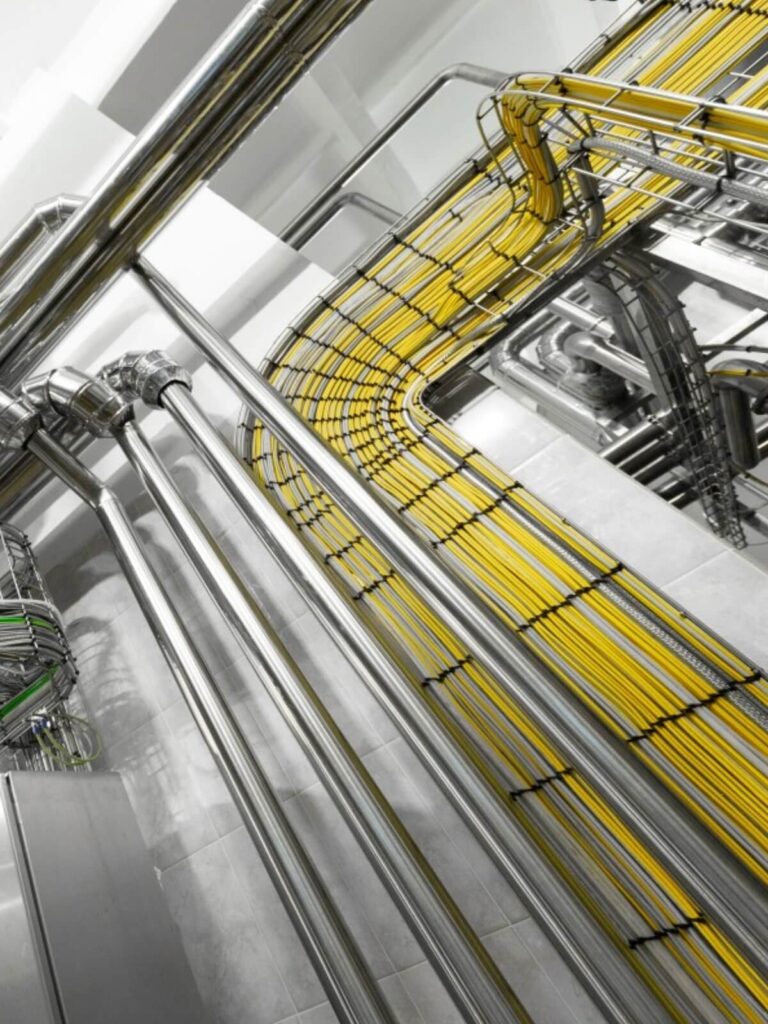
Defined route. Protected cable. Clear test responsibility.
Start with the link the network needs
When fibre is the right physical route
Fibre is commonly used where a project needs a backbone between network areas, a longer building link or a connection between separate buildings. The useful starting point is the issued network requirement, route and endpoints rather than choosing a cable type in isolation.

A building backbone is being added or upgraded
New cabinets, floors, plant areas or network zones may need a backbone between equipment locations while the active network design remains with the IT or connectivity specialist.

Two buildings or operational areas need linking
Inter-building and campus routes may need internal and external pathways, ducts, containment, protected entries and clearly defined fibre construction and test requirements.

Copper is not the right route for the project
Distance, environment, segregation, bandwidth or an issued technical design may make fibre the appropriate physical medium for a particular backbone or equipment connection.
For standard CAT6 and CAT6A outlet cabling, use the Structured Data Cabling.
Defined fibre infrastructure
What the installation scope can include
WB can deliver the physical route and fibre installation package around an issued requirement. The quotation should define the cable, route, protection, endpoints, termination method, test method and which party is responsible for each specialist activity.
Internal fibre routes
Cable installation through agreed tray, basket, trunking, conduit, risers or protected pathways between cabinets, comms rooms, plant areas and network zones.

Inter-building and external links
Physical backbone routes between buildings or site areas, including suitable pathways, cable protection, entries and coordination with existing ducts or civils where those are available.
Cabinet and equipment interfaces
Fibre links can be coordinated with cabinets, fibre panels, active equipment positions, local electrical supplies and the other physical infrastructure required at each endpoint.
Fusion splicing, connector termination, cleaning, inspection, optical-loss testing and OTDR are distinct activities. The competent resource, equipment, acceptance limits and records must be agreed before the work starts.
Routes, access and an agreed installation method
Plan the fibre installation around the site
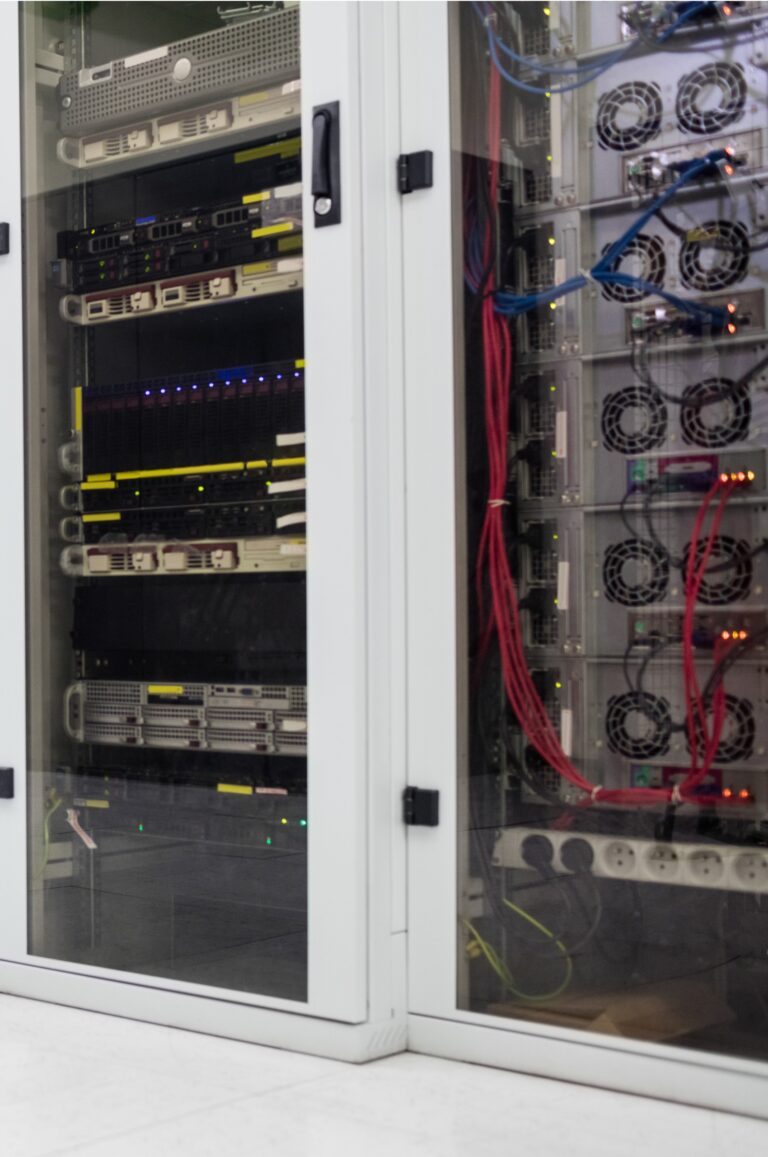
Fibre work can cross comms rooms, risers, production areas, roofs, external routes and separate buildings.Route access, cable protection, pulling conditions, bend limits, penetrations and endpoint readiness should be resolved before mobilisation.
01
Define the endpoints and requirement
Confirm the start and finish locations, application or issued design, fibre type if already specified, required link count, spare capacity, termination requirement and the records needed at handover.
02
Survey the route and interfaces
Review containment, ducts, risers, penetrations, external exposure, pulling access, cabinet space, endpoint hardware and any civils or specialist access needed to complete the route.
03
Install, terminate and test to the agreed scope
Complete the physical installation, coordinate the assigned termination or splicing resource, protect and identify the link, then issue the agreed inspection and test information.
Do not open live electrical equipment, disturb active network connections or enter restricted areas simply to gather quotation information. Existing drawings, cabinet references, route photographs and the network specialist’s issued requirement are enough to start the review.
Have a route drawing or endpoint schedule? Discuss the fibre requirement with WB.
From physical route to usable handover
Know what was installed and how it was tested
A fibre handover should allow the client or network specialist to identify the route, endpoints and installed cable, understand which specialist work was completed and match the test evidence to the correct link.
- Route, origin, destination and cable identification.
- Cable type, core or fibre references and endpoint information where these form part of the project records.
- Termination, splicing or connection details provided by the responsible specialist where included.
- Agreed inspection, loss-test, OTDR or other acceptance results where those tests form part of the scope.
Keep route drawings, cabinet references and later network changes with the test information so future work can be traced against the original link.
Testing responsibility matters
- Inspection:connector cleanliness, physical condition and agreed visual checks should be recorded by the responsible competent person where included.
- Loss testing:the required test method, reference method, wavelengths, limits and result format should be agreed before work starts.
- OTDR:an OTDR trace is a separate diagnostic or acceptance deliverable and should only be promised where the project specification requires it and the competent resource is assigned.
- Certification:WB will not present a fibre link as certified unless the agreed competent personnel, equipment, limits and acceptance tests are in place.
BS EN 50174-4:2025 now provides the current standards framework for inspection and testing of installed optical-fibre cabling designed to premises cabling standards. The public page stays focused on the buyer task rather than reproducing technical test procedures.
If specialist fibre work is needed:WB can coordinate an appropriate fibre specialist within the project where required. The quotation should identify who owns termination, splicing, cleaning, inspection and acceptance testing. See Connectivity Installation Partner.
Direct fibre experience on operational sites
Data cabling and fibre at North British Distillery
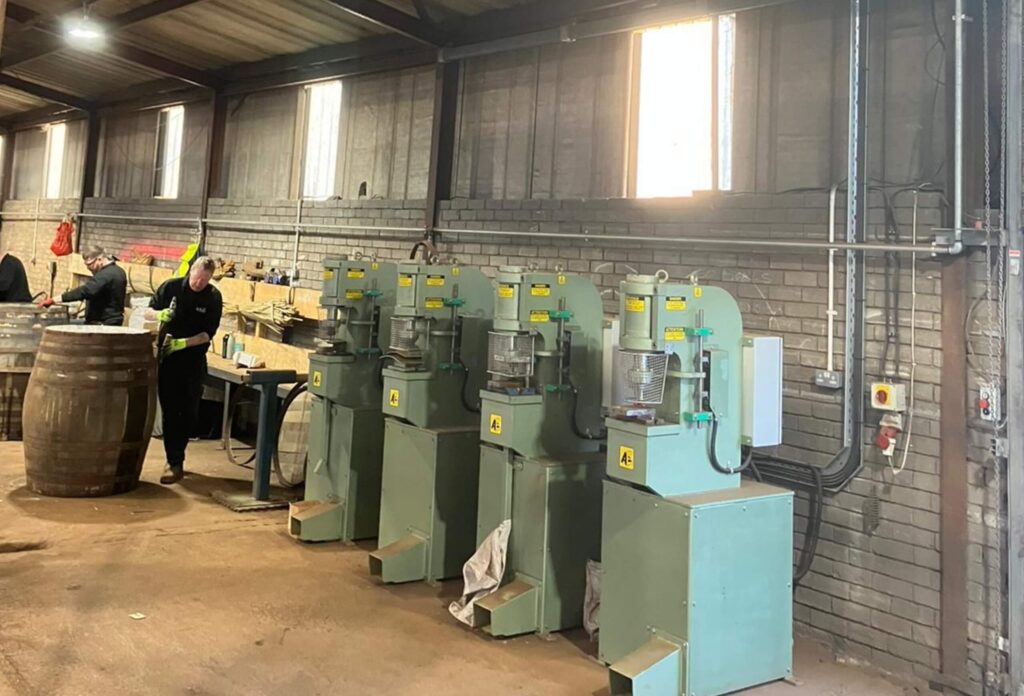
North British Distillery
WB Electrical has supported North British Distillery since 2016 across its Edinburgh distillery and associated West Lothian warehousing sites. The published relationship records data cabling and fibre installation alongside wider electrical infrastructure work.
That experience is relevant to planning physical network infrastructure around live industrial operations, access, existing services and changing site requirements. Each new fibre project still needs its own route, cable and specialist test scope.
Supplier assurance
For contractor selection and project delivery, review WB’s current accreditation and management-system evidence, then tell us about any fibre-specialist, test-equipment, manufacturer, access or documentation requirements that apply to the project.
Practical answers before you book
Fibre optic and backbone cabling questions
Can WB Electrical install fibre optic cabling?
Yes. WB can provide physical fibre routes, cable installation, containment, backbone links and equipment connections. The exact cable, pulling method, termination, splicing, cleaning, inspection and test responsibilities are confirmed for each project before work starts.
Does WB carry out fusion splicing and OTDR testing?
Not as an automatic in-house promise on every project. Where fusion splicing, connector inspection, optical-loss testing or OTDR is required, the quotation will identify the competent resource and test scope. WB can coordinate an appropriate specialist where that is the agreed delivery model.
What fibre type should our project use?
That depends on the application, network design, distance, environment, equipment and project standard. Share the issued design or required application with WB. We will not choose fibre construction or performance requirements from a generic website rule where the network designer or specification should define them.
Can fibre be installed between separate buildings?
Potentially. The route, ducts or containment, entries, cable construction, external exposure, endpoint hardware and any civils must be reviewed first. Inter-building work may involve other contractors or specialist responsibilities as well as the fibre installation.
Can fibre cabling be coordinated with electrical and cabinet work?
Yes. WB can coordinate containment, local electrical supplies, cabinets, equipment positions and the physical fibre route within one site package. Active network configuration and final network performance remain with the responsible network party unless expressly included.
Connected data and connectivity services
Related infrastructure routes

Copper outlets and local links
CAT6 and CAT6A cabling, outlets, patch panels, labels and agreed copper test records.
Cabinets and endpoint infrastructure
Cabinets, patching, cable management, equipment mounting and local power at network locations.

A provider needs field delivery
Site surveys, cabling, mounting, power, access and repeatable rollout support for issued connectivity solutions.
Connectivity Installation Partner
Wi-Fi Access Point Infrastructure
Tell us about the route and endpoints
Request a fibre cabling quotation
Send the link requirement, site details and any drawings or fibre specification already available. If the termination or test requirement is not yet clear, identify the network designer, IT contact or provider who can confirm it.
Information for your quotation
- Company or organisation, site address and affected buildings or areas.
- Origin and destination of each required fibre link.
- Issued drawings, fibre specification, core count, connector or panel information where available.
- Existing ducts, containment, risers, external routes, access constraints and cabinet locations.
- Required termination, splicing, inspection, loss-test, OTDR and handover format if already specified.
Missing drawings or a final fibre specification need not stop an enquiry. Send the information you already have and identify the network specialist, consultant or IT contact who owns the technical design.
What affects fibre cabling cost?
Route length and complexity, cable construction, containment or duct condition, building entries, access, working hours, endpoint hardware, termination method, splicing, specialist testing and handover requirements all affect price. Civils and specialist access may also be separate items.
The quotation should separate the physical installation from any specialist termination, splicing, certification, active-equipment configuration or civils so the responsibility and price are clear.
Based in Larkhall, we support suitable commercial, industrial and public-sector fibre infrastructure across Glasgow, Lanarkshire and the Central Belt. Larger, remote and multi-site projects elsewhere in Scotland are considered by agreement.