
Warehouse electrical contractors | Distribution, equipment power and operational sites
Warehouse & Logistics Electrical Services Across Scotland
Electrical installations, alterations and power upgrades for warehouses, distribution centres and logistics sites, including distribution, three-phase equipment supplies, FLT charging infrastructure, containment and high-level routes.
Based in Larkhall, WB Electrical supports warehouse and logistics projects across Glasgow, Lanarkshire, Edinburgh and the Central Belt, with suitable project-led requirements elsewhere in Scotland considered by agreement.
Plan around shifts, traffic routes, equipment and access.
Operational change often drives electrical change
When to involve a warehouse electrical contractor
Warehouse electrical work is often triggered by new equipment, changing racking, additional charging positions, loading-bay changes or growing demand rather than by a standalone electrical project. Early review helps resolve distribution, routes, access and supplier interfaces before delivery and installation dates are fixed.

New equipment or charging loads are being introduced
Conveyors, dock equipment, roller doors, packing machinery, HVAC, gates and FLT chargers may need dedicated supplies, local isolation, containment and distribution changes planned from the actual equipment data.

Racking, mezzanines or warehouse layouts are changing
New aisles, pick areas, packing zones and mezzanines can affect socket positions, cable routes, high-level containment, lighting, local drops and safe access for future maintenance.

Existing distribution no longer suits the operation
Boards, sub-mains, available ways and retained circuits may need alteration as the warehouse adds equipment, charging positions, automation or new work areas.
Connected warehouse installation requirements
Electrical services for warehouses and logistics sites
A warehouse change can affect several electrical systems at once. WB can deliver one defined alteration or coordinate the relevant installation components around a wider equipment, racking, fit-out or operational project.
Distribution boards and sub-distribution
Board replacements, alterations and new sub-distribution planned around warehouse loads, retained equipment, future demand and a practical changeover window.
Use this route where the main requirement is the board, sub-distribution or capacity-led distribution change.

Specialist equipment and three-phase supplies
Dedicated single and three-phase supplies for conveyors, dock equipment, roller doors, packing machinery, HVAC, gates, chargers and other defined logistics equipment.
Use this route where the main buyer task is powering a machine, plant item or other equipment with defined electrical and supplier-interface requirements.

Additions, alterations and local power changes
New circuits, relocated outlets and practical installation changes for racking, mezzanines, packing areas, welfare spaces, loading bays and changing warehouse layouts.
Use this route where the change is defined and local rather than a complete warehouse fit-out or material distribution upgrade.
When the warehouse project needs supporting infrastructure
Containment & Conduit covers tray, ladder, trunking, basket and conduit routes planned around racking, high-level access, vehicle movement, local drops and future maintenance. Commercial Electrical Fit-Outs covers coordinated packages where distribution, power, containment, lighting and testing need to be delivered together.
For staged refurbishment, contractor works or a defined short-term operational need, Temporary Power Solutions provides the route for temporary distribution where a suitable source and project arrangement can be established.
Shifts, loading routes and a workable programme
Plan electrical work around the operating warehouse
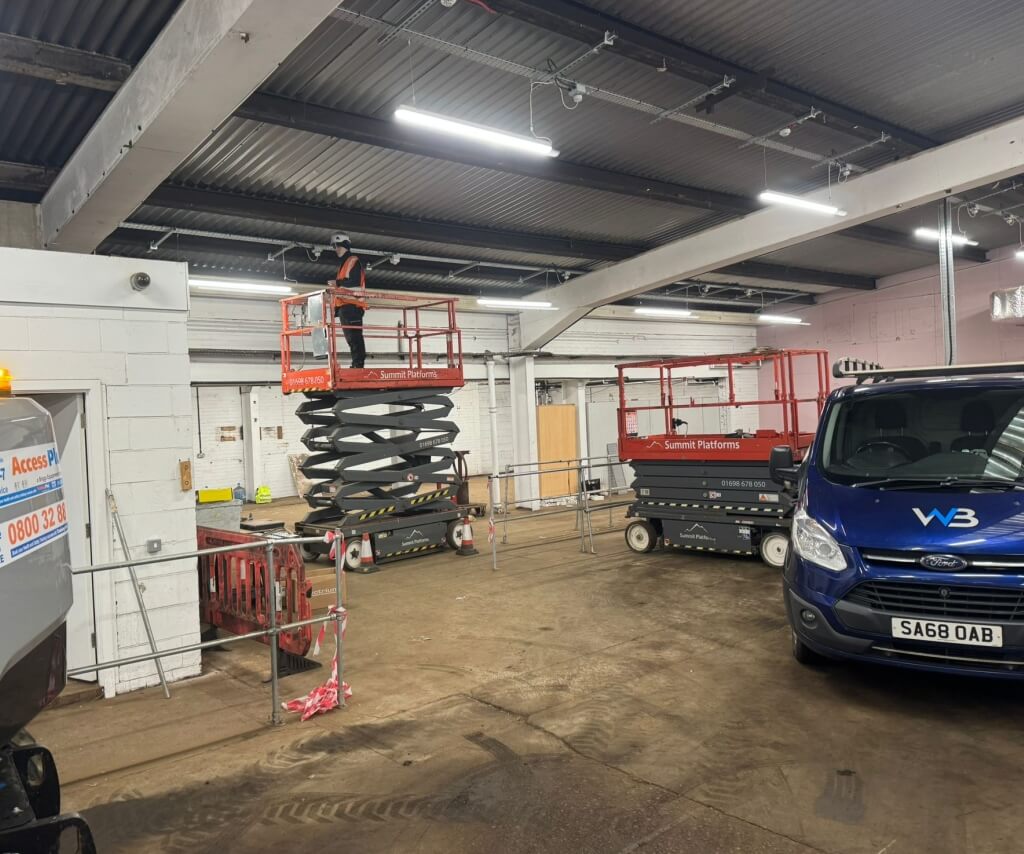
Warehouse work has to coexist with staff, forklifts, loading vehicles, stock movements, pick and dispatch activity and specialist contractors. Define the work area, traffic interaction, access and acceptable interruption before the installation programme is fixed.Bring together available layouts, equipment data, racking information, loading routes, shift patterns, retained services and delivery dates. You do not need a finished electrical design before contacting WB, but the information already available helps identify what needs surveyed and coordinated.
01
Define the operational change
Confirm the affected warehouse area or equipment, shift pattern, loading or dispatch activity, intended change, programme dates and the drawings or equipment information already available.
02
Survey the electrical routes and site conditions
Review supply and distribution, retained loads, racking and cable routes, high-level access, charging areas, isolation points, external exposure and interfaces with warehouse equipment.
03
Agree scope, access and responsibilities
Define the electrical package, supplier interfaces, isolation or phasing plan, exclusion zones, traffic controls, access arrangements and required handover records before mobilisation.
Do not open electrical panels, climb racking or enter restricted loading or plant areas simply to gather quotation information. Existing documents, safely visible equipment data and ordinary site photographs are enough to begin the review.
Have a layout, equipment schedule or planned installation date? Send the warehouse electrical requirement to WB.
From installation to a usable site record
Testing and handover for the work completed
Warehouse handover should make clear what was installed or altered, what was inspected and tested, how circuits, isolators and equipment supplies are identified, and what remains outside the agreed electrical package.
For each completed package
- Inspection and testing appropriate to the electrical work completed.
- Applicable electrical certificates, test records and board, circuit, isolator or equipment identification.
- Updated schedules, marked-up information or product details where these form part of the agreed handover.
- Separate defects, retained systems and follow-on recommendations identified rather than silently added to the completed scope.
Across operational areas or several depots
Use consistent site, building, zone and equipment references so quotations, isolations, handover records and follow-on work can be matched to the correct location. Warehouse, landlord and equipment-supplier responsibilities should remain visible throughout.
A defined electrical package does not automatically create a wider EICR, battery-area risk assessment, automation commissioning record, road-EV charging record or equipment-manufacturer acceptance unless those outputs are expressly included.
Where the warehouse project needs wider contractor coordination: WB can support the electrical interfaces within a broader M&E or specialist package while keeping equipment, controls, structural and commissioning responsibilities clear. Explore M&E Project Support.
Verified warehouse and operational-site experience
Electrical infrastructure across North British Distillery warehousing
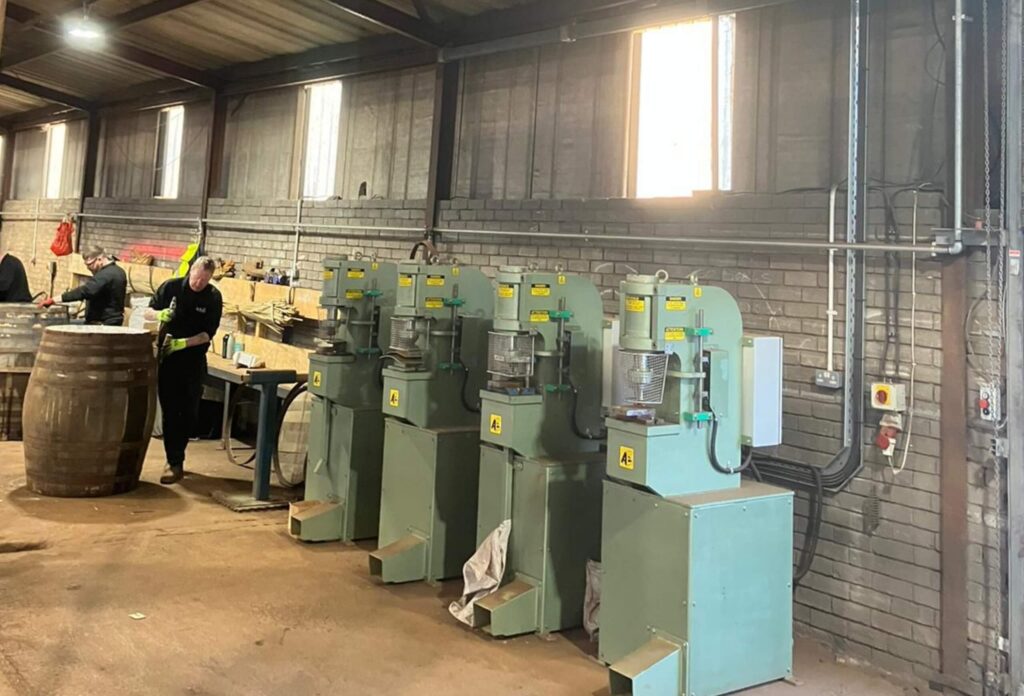
North British Distillery
WB Electrical has supported North British Distillery since 2016 across its Edinburgh distillery and associated West Lothian warehousing sites, providing planned and reactive work as electrical infrastructure and operational requirements have changed.
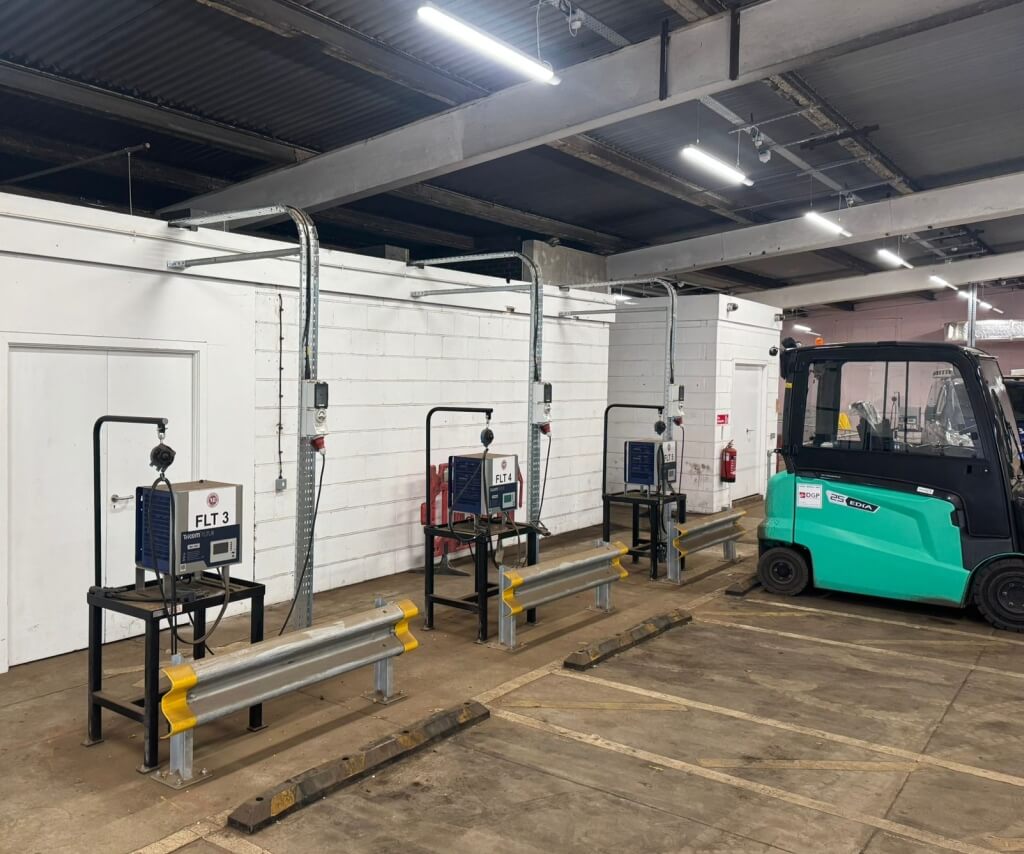
The published work includes distribution boards, new circuits, containment, supplies for gates, roller doors, heaters, controls and FLT charging bays, plus lighting, data, testing and remedial follow-up coordinated around live operations and agreed access windows.
Supplier assurance
For contractor selection and procurement, review WB’s current accreditations and certificates. Tell us about inductions, permits, RAMS, supplier-onboarding, insurance or project-document requirements when enquiring.
Before the scope and programme are agreed
Warehouse and logistics electrical questions
Can electrical work be planned around warehouse shifts and loading activity?
Often. Depending on the project, the programme may use phased areas, preparation before isolation, agreed evening or weekend access, exclusion zones and controlled work areas. The method depends on the affected circuits, traffic routes, loading pattern and safe access, so zero disruption should not be assumed before survey.
Can WB provide power for conveyors, dock equipment and roller doors?
Yes, where the equipment data, existing supply and responsibilities are clear. WB can provide the agreed circuit, protection, containment, local isolation and connection. Equipment-internal wiring, controls, software and manufacturer commissioning remain with the relevant supplier unless expressly included.
Can WB install electrical supplies for forklift chargers?
Yes. WB can review charger and battery information, operating pattern, existing capacity, circuit requirements, cable route, charger position and electrical handover. The site operator and equipment supplier retain their applicable battery-safety, ventilation and operating responsibilities unless separately agreed.
Is FLT charging the same as commercial road-EV charging?
No. Forklift and material-handling chargers are industrial equipment loads with their own manufacturer information, battery technology, operating pattern and charging-area controls. Road-EV charging is a separate service and any road-EV funding scheme should not be assumed to apply to FLT charging.
Can WB undertake high-level or external warehouse work?
Yes, where the task, access method and site controls are suitable. High-level work may require MEWPs, scaffold, exclusion zones or racking coordination. External equipment and routes also need suitable products, supports, sealing and access for the actual environment.
Need warehouse lighting or road-fleet charging as well? See Warehouse & Logistics LED Lighting. For workplace or fleet EV charging, explore Fleet & Logistics EV Charging.
One warehouse, distribution centre or multi-site logistics estate
Request a warehouse electrical review or quotation
Tell us what is changing, how the site operates and the programme you are working towards. WB can advise whether the next step should be a records review, equipment-data review, site survey, defined quotation or wider project discussion.
Useful information to send
- Warehouse or depot address, affected zone, operating hours and shift pattern.
- The required change, such as equipment, charging, racking, distribution, containment, fit-out or external infrastructure.
- Equipment make, model, electrical data, layouts, board information, photographs and existing records where available.
- Traffic routes, loading activity, high-level access, permits, inductions and acceptable isolation windows.
- Delivery or commissioning date and the racking, equipment, controls, automation or other specialist parties involved.
Missing drawings or confirmed quantities need not stop an enquiry. Send the information you already have and identify any equipment supplier, site engineer or facilities contact who may hold the remaining records.
What affects a warehouse electrical quotation?
Scope, equipment loads, existing distribution and capacity, cable routes, high-level access, traffic controls, working hours, phasing, external exposure, specialist interfaces, testing and handover requirements all affect price. Some work can be quoted from clear information; other projects need a survey first.
The quotation defines the electrical work WB is taking responsibility for. Equipment controls, PLC or software changes, manufacturer commissioning, structural approval, racking work, traffic management, battery-area risk controls and specialist-system responsibilities remain with the relevant party unless expressly included.
For recurring warehouse maintenance and electrical support, use the Preventative & Reactive Maintenance.