
For fleet managers, depot operators and facilities teams
Fleet & Depot EV Charging in Scotland
Plan charging around the next shift. WB Electrical scopes and installs fleet charging for delivery depots, service vehicles and commercial sites, bringing together available power, vehicle requirements and practical installation work.
Based in Larkhall, we support businesses across Lanarkshire, Glasgow and the Central Belt, with larger depot projects and wider Scottish site programmes considered by agreement.
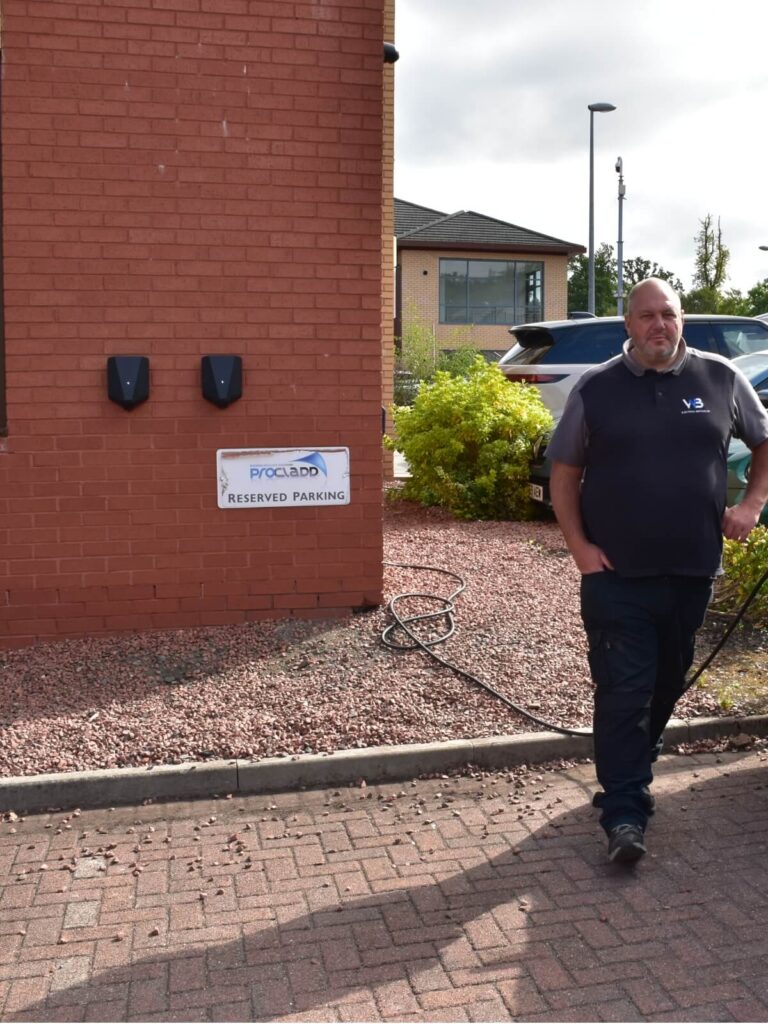
Charging planned around your operation.
Return times, working yards and changing vehicle demand
Start with the depot’s working day
Last-mile delivery vans, service fleets and mixed logistics sites have different charging needs. A useful brief starts with vehicle movements and the energy needed for the next duty.

Work back from departure
Record arrival and departure times, daily energy use and late returns. Include demanding routes and seasonal variation, rather than sizing the system around an average day alone.

Fit a working yard
Keep loading areas, turning space and pedestrian routes in the plan. Charger positions, cable reach and impact protection must suit the vehicles and how drivers park.

Plan the fleet’s next phase
Separate vehicles entering service now from later replacements. Identify which supplies, routes and bays to prepare, with an agreed trigger for adding capacity or chargers.
Select the work your depot needs
Bring power, chargers and controls into one plan
For a new fleet installation or an expanding depot, the electrical work must support the charging requirement while respecting other site loads.

Check the charging requirement
For uncertain supply headroom, a vehicle order or a new depot.
Compare the fleet’s charging windows with existing site demand, distribution and proposed charger locations. Identify the applicable network enquiry or approval route before committing to a programme.
Install a maintainable system
For return-to-base vans, business vehicles and agreed depot requirements.
Scope charger compatibility, circuits, protection, isolation and labelled cable routes. Set responsibilities for foundations, trenching, reinstatement, bay markings and other contractors.

Allocate power and access
For simultaneous charging, staggered returns and different vehicle priorities.
Assess load management and supported scheduling against the available supply. Confirm user permissions, connectivity, reporting and any vehicle-data integration with the chosen platform.
Prepare for expansion and ongoing use
Use EV infrastructure upgrades for distribution changes and future provision. Agree maintenance and support around usage, equipment and the operational impact of a fault.
Operations, property and electrical delivery
Plan the work around dispatch and deliveries
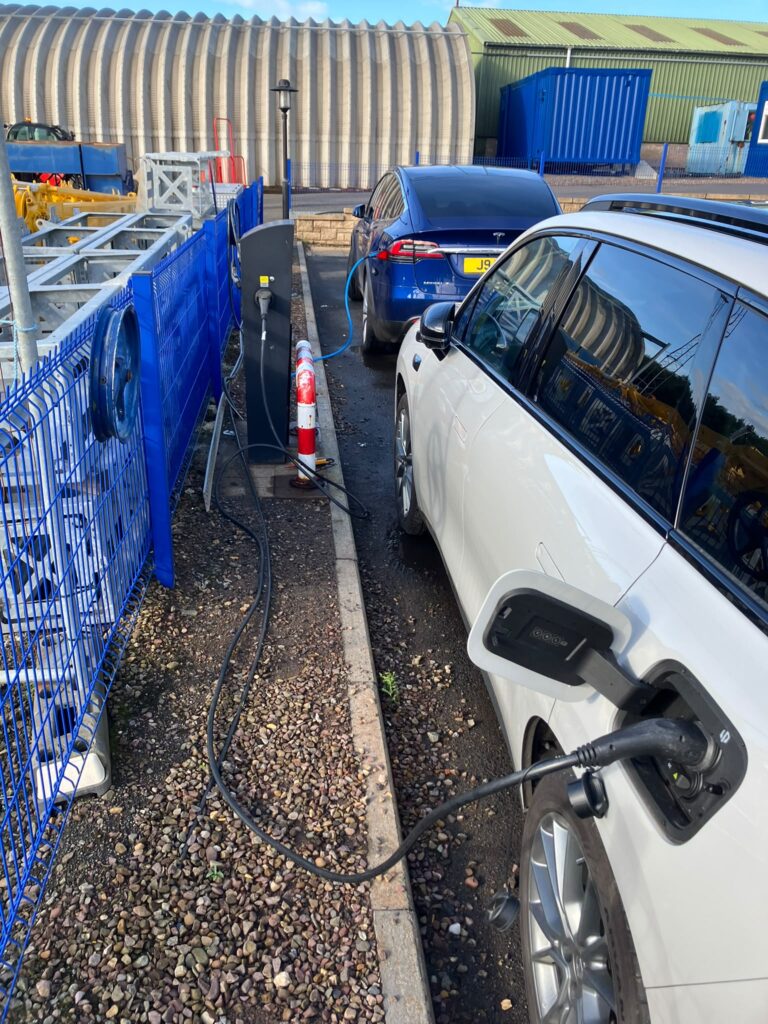
Power interruptions and excavations can affect depot operations. Agree isolation windows, critical supplies and protected working areas before work starts.
01
Bring the right people into the brief
Involve fleet operations, facilities, the property owner and the electricity account holder. Confirm lease permissions, vehicle delivery dates, budgets and applicable planning or building requirements.
02
Sequence the work around the yard
Map loading times, vehicle circulation, pedestrian access and emergency routes. Agree phases, temporary bay closures and other contractor interfaces, with clear notices before each interruption.
03
Agree how charging will be run
Nominate who connects vehicles, checks charging progress and handles exceptions. Involve IT where connectivity or integrations are needed. Confirm account ownership, subscriptions and support responsibilities.
For larger HGV or high-power DC projects, define the vehicle, equipment, network and specialist delivery requirements at the outset. WB’s electrical scope and any specialist partners are agreed for the individual project.
Planning your first electric vans or another installation phase? Discuss your depot charging requirement.
Clear records and a practical response to faults
Hand over a system the depot can manage

Record what was installed and checked
- Electrical certification, circuit identification and charger asset references.
- Agreed charging limits, control settings and functional checks.
- Operating instructions, warranty information and any outstanding actions.

Set the operating and support arrangements
Agree who monitors charging and escalates a failed session. Confirm maintenance scope, response arrangements and responsibility for electrical, charger, software and vehicle faults.
Plan how the fleet will cope with a charger outage or a missed charging window. Any reserve capacity, alternative charging or priority rules need to be practical for your operation and supported by the equipment.
Relevant commercial EV installation experience
Electrical installation and controlled charging at Procladd
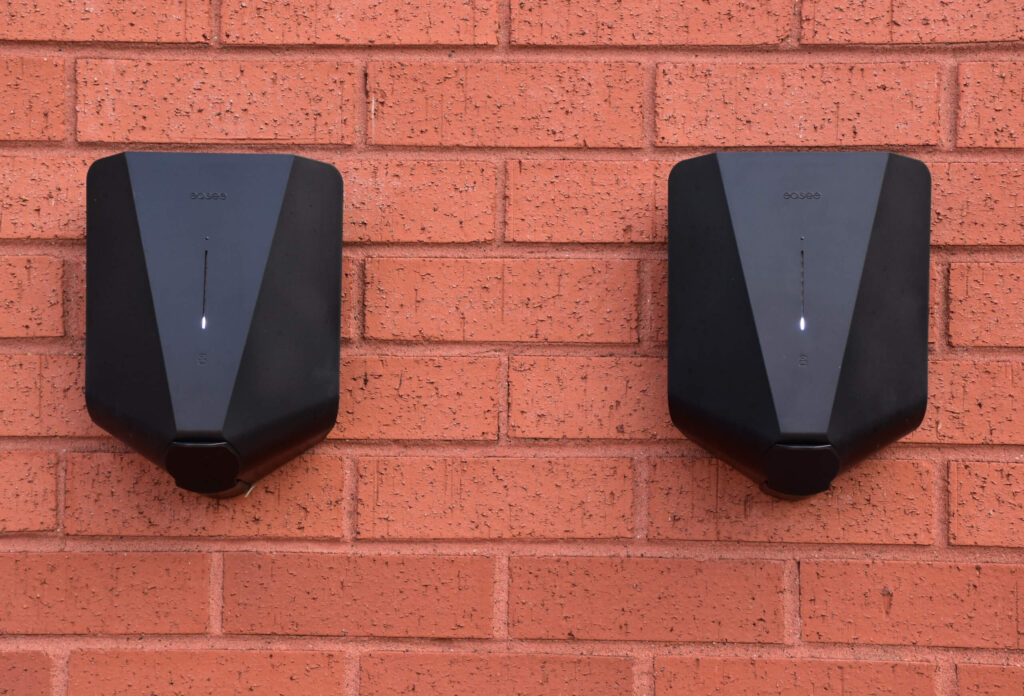
Ten workplace chargepoints in Hamilton
WB’s published Procladd project records ten Easee chargepoints installed in 2025, with associated circuits, protection, containment, testing and authorised-user access.
This workplace installation demonstrates the supporting electrical work and handover. Your depot’s vehicle schedules and charging performance requirements would be assessed separately.
Supplier assurance
Review WB’s published accreditations and certificates and tell us about your procurement requirements. Agree site rules, method statements, documentation and the boundary between WB’s work and specialist or network activities.
Decisions before specifying the system
Fleet and depot charging questions
Does a fleet depot need rapid DC charging?
Not automatically. Compatible AC charging may suit vans parked for several hours. Shorter turnaround periods or particular vehicles may need DC charging. Vehicle charging limits, energy demand and available time determine the requirement; the charger’s advertised rating alone does not establish the result.
Can load management avoid a supply upgrade?
It may make better use of the supply by sharing power or changing when charging occurs. It cannot create extra energy if the fleet needs more than the site can deliver in the available time. We assess both capacity and charging windows, including the applicable distribution network operator (DNO) process.
Can we prepare the depot now and add chargers later?
Yes, where the design and budget support it. Separate active chargers from future ducts, routes, distribution and bay provision in the quotation. Review the later vehicle requirement before expansion; spare physical space does not establish spare electrical capacity.
How do we handle late returns or a communications failure?
Set an escalation process for missed sessions and confirm the controller’s behaviour if connectivity is lost. Priority charging or offline operation depends on the equipment and setup. Agree and check these functions at commissioning; the fleet operator should also plan practical alternatives for disrupted charging.
Can access be restricted to our fleet?
Supported systems can use authorised accounts or cards and provide session records. Confirm what is available for the chosen chargers and platform. If other operators will use the depot, separately agree booking, access, charging priority, payment and site-safety responsibilities.
Is funding available for depot charging?
Funding depends on the applicant, vehicles, site and timing. Check the official Depot Charging Scheme for its current application position and terms. Eligible projects may also warrant checking the Workplace Charging Scheme. Confirm the appropriate route and eligible costs before committing expenditure; do not assume grants can be combined.
For employee parking alongside your depot, see workplace charging. Explore the full Commercial EV Charging service group.
A first installation, an extension or an agreed site programme
Tell us what the next shift needs
Send the information you have. We will review the requirement and identify the site assessment or further detail needed to scope the work.
Useful information for a depot review
- Depot address, site contact and ownership or lease arrangements.
- Vehicle types, quantities, charging capabilities and planned delivery dates.
- Arrival times, departures, energy needs and unusual duty patterns.
- Existing chargers, supply records and layout plans, if available.
- Critical loads, access restrictions, future phases and target dates.
Mention any records or photographs you hold; the office will confirm how to share them.

What affects the quotation?
Charger type and number, electrical capacity, cable distances, civil works, working windows, controls and commissioning all affect cost. Identify network works, software, connectivity and maintenance charges separately.
The proposal should define responsibilities, active and future provision, and any funding or delivery assumptions.
For charging at your own home, use the domestic enquiry route.