
For facilities, property and operations teams
Commercial Lighting Maintenance & Repairs in Scotland
Keep commercial and industrial lighting dependable with one-off fault finding, planned maintenance and condition-led reviews. WB Electrical can investigate fittings, drivers, controls, circuits and access constraints, then repair what is practical and record what needs attention next.
From our Larkhall base, we support lighting maintenance across Glasgow, Lanarkshire and the Central Belt. Suitable multi-site and planned programmes elsewhere in Scotland are considered by agreement.
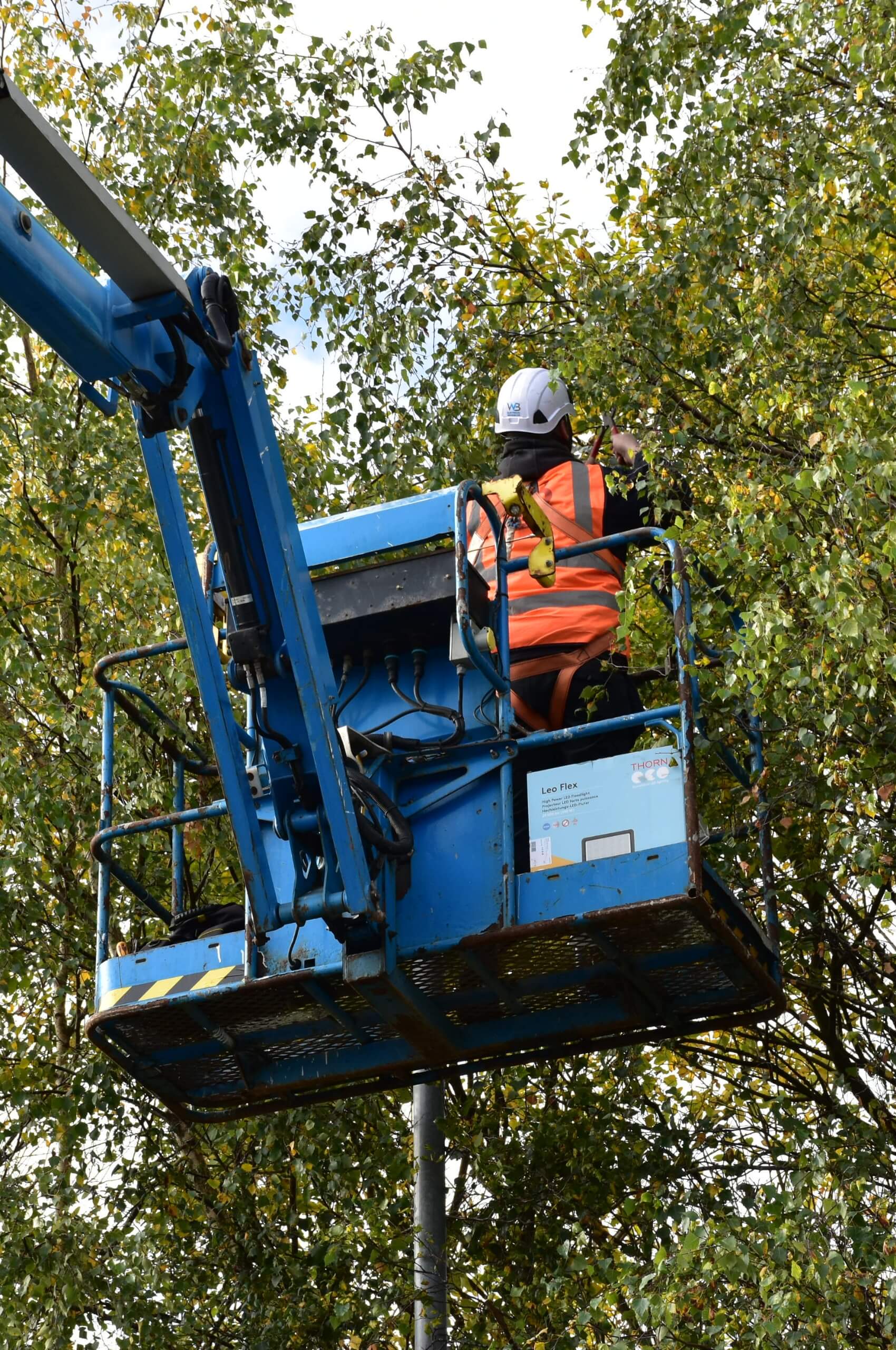
Fix the fault. Understand the pattern. Plan the next decision.
One fault, repeated failures or no reliable baseline
When Lighting Maintenance Is the Right Route
Lighting maintenance should start with the problem the site needs to solve. That may be a failed fitting today, recurring high-level faults, inconsistent lighting across a working area or an ageing installation with no useful asset record.

A defined lighting fault needs attention
Failed, flickering, dim or intermittent lighting can be investigated through the fitting, driver, sensor, local connection, circuit and supply within the agreed scope rather than assuming the visible fitting is the only cause.

Failures keep returning or access is expensive
High-bay, production, yard and other difficult-access lighting can justify planned visits when repeated call-outs, access equipment and operational disruption cost more than a controlled maintenance programme.

The site needs a condition and renewal baseline
Mixed fittings, obsolete parts, weak records or changing layouts can justify a condition survey that separates what can be retained, repaired, monitored, replaced or moved into a planned upgrade.
If the requirement is a wider electrical PPM arrangement covering distribution, equipment and several systems, use Preventative & Reactive Maintenance. Formal EICR and emergency-lighting test regimes remain separate testing services.
Repair, maintain and understand condition
What Commercial Lighting Maintenance Can Include
The scope should identify the areas and assets covered, the level of investigation, repair authority, access method and records required. It can range from one fault to a repeat programme across several premises.
Fault finding, repairs and component replacement
Investigate lighting faults and complete agreed repairs to fittings, LED modules, drivers, ballasts, sensors, photocells, timers, controls, connections, cabling and local circuits where suitable parts and safe access are available.

Planned visits and high-level maintenance
Group inspections, cleaning where agreed, adjustments, minor repairs and replacement work around critical areas, operating hours and access requirements. High-level tasks can be coordinated to reduce repeated MEWP mobilisation and disruption.
Condition surveys, asset information and priorities
Record fitting families, controls, locations, mounting heights, access needs, observed condition, recurring failures and agreed priorities so facilities teams can plan spares, budgets, selective replacement or future renewal.
A routine lighting maintenance visit is not automatically an EICR, emergency-lighting duration test, full lighting-design verification or hazardous-area inspection. Advanced controls design, structural concerns and manufacturer-specific work may also need separate specialist input.
Access, operating hours and repair authority
Plan Maintenance Around the Working Site
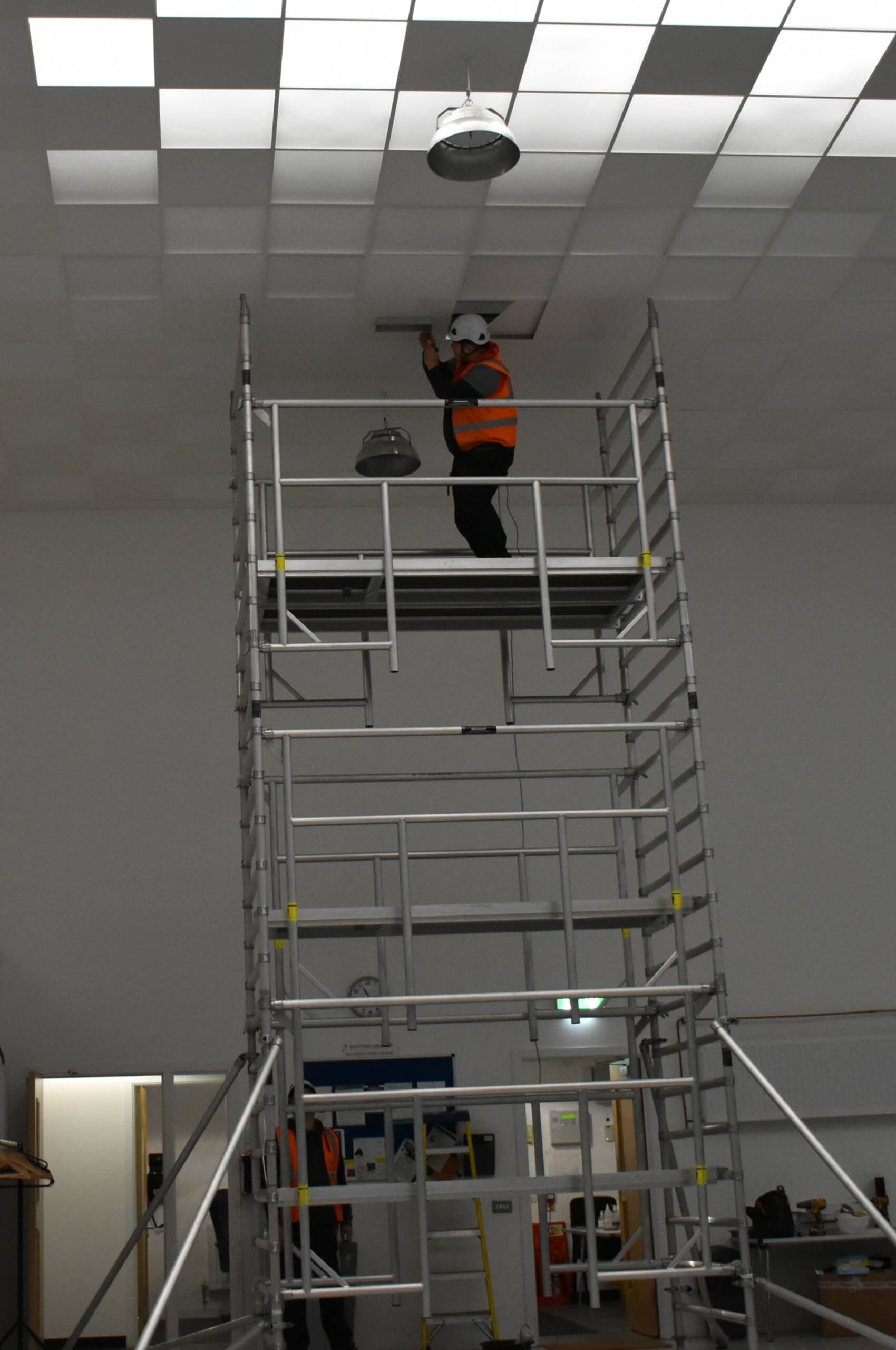
Lighting faults often sit above stock, machinery, offices, customer areas or vehicle routes. Before attendance, define what can be accessed, isolated and repaired, and what needs permits, escorts, shutdowns, access equipment or client approval.
01
Define the problem and critical areas
Confirm the symptoms, affected areas, business-critical tasks, operating hours, recent changes, previous failures and whether the immediate priority is repair, investigation or a wider condition baseline.
02
Agree access, scope and approval limits
Review fitting and control information, mounting heights, MEWP or tower routes, stock and traffic constraints, permits, isolations, spares and what level of repair can be authorised during the visit.
03
Repair, check and record the next action
Complete the agreed work, carry out the inspection, testing and functional checks appropriate to that task, then record completed repairs, limitations, recurring issues and items needing parts, further testing or a planned upgrade.
Work at height must be properly planned, supervised and carried out by competent people using suitable equipment. High-level lighting may also require exclusion zones, traffic control and coordination with the site before access equipment arrives.
Need to review a fault, backlog or planned visit? Discuss your lighting maintenance requirement with WB.
Choose the right route instead of forcing every site into a contract
Compare Repair, Planned Maintenance and Renewal Before You Commit

A useful maintenance scope should make the boundaries clear
- Sites, areas, lighting types, critical zones, known faults and operating hours included.
- Inspection, cleaning, fault finding, adjustments, parts replacement, functional checks and electrical testing included within the agreed task.
- Mounting heights, access equipment, traffic or work-zone controls, permits, isolations, approval limits and specialist interfaces.
- Visit records, photographs, asset updates, parts used, completed work, defects, limitations, priorities and the next review or renewal action required.
The Electricity at Work Regulations 1989 require electrical systems to be maintained as necessary to prevent danger, while workplace lighting must be suitable and sufficient. A sensible lighting-maintenance plan therefore follows the site, use, condition, operating history and manufacturer information rather than a single generic interval.
One-off repair, planned programme or upgrade
- Use a one-off repair route for a defined local fault or outage where the likely scope and access can be established quickly.
- Use planned visits where failures recur, lighting is operationally important, access is costly or several sites need consistent maintenance records.
- Use a condition survey when records are weak, fittings are mixed or obsolete, or budgets need evidence before repair and renewal decisions are made.
- Move to a lighting upgrade where failure rates, obsolescence, poor distribution, incompatible controls or maintenance cost make repeated repair a weaker long-term option.
The first review should establish which route gives the client a useful result now, with the option to build a wider programme later if the evidence supports it.
If the issue is mainly controls: straightforward sensor, timer or driver faults can sit within maintenance, while wider zoning, dimming, daylight response, DALI changes or BMS integration should route to Smart Lighting Controls.
Direct lighting-maintenance evidence from a long-term industrial relationship
Lighting Maintenance Within Long-term Bridon-Bekaert Support
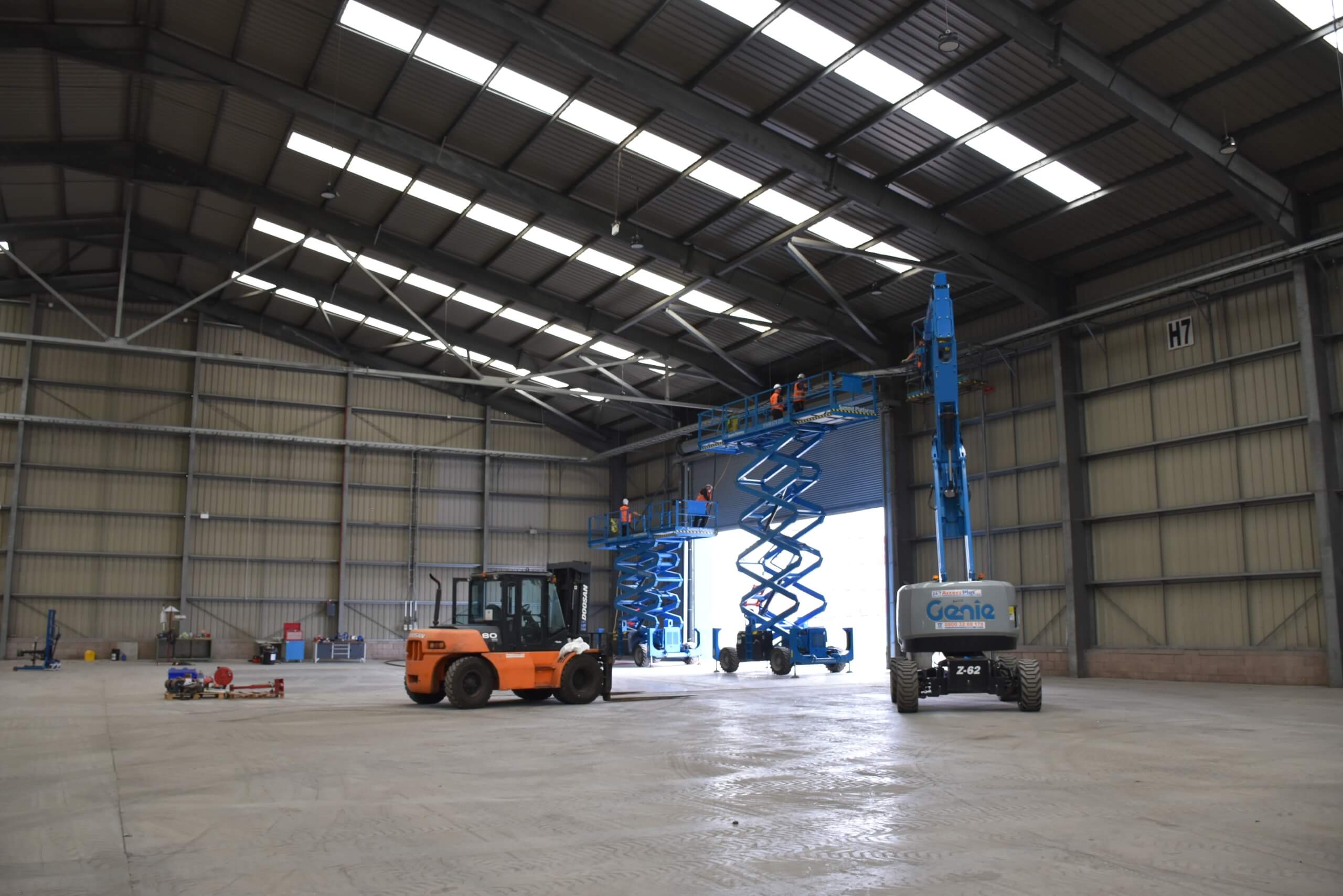
Bridon-Bekaert
WB Electrical has supported Bridon, now part of Bridon-Bekaert, since 2014 across manufacturing and warehouse facilities in Coatbridge and Grangemouth. The published case study specifically records warehouse, production and high-level lighting maintenance, together with new lighting, sensors, emergency lighting, yard lighting and wider electrical maintenance.
This is direct evidence of lighting maintenance in working industrial environments. It does not imply that every future site has the same access method, maintenance interval, asset condition, controls or hazardous-area requirements.
Supplier assurance
Review WB’s current electrical contractor memberships, management-system certificates and accreditation evidence as part of your supplier assessment. Where lighting work enters a classified area, manufacturer-controlled system or specialist design issue, agree the separate competence and responsibility required.
Practical answers before you plan the first visit
Commercial Lighting Maintenance & Repairs Questions
What does commercial lighting maintenance include?
It can include visual condition checks, fault finding, cleaning where agreed, adjustments, fitting or component replacement, sensor and control checks, local electrical repairs, task-appropriate inspection and testing, asset updates and defect priorities. The quotation should state the exact areas, assets, access, exclusions and evidence included.
Can WB attend a one-off lighting fault without a maintenance contract?
Yes. A defined repair or fault-finding visit can be arranged without committing to an ongoing programme. If the visit reveals repeated failures, obsolete parts, difficult access or a wider backlog, WB can propose planned options separately for the client to consider.
How often should commercial lighting be inspected or maintained?
There is no single honest interval for every site. Frequency should reflect the environment, operating hours, critical tasks, condition, failure history, access, manufacturer information and the consequence of failure. An initial visit can establish a sensible starting point and later records can help refine it.
Can WB maintain high-bay, external lighting, drivers and sensors?
Yes, where the equipment, access and agreed scope are suitable. WB can investigate high-bay and external fittings, drivers, sensors, photocells, timers and related controls, with access equipment and site controls planned as needed. Classified areas require the correct hazardous-area information and separately agreed competence and scope.
Does lighting maintenance replace EICR or emergency-lighting testing?
No. Routine maintenance, EICR and emergency-lighting testing have different purposes and records. They can be coordinated around the same site, but an ordinary lighting-maintenance visit should not be represented as completing those formal inspection or test regimes unless they were separately instructed and carried out.
Connected routes for repair, renewal and wider site support
Related LED Lighting and Maintenance Services
Lighting upgrades and planned renewal
Use the upgrade route where repeated failures, obsolete equipment, poor lighting performance or changing layouts make planned replacement or redesign the better option.
Controls and external lighting
Keep wider control-system projects and permanent external-lighting improvements distinct from routine fault finding and planned maintenance.
Formal testing and wider electrical maintenance
Coordinate lighting with the correct testing route and with broader planned or reactive electrical support when the requirement extends beyond the lighting system.
Share the fault, affected areas and level of support you need
Request a Commercial Lighting Maintenance Review
Tell us whether you have one failed fitting, recurring faults, a maintenance backlog, difficult high-level access, several sites or a need to understand the condition of the lighting estate. We can recommend whether the next step should be a repair visit, condition survey or planned programme.
Information for your quotation
- Company or organisation, site address and number of locations.
- Affected areas, symptoms, operating hours and which lighting is critical to the site.
- Fitting, driver, sensor or control make and model, photographs and previous reports where available.
- Approximate asset count, mounting heights, access routes, stock, machinery, traffic, permits and shutdown constraints.
- Reporting, asset-list, repair-authority, emergency-lighting, formal testing or hazardous-area requirements that need separate definition.
Mention drawings, fitting schedules, photographs, fault history or asset information in the quote form. The office can confirm a suitable way to share them. Please do not open electrical equipment or access high-level fittings just to gather details.
What affects commercial lighting maintenance cost?
Fault type, asset quantity, mounting height, access equipment, working hours, investigation time, parts availability, site controls, number of locations, reporting detail and whether the visit is reactive, planned or survey-led all affect the price.
The next step may be a one-off repair, fault-finding visit, condition survey or planned maintenance proposal. Lighting upgrades, advanced controls, emergency-lighting tests, formal EICR work and hazardous-area requirements should be scoped separately unless expressly included.
Based in Larkhall, we support suitable commercial, industrial and public-sector lighting maintenance across Glasgow, Lanarkshire and the Central Belt. Larger and multi-site programmes elsewhere in Scotland are considered by agreement.