
For commercial, industrial and managed premises
Commercial External, Flood & Security Lighting in Scotland
Plan permanent external lighting around the people, vehicles, tasks, cameras and boundaries that use the site after dark. WB Electrical surveys the existing installation, develops or coordinates the lighting scope, installs the agreed equipment and commissions it for practical day-to-day operation.
From our Larkhall base, we support external lighting projects across Glasgow, Lanarkshire and the Central Belt. Suitable larger, specialist and multi-site requirements elsewhere in Scotland are considered by agreement.
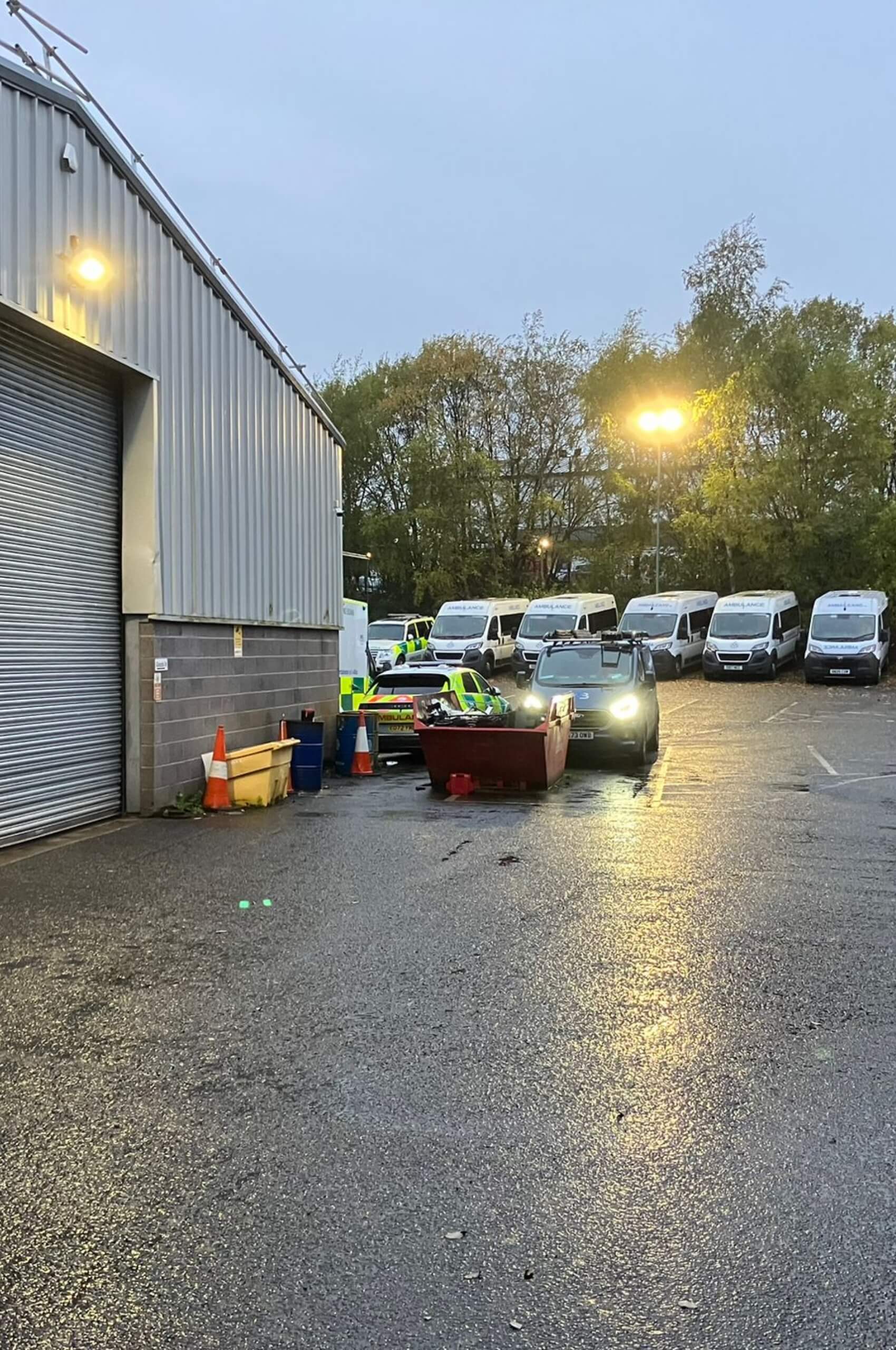
Light the route and task, not just the wall.
Start with what the site actually needs after dark
When to Review Your External Lighting
External lighting is worth reviewing when visibility, glare, failures, controls or changing site use are creating a practical problem. More output is not automatically the answer; position, optics, aiming and control can matter just as much.

Dark spots or poor route visibility
Yards, loading areas, car parks, gates and pedestrian routes can become difficult to use safely when trailers, plant, structures or changes to the site create shadows and uneven coverage.

Glare, shadows or camera-facing problems
A badly aimed or unsuitable fitting can dazzle drivers and pedestrians, create harsh contrast, produce deep shadows or work against a CCTV camera rather than helping it.

Ageing fittings, repeated faults or wasted run time
Failed drivers, water ingress, obsolete discharge fittings, poor controls or lights running when areas are unused can justify repair, selective replacement or a planned LED upgrade.
If the main requirement is ongoing servicing rather than a defined external-lighting project, use Lighting Maintenance & Inspections. More advanced zoning or automation should route to Smart Lighting Controls.
Survey, electrical infrastructure and a defined after-dark outcome
What a Flood & Security Lighting Project Can Include
The agreed scope should show which areas are being lit, which existing assets are retained, what problem is being solved and how the completed installation will be aimed, controlled, tested and handed over.
External lighting survey and design basis
Review site use, vehicle and pedestrian routes, loading activity, cameras, sensitive boundaries, mounting positions, existing circuits and controls. A dusk or night review, measurements or lighting calculations can be included where the project needs them.

Electrical installation and sensible controls
Install or replace suitable external luminaires, brackets, circuits, containment and agreed controls such as photocells, timers or occupancy sensors. Column, civil, structural or specialist design responsibilities are identified separately where required.
Aiming, commissioning and handover
Inspect and test the electrical work, set final aiming and controls, check the agreed lighting outcome and provide the defined asset, circuit, product, commissioning and maintenance information.
Security lighting can support visibility, surveillance and site management, but it is not a guarantee against crime. Emergency escape lighting, hazardous-area requirements, standby-power arrangements, structural condition and final CCTV performance remain separate responsibilities unless explicitly included.
High-level access, traffic movement and sensitive boundaries
Plan the Installation Around the Working Site
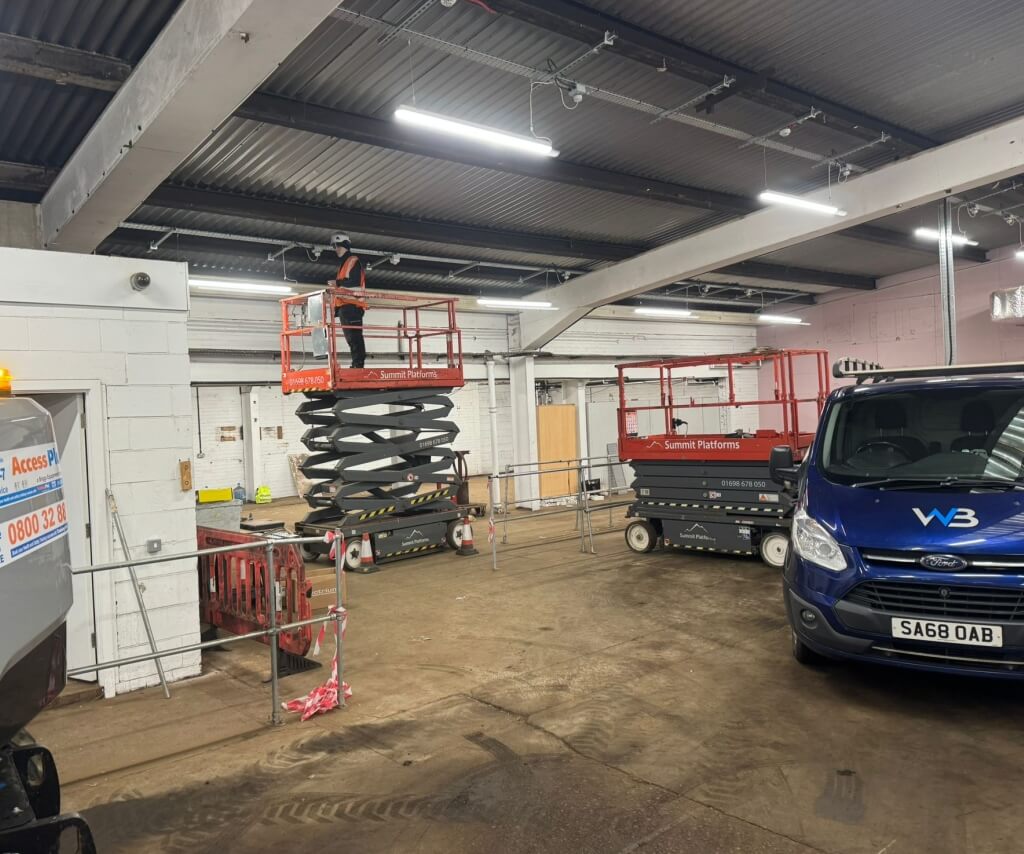
Mounting height, vehicle routes, public access, weather exposure, operating hours and nearby properties can affect both the design and the installation method. These constraints should be visible before equipment is ordered or access plant arrives.
01
Survey by day and after dark where useful
Confirm routes, tasks, fitting positions, circuits, controls, mounting heights and access in daylight, then observe dark patches, glare, shadows, transitions and camera-facing conditions after dark where useful and safe.
02
Agree the lighting route and work method
Compare repair, re-aiming, shielding, revised optics, selective replacement or a new scheme. Then agree access equipment, traffic and pedestrian controls, isolations, permits, phasing and specialist inputs.
03
Install, aim, commission and record
Complete the agreed electrical work, inspect and test it, set final aiming and control behaviour, verify the agreed outcome within scope, then hand over useful records for operation and future maintenance.
High-level external lighting work may need MEWPs, exclusion zones, vehicle management, permits and weather-sensitive planning. Work at height must be properly planned, supervised and completed by competent people using suitable equipment.
Need to review a yard, car park or perimeter? Discuss your external lighting project with WB.
Correct the lighting problem before assuming every fitting needs replaced
Compare the External Lighting Route Before You Commit

A useful proposal should make the installed outcome clear
- Areas, tasks, vehicle and pedestrian routes, operating hours, camera views and sensitive boundaries included.
- Existing and proposed fittings, positions, optics, aiming, controls and any measurements or lighting calculations included.
- Access equipment, traffic or pedestrian management, isolations, permits, phasing and civil, structural or specialist interfaces.
- Electrical testing, commissioning, control settings, product information, asset or circuit records, assumptions, exclusions and future maintenance route.
BS EN 12464-2:2024 is a current reference for lighting of outdoor workplaces. Current ILP guidance GN01/26 addresses avoidance of obtrusive light. The applicable criteria and evidence should be agreed for the particular site rather than copied from a generic fitting schedule.
Repair, re-aim, replace or redesign
- Repair or clean suitable equipment where the underlying fitting, circuit and mounting arrangement remain serviceable.
- Re-aim, shield or change optics where the main problem is glare, spill, shadows or poor distribution rather than lack of total output.
- Use selective LED replacement where ageing or inefficient fittings are the main issue and the existing positions still suit the site.
- Relayout or redesign where routes, tasks, cameras, site boundaries or mounting positions have changed enough that the original scheme no longer works.
The survey should establish the most practical route rather than treating every external-lighting problem as a brighter one-for-one replacement.
If controls become a wider project: photocells, timers or straightforward sensors can sit within the lighting scope, while more involved zoning, dimming, automation or BMS integration should route to Smart Lighting Controls.
Direct yard and security-lighting evidence from an industrial relationship
Yard and Security Lighting Within Long-term Bridon-Bekaert Support
Bridon-Bekaert
WB Electrical has supported Bridon, now part of Bridon-Bekaert, since 2014 across manufacturing and warehouse facilities in Coatbridge and Grangemouth. The published case study specifically records yard and security lighting, alongside warehouse, production and high-level lighting maintenance, new lighting, sensors and emergency lighting.
This is direct evidence of external and security-lighting work within an industrial support relationship. It does not imply that every future site has the same lighting criteria, environmental constraints, access method, controls or security requirements.
Supplier assurance
Review WB’s electrical contractor memberships, management-system certificates and current accreditation evidence before appointing us. If the project requires a named lighting designer, structural engineer, CCTV specialist or other third-party discipline, state that requirement before quotation.
Practical answers before you specify the work
Commercial Flood & Security Lighting Questions
What happens during an external lighting survey?
We first establish how the area is used, including vehicle and pedestrian routes, tasks, entrances, loading positions, cameras, operating hours and known problems. The survey can then review fittings, circuits, controls, mounting heights, access, visible condition and sensitive boundaries. Daylight observations, an after-dark review, measurements and photometric calculations are different levels of evidence, so the quotation should state which are included.
Can WB reduce glare or light spill without replacing every fitting?
Often, depending on condition and suitability. Re-aiming, shielding, changing optics, dimming, rezoning or relocating a fitting may correct the problem. Where neighbouring property, sky glow or other obtrusive-light concerns matter, the design should use current guidance and make the relevant assumptions and limits clear.
Can external lighting improve CCTV performance?
It can support clearer camera views, but more light is not automatically better. Direction, uniformity, colour quality, reflections, backlighting and the camera’s own settings all affect the result. WB can coordinate lighting with known camera positions, while final image performance should be checked with the client or security-system provider.
Which controls suit yards, car parks and external routes?
Photocells suit dusk-to-dawn activation, time schedules suit predictable operating hours, and occupancy detection can reduce run time in genuinely intermittent areas. Zoning, dimming and manual override can combine these approaches. The control strategy should follow the site’s actual operating and security needs rather than an automatic energy-saving assumption.
Can you install or replace high-level floodlights?
Yes, where the site and scope are suitable. We can plan the access method, work area and electrical isolation, then remove, install, aim and test agreed fittings. Suspect columns, brackets, roofs or other structures may need separate competent structural assessment before they are relied upon.
Connected lighting services for the rest of the site
Related LED Lighting Services
General lighting upgrades
Coordinate external works with a wider permanent LED upgrade where internal and external lighting are being improved together.
Smart controls and planned maintenance
Use a defined controls route for wider zoning or automation, and keep routine inspections, faults and planned replacement under the maintenance service.
Emergency, temporary and hazardous-area lighting
Keep escape lighting, temporary site lighting and classified-area installation requirements as distinct scopes where they apply.
Share the site, problem areas and result you need after dark
Request a Commercial External Lighting Survey
Tell us whether the requirement is a new installation, dark spot, glare issue, security-led improvement, car park or yard upgrade, failed high-level fitting or wider external-lighting review. We can establish what survey or design-coordination step is needed before pricing.
Information for your quotation
- Company or organisation, site address and postcode.
- Areas involved, how they are used and the lighting problem or outcome required.
- Vehicle routes, pedestrian routes, loading activity, public access and camera positions where relevant.
- Existing fitting types, controls, approximate mounting heights, known faults and circuits if available.
- Operating hours, access constraints, traffic controls, permits, sensitive boundaries and planning or hazardous-area information where relevant.
Mention site plans, photographs, fitting schedules, camera concerns or existing lighting information in the form. The office can confirm a suitable way to share them. Please do not access high-level fittings or open electrical equipment just to gather details.
What affects external lighting project cost?
Area size, fitting quantity and type, mounting height, access, circuits and containment, controls, condition of existing equipment, after-dark survey or design work, traffic management, specialist interfaces, working hours and the handover required all affect the price.
The next step may be a site survey, after-dark review, repair or re-aiming visit, options proposal or installation quotation. Emergency, temporary, hazardous-area, advanced-controls, standby-power or structural requirements should be identified and scoped separately unless expressly included.
Based in Larkhall, we support suitable commercial, industrial and public-sector external-lighting work across Glasgow, Lanarkshire and the Central Belt. Larger, specialist and multi-site requirements elsewhere in Scotland are considered by agreement.