
For facilities, engineering and reliability teams
Electrical Thermal Imaging & Condition Monitoring in Scotland
Build useful condition history around important electrical assets. WB Electrical provides baseline and repeat thermographic surveys to identify abnormal heat patterns, prioritise investigation and track changes over time.
From our Larkhall base, we support commercial, industrial and public-sector sites across Glasgow, Lanarkshire and the Central Belt. Wider Scottish and multi-site survey programmes are considered by agreement.
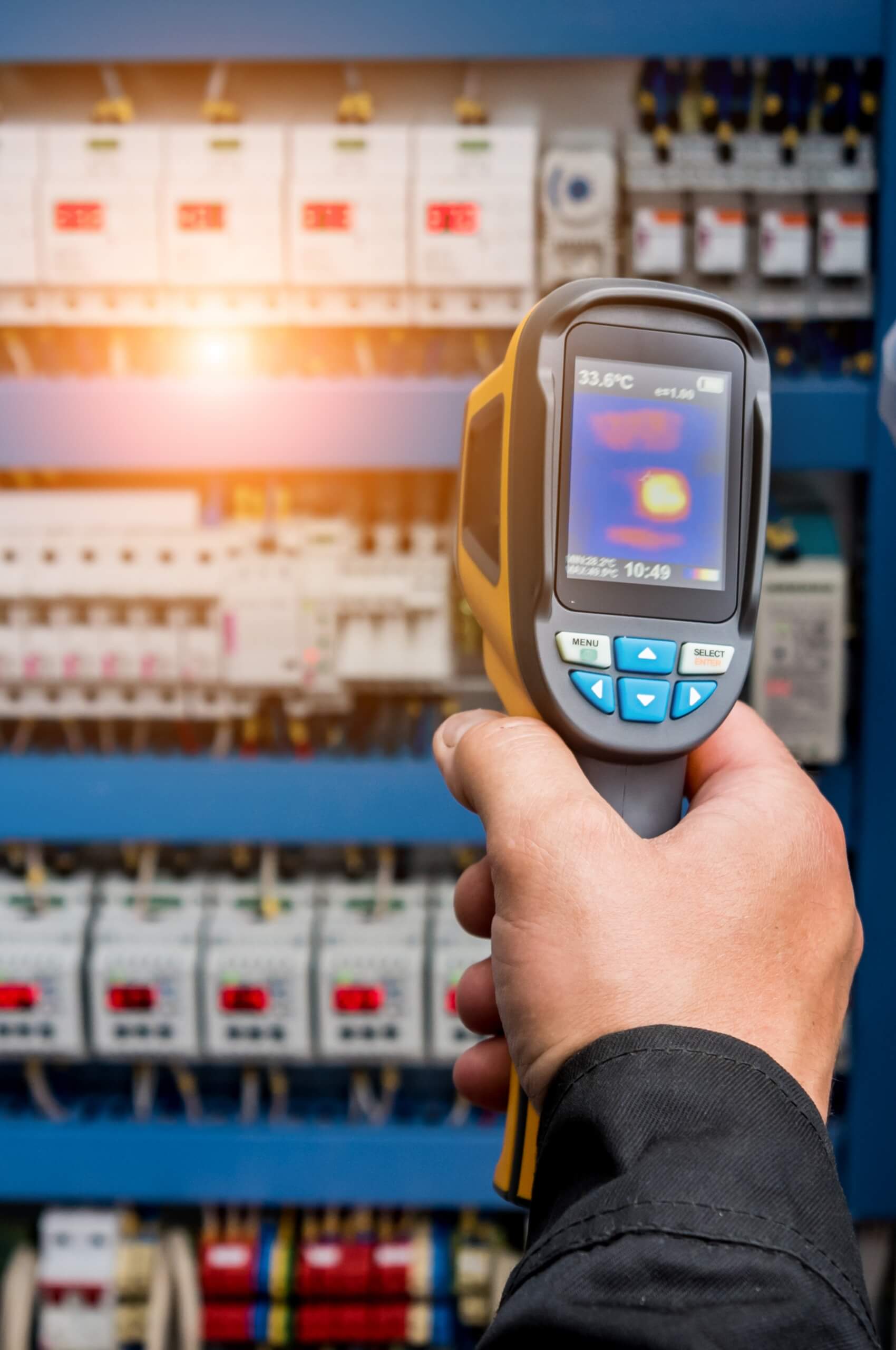
Baseline. Compare. Prioritise. Re-check.
Condition evidence that supports maintenance decisions
When thermal imaging and condition monitoring adds value
Thermography is most useful when the survey has a defined maintenance purpose. Agree the assets, operating conditions and decision the findings need to support, then use repeat surveys where comparison over time will add value.

You need a baseline for important assets
Named distribution boards, switchgear, control panels or plant supplies need an initial thermographic record so later surveys can be compared against a known reference point.

You have recurring or load-related concerns
Repeated tripping, changing loads, previous hot spots or concern around critical electrical equipment may justify targeted thermal evidence alongside the relevant electrical investigation.

You want to verify repairs and track change
A repeat survey can revisit previous anomalies or repaired assets under comparable operating conditions and keep outstanding actions visible within the wider maintenance programme.
Need a standalone thermographic inspection for an insurer, audit or independent testing record? See Thermal Imaging Inspections.
Defined assets and representative operating conditions
What condition monitoring can include
The survey should state which assets and inspection points are included, why they matter and the operating conditions needed for useful comparison. Accessible low-voltage distribution, control and fixed plant supplies can be considered where the agreed safe viewing arrangement supports the task.
Distribution boards and switchgear
Main and sub-distribution equipment, protective devices, connections and terminations can be surveyed where they are visible within the agreed safe access arrangement and carrying a representative load.

Control panels and plant supplies
Motor control centres, contactors, isolators, plant supplies and accessible electrical connections can be included where equipment ownership, operating duty, access and any manufacturer restrictions are understood.
Critical supplies and specialist interfaces
Critical circuits can be prioritised, but high-voltage equipment, hazardous areas, manufacturer-controlled assemblies and specialist systems require separate assessment. A thermal image does not transfer responsibility for another specialist system to WB.
For connected needs, use Planned Preventative Maintenance, Electrical Equipment Servicing, Compliance Testing or Backup & Standby Power Systems.
Comparable surveys need useful context
Build a repeatable condition-monitoring process
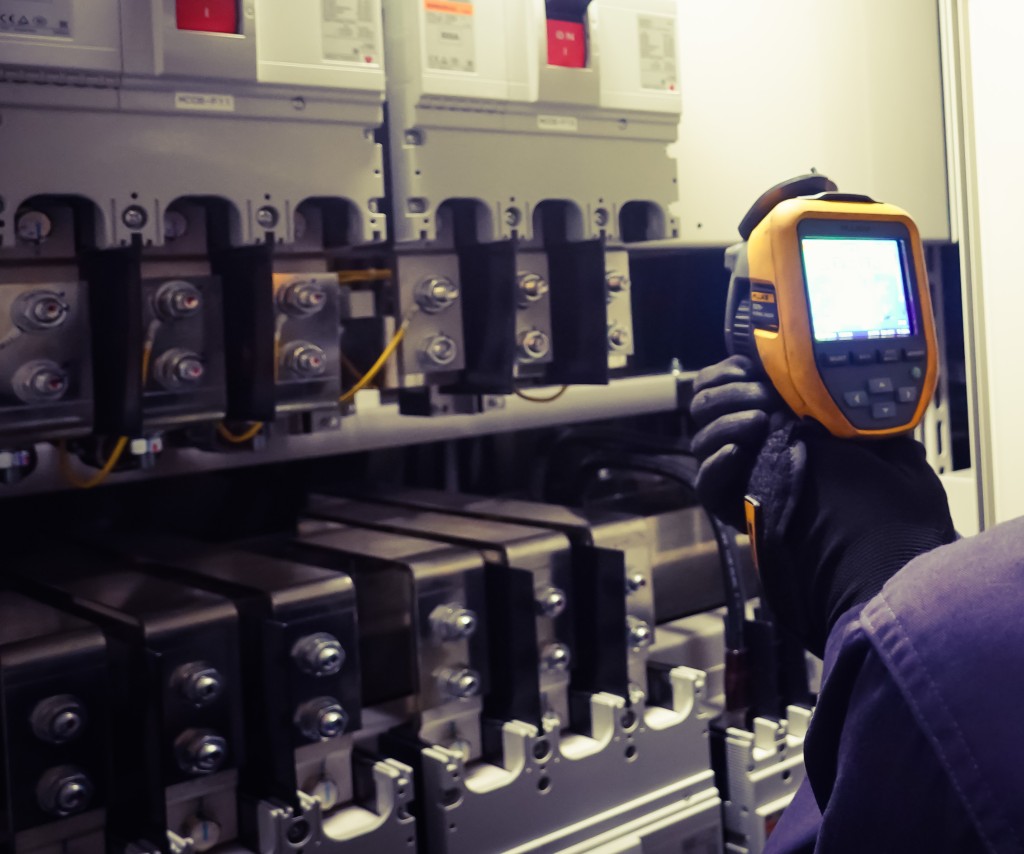
Thermal images are most useful when the same assets can be identified, the equipment state is understood and survey conditions are recorded. Safe access and representative operating load are separate planning questions and both matter.
01
Set the baseline and asset list
Confirm the boards, panels, plant supplies and critical assets to include, together with previous thermograms, known faults, repairs and the maintenance decision the survey needs to support.
02
Plan access and representative load
Agree operating windows, permits, barriers, covers, viewing points and site controls. Where practicable, scan equipment during normal or otherwise representative duty and record important limitations.
03
Compare findings and close actions
Record thermal and visual references, compare previous findings where conditions are sufficiently similar, prioritise investigation or repair and schedule a re-check where it will confirm whether the condition has changed.
A clear thermogram is not a complete electrical diagnosis. Hidden components, reflective surfaces, changing load and inaccessible equipment can affect what the camera shows. Unobserved equipment must remain recorded as a limitation rather than treated as checked by assumption.
Need help defining the asset list or survey window? Discuss your thermal survey scope with WB.
Evidence with clear limitations
Turn thermal findings into maintenance actions
A traceable survey record
- Agreed assets, locations and thermographic coverage.
- Thermal and corresponding visible images linked to asset references.
- Relevant operating or load context, limitations and inaccessible items.
- Prioritised findings, recommended next actions and comparison with earlier surveys where suitable.
The survey record should help the facilities or engineering team identify what was observed, under which conditions, what remains uncertain and which findings need monitoring, investigation or corrective work.
Priorities should lead to investigation or repair
- Urgent concern: communicate promptly to the nominated site contact and agree any necessary electrical isolation or further assessment through the authorised site process.
- Planned corrective work: define the investigation or repair scope, parts, isolation and suitable work window.
- Monitor or review: retain the finding for comparison where condition or trend needs further evidence.
- Separate formal test: route to the relevant inspection or testing service where a specific certificate, insurer report or independent record is required.
An unusual temperature pattern can identify an area that needs attention, but the image alone may not establish the electrical cause or justify a particular repair. Suitable investigation, measurements or specialist input may still be required.
Where a finding needs follow-up, WB can define suitable electrical investigation or remedial work and coordinate it through the wider electrical maintenance service.
Condition-led investigation within continuing site support
Thermal imaging experience in a working industrial environment
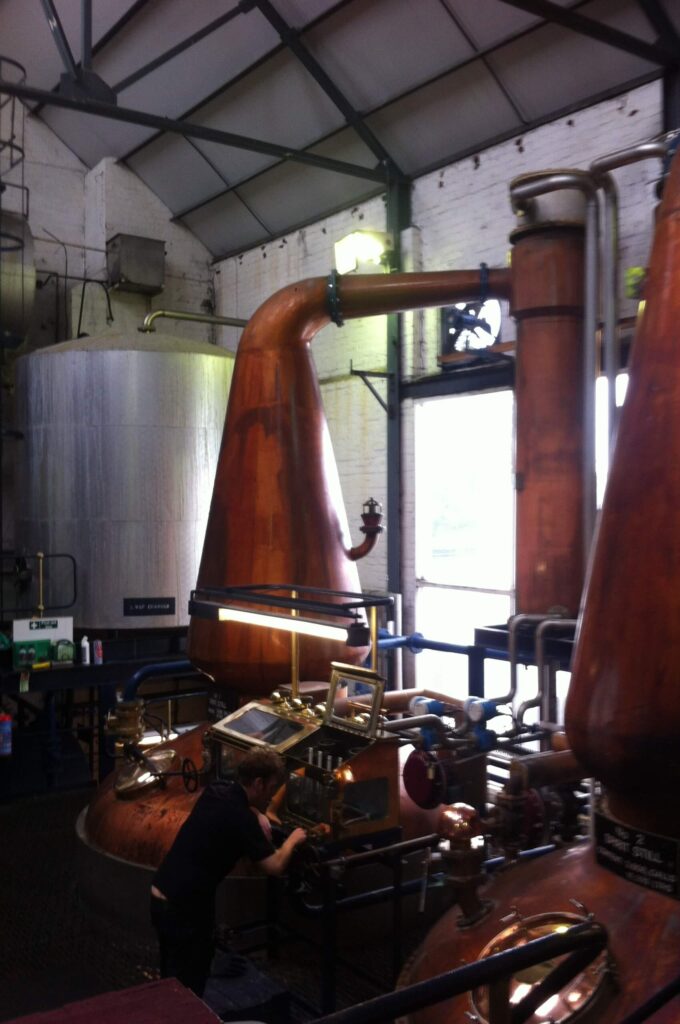
North British Distillery
WB Electrical has supported North British Distillery since 2016 across its Edinburgh distillery and associated West Lothian warehousing sites. The published case study includes thermal imaging support for condition-led investigation alongside planned work, reactive fault finding, inspection and electrical improvements.
This demonstrates practical use of thermography within continuing industrial electrical support. Any new monitoring programme still receives its own asset scope, operating conditions, frequency and reporting requirements.
Supplier assurance
Review WB’s current contractor evidence and share any specified thermography qualification, camera, calibration or reporting requirement so suitability can be confirmed before booking.
Practical answers before you plan
Thermal imaging & condition monitoring questions
What does electrical thermal imaging show?
It records infrared radiation from visible surfaces and presents the resulting temperature pattern as a thermogram. Differences between phases, connections or comparable components can highlight an area that needs further investigation, monitoring or remedial work.
How often should electrical thermal imaging be repeated?
There is no universal annual interval for every asset. The useful frequency depends on criticality, duty, environment, previous findings, maintenance history, manufacturer information and any client or insurer requirement. A baseline helps decide which assets merit repeat monitoring.
Does thermal imaging replace an EICR or electrical testing?
No. Thermal imaging is a complementary condition-monitoring technique. It does not test every electrical safety requirement, reveal every concealed defect or replace an EICR, periodic inspection or other task-specific electrical testing.
Does the equipment need to remain energised?
Electrical thermography is often most informative while equipment is energised and carrying a representative load. That does not remove the electrical risk. Safe viewing arrangements, barriers, covers, permits and work near live parts must be agreed for the installation and site.
What happens if an abnormal heat pattern is found?
The finding is considered against its location, operating condition, comparable components and available history. The next step may be electrical investigation, prompt isolation, planned repair, closer monitoring or a post-repair re-scan, depending on the apparent risk and site controls.
Connected services around the findings
Related electrical maintenance services

You need a wider planned maintenance programme
Use planned preventative maintenance to turn asset priorities, repeat findings and corrective actions into a wider scheduled maintenance programme.
You need equipment investigation or servicing
Use equipment servicing where a finding points to defined maintenance, adjustment, cleaning, replacement or manufacturer-specific work on agreed electrical equipment.

You need a standalone thermographic inspection
Use the Testing & Inspection route when the main requirement is a one-off thermal survey, insurer or audit submission, or an independent inspection record rather than continuing condition monitoring.
Explore the Preventative & Reactive Maintenance service family
Share the site, assets and survey purpose
Plan an electrical thermal imaging programme
Send the information you already have. WB will review the site, asset scope, operating conditions, previous findings, access and reporting requirement before recommending a practical survey or repeat-monitoring approach.
Information that helps us quote
- Company or organisation, site address, postcode and number of locations.
- Survey purpose, priority assets and the operations or services they support.
- Approximate board, panel and plant-supply quantities, plus asset lists or drawings where available.
- Normal operating hours, representative load windows, permits, escorts, barriers, covers and access restrictions.
- Previous thermograms, electrical reports, faults or repairs, required reporting format and target date.
Mention previous reports or useful photographs in the quote form. The office will confirm a suitable way to share them. Do not remove electrical covers or approach exposed live parts to take photographs.
What affects thermal survey cost?
Asset quantity and complexity, safe access, operating windows, travel, report detail, repeat visits and any specialist requirements all affect price. Several sites or return surveys add scope, while investigation and repair are agreed separately where needed.
The next step may be a quotation, a baseline survey, a repeat monitoring visit or a separate investigation. Repairs, formal testing, specialist attendance and post-repair re-checks are included only where the agreed scope states them.
Based in Larkhall, we support suitable thermal imaging and condition-monitoring work across Glasgow, Lanarkshire and the Central Belt. Multi-site and larger requirements elsewhere in Scotland are considered by agreement.