
For employers, facilities teams and commercial landlords
Workplace EV Charging Installation in Scotland
Give staff and company vehicles a practical place to charge. WB Electrical plans and installs workplace chargepoints around parking patterns, available power and day-to-day site operations, with clear controls and a route for future expansion.
From our Larkhall base, we work with businesses across Lanarkshire, Glasgow and the Central Belt. Larger workplace projects and Scottish property portfolios are considered by agreement.

Charging that fits the working day.
Staff needs, shared space and a realistic growth plan
Start with how your workplace uses its parking
An office car park, a shared business centre and a shift-based workplace need different arrangements. Agree who needs charging and when before choosing equipment.

Match the working day
Staff may park for a full day, part of a shift or a short visit. Consider current EV use, likely growth and the energy vehicles need during that time.

Make the bays usable
Plan around pedestrians, accessible routes, deliveries and existing parking pressures. Agree who can use each bay and how drivers share access.

Build in sensible stages
Start with an agreed number of live chargers and identify provision for later bays. Expansion should reflect demand, budget and available capacity.
Bring the right EV services into one plan
From the first capacity check to everyday charging
We can scope a new workplace installation or review what is already there. These components address different parts of the requirement.

Understand what the site can support
For a first installation, uncertain supply capacity or a change in parking demand.
Review existing demand, distribution, parking times and proposed bay locations before deciding on charger quantities and power.
Install chargers and their supplies
For staff bays, company cars and controlled workplace use.
Coordinate charger selection, circuits, protection, mounting and cable routes. Agree any groundworks, reinstatement, signage and other contractor interfaces in the scope.

Manage power and user access
For several chargers sharing a building supply or parking used by different teams.
Assess suitable load management alongside staff access and reporting requirements. Platform features, connectivity and ongoing charges need to be confirmed separately.
Expansion and care after installation
If more bays or distribution changes are needed, use EV infrastructure upgrades. Arrange maintenance and support around the equipment, usage and response arrangements your site needs.
People, permissions and practical working windows
Coordinate the installation around your business
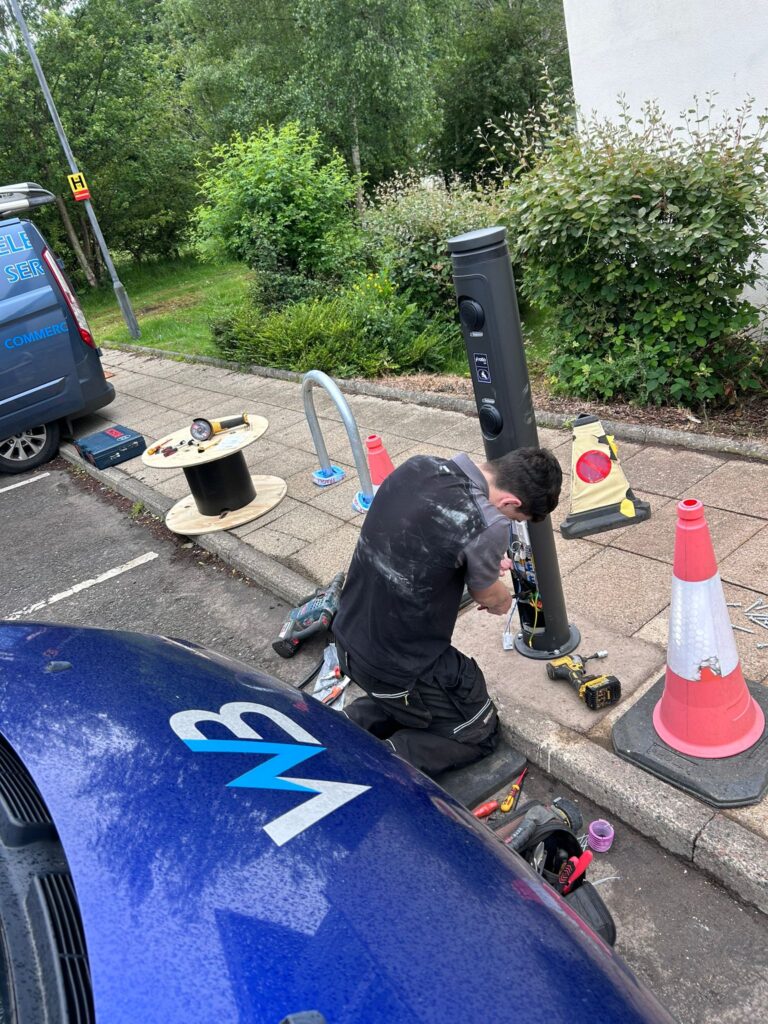
New circuits and distribution work may need planned power interruptions. Identify critical supplies, parking restrictions and safe pedestrian routes before the installation programme is agreed.
01
Agree ownership and permissions
Identify the employer, landlord or managing agent who controls the parking and electrical supply. Confirm landlord consent where needed and review applicable planning, building and network requirements.
02
Set the charging policy
Involve facilities, HR, finance and IT as appropriate. Decide staff and visitor access, any charging fees, fair-use rules, account administration and who handles driver queries.
03
Plan safe access and delivery
Agree cable routes, excavations, vehicle movements and accessible bay arrangements. Coordinate other contractors, phased working, staff notices and any shutdown or reinstatement checks.
For shared car parks, agree which organisation funds, operates and maintains each part of the system. A tenant’s parking space does not automatically provide permission to alter the building supply.
Need to bring the site team and landlord together? Discuss your workplace charging plan.
A system your team can operate and maintain
Leave the facilities team with useful information

Installation and commissioning records
- Electrical certification appropriate to the agreed work.
- Charger and circuit identification, operating instructions and warranty information.
- Confirmed settings, functional checks and any limitations or outstanding actions.

Day-to-day ownership and follow-up
Nominate who adds users, reviews charging data and manages software or connectivity subscriptions. Agree the fault-reporting route and distinguish manufacturer cover from electrical maintenance.
For several workplaces, use consistent site and asset references. Review usage before adding chargers, and retain the agreed provision for future bays in the site records.
A workplace installation in the Central Belt
Ten chargepoints for Procladd in Hamilton
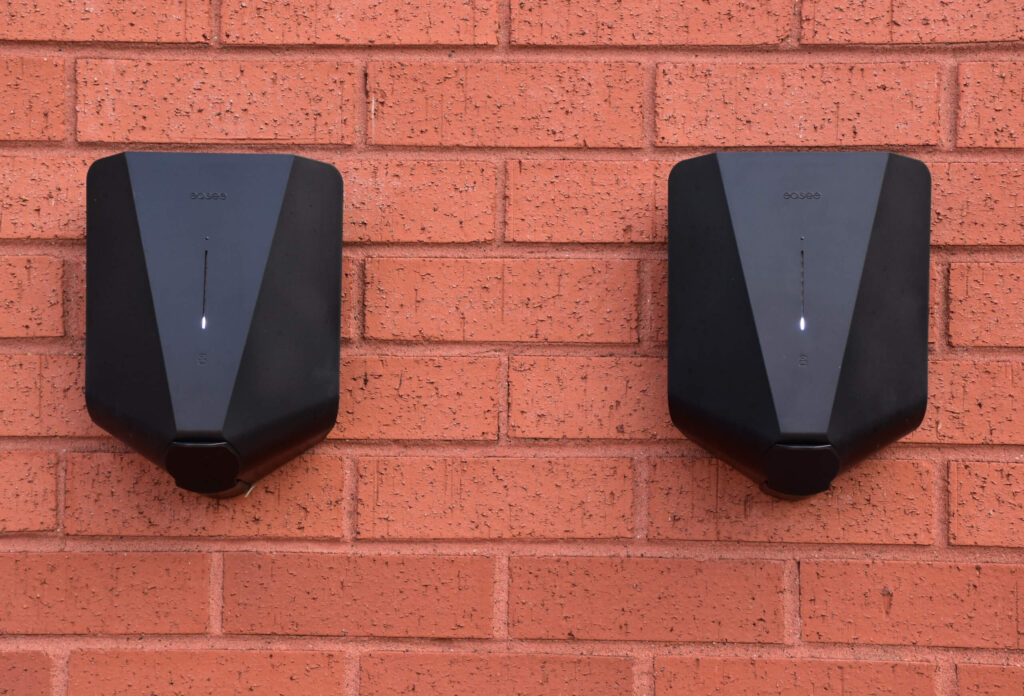
Charging within a working commercial site
Procladd’s 2025 workplace project brought ten Easee chargepoints into its Hamilton premises. WB’s published case records the supporting circuits, protection, isolation, containment and testing, together with controlled user access and handover.
It is a relevant example of coordinating the electrical installation and the way a workplace will use its chargers.
Supplier assurance
For procurement, review WB’s published accreditations and certificates. Share any site-specific supplier requirements when enquiring. Where grant funding is proposed, confirm the installer and equipment eligibility for that scheme before work starts.
Questions before choosing the installation
Workplace charging questions
How many chargers do we need, and how powerful should they be?
Start with current and expected EV use, parking duration and the energy drivers need. AC charging often suits vehicles parked for several hours. Higher advertised power does not mean every car can accept it. We assess the supply and vehicle requirements before recommending a first phase.
Will workplace charging need a power upgrade?
Not always. A capacity review may identify a suitable existing supply, staged installation or load management. Controls cannot create additional energy when demand exceeds what the supply can deliver. We check the applicable distribution network operator (DNO) notification or approval route for the proposed work.
Can we keep charging staff-only and charge for electricity?
Supported systems can restrict access through cards or user accounts. Agree whether charging is free, subsidised or paid, and specify the required reporting or payment service. Software and transaction costs vary. If you intend wider public access, review the public and customer charging requirements separately.
Can chargers be installed at leased or shared premises?
Potentially. Agree permission for the parking spaces, cable routes and electrical alterations with the landlord or relevant owner. Confirm who pays the electricity bill and manages shared assets. The design, quotation and any grant application must reflect these responsibilities.
Is Workplace Charging Scheme funding available?
As at September 2026, eligible applicants can receive up to 75% of purchase and installation costs, capped at £500 per socket and 40 sockets across all sites. Funding is listed to 31 March 2027. Who uses the bays affects eligibility. Confirm eligibility, voucher timing and the installer/equipment requirements before work. See the current official Workplace Charging Scheme guidance.
Do workplace chargers need smart functionality?
Relevant private workplace chargepoints sold in Great Britain must meet smart-chargepoint rules, with exclusions including rapid and public equipment. Product compliance is distinct from site load management, user access and payment features. We confirm the equipment and supported functions required for the project.
For vehicles that must be ready for dispatch or a particular shift, see fleet and logistics charging. Explore Commercial EV Charging for the full service group.
One workplace or an agreed rollout across several sites
Plan workplace charging for your organisation
Tell us how the parking is used and what you want to achieve. We will identify the information or site assessment needed to scope the next step.
Useful information to send
- Organisation, site address and landlord or managing-agent involvement.
- Staff, company vehicles and other intended users; typical parking times.
- Live chargers needed now and bays to prepare for later.
- Existing chargers, supply records or site plans, if available.
- Access constraints, working hours, target dates and funding intentions.
You do not need a finished specification. Mention any records or photographs you hold; the office will confirm how to share them.

What affects the quotation?
Charger numbers and power, cable routes, groundworks, distribution changes, access, controls and commissioning affect cost. Confirm separate network, software, connectivity and ongoing maintenance charges.
The scope should distinguish active chargers from future provision and make any funding assumptions clear.
For an installation at your own home, use the separate domestic enquiry route.