
For office occupiers, landlords and property teams
Electrical Testing for Offices & Commercial Property
Plan electrical testing around the people, equipment and shared spaces in your building. WB Electrical coordinates office EICR, emergency lighting and workplace equipment checks, with defined scopes and useful records.
Based in Larkhall, we support offices and commercial premises across Glasgow, Lanarkshire and the Central Belt. Wider Scottish portfolios are considered by agreement.

A practical plan for your working building.
One building can have several priorities
Testing that fits how your premises are used
An occupied floor, a tenant handover and a property portfolio need different arrangements. Tell us what has prompted the work so we can establish the right testing and coordination needs.

Keep the working day organised
Staff, visitors, meetings and IT equipment affect access. Agree which areas can be tested during normal hours and which need a planned interruption.

Prepare for a property change
A lease event, new occupier or changed layout may leave gaps in records. Review the available reports and affected areas before deciding what needs checking.

Bring several dates together
For managed buildings or multiple offices, identify each site’s tests, due dates and open findings. Coordinate suitable visits while keeping the records distinct.
Start with the part of the building that needs attention
Bring the right checks into one plan
These services answer different questions. We can help scope one requirement or coordinate several checks; a single report does not cover every system in the building.
Fixed wiring and office circuits
For distribution boards, lighting circuits, sockets and the fixed installation serving your premises.
An Electrical Installation Condition Report (EICR) records the condition of the agreed installation and any findings or limitations.

Escape routes and shared spaces
For emergency fittings and exit signs serving stairs, corridors, work areas and final exits.
Functional and duration tests check the included emergency lighting, with failed fittings and follow-up recorded.

Desk, kitchen and plug-in equipment
For suitable office IT equipment, chargers, extension leads and shared appliances.
Portable appliance testing (PAT) combines the appropriate inspection and testing with useful equipment records. The approach depends on risk and use.
When a more focused review is needed
Thermal imaging can help assess selected electrical equipment under representative load. Targeted condition inspections address an agreed asset or concern. Neither replaces an EICR where a formal fixed-wiring report is required.
For an insurer, landlord or auditor request, electrical documentation support helps identify the relevant records. Share the exact wording; the requesting organisation decides what evidence it will accept.
People, permissions and a workable test window
Agree the boundaries before the visit

Some tests need the power switched off. Identify servers, network equipment, access control and other critical supplies before booking. Emergency-lighting duration tests also need an appropriate discharge and recharge window.
01
Map the building and equipment
Confirm whether the scope covers tenant rooms, landlord areas, shared escape routes or particular assets. Identify who can authorise access and interruptions; do not assume one occupier’s report includes the whole building.
02
Coordinate the people affected
Nominate a building contact and involve the managing agent, occupiers and IT or other system providers where needed. Agree secure-room access, staff notices and who will check affected services after reinstatement.
03
Choose a realistic working window
Review desk access, meeting-room bookings, cleaners and visitors. Phased areas or agreed evening/weekend visits may help. The test method and safe access determine what can be achieved in each window.
Any inaccessible area, unavailable equipment or unresolved isolation must remain visible in the scope and records. A restricted visit must not imply that excluded systems have been checked.
Need help coordinating tenants or access? Discuss your office testing plan.
From individual tests to manageable property records
Keep the findings connected to the right site
Useful records identify the location, the work completed and the actions still open. Agree the report recipient and any building or asset references before the first visit.
For each attendance
- A clear site, floor or asset reference and the agreed scope.
- Results, limitations and anything not tested.
- Urgent findings raised with the nominated contact.
- Applicable reports and the next action or review recommendation.
Across tenancies or several offices
Use consistent building names, local contacts and report references. Existing due dates and unresolved findings can inform a coordinated programme, while each service retains the interval and scope appropriate to it.
The aim is a property file that your team can use when a tenant changes, an audit approaches or remedial work is authorised.
Where electrical work is needed: we can define and quote the follow-up separately. Keep immediate safety actions, further investigation, authorised repairs and completion records clear. Explore EICR remedial works.
Practical experience in occupied buildings
Coordinating work across a varied estate
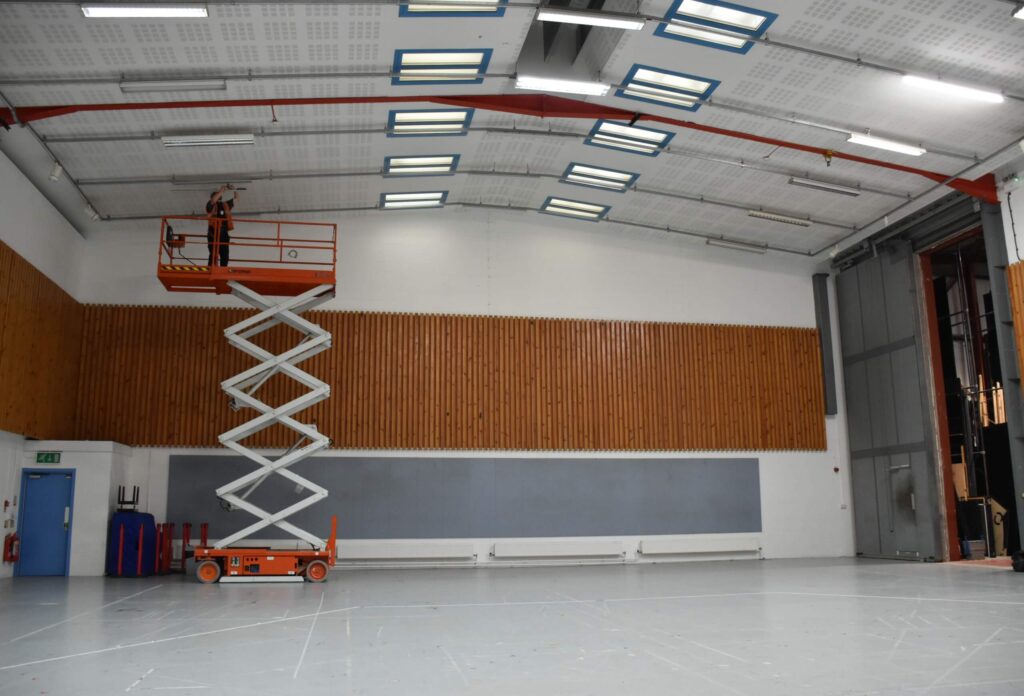
Scottish Opera, Glasgow
WB’s published Scottish Opera case study records a relationship since 2015 across multiple Glasgow premises, including office and support areas within a wider working estate.
The recorded scope includes EICR, PAT, emergency-lighting inspection and remedial activity, coordinated with the onsite maintenance team. It demonstrates the value of local contacts, clear work areas and a handover matched to each task.
Supplier assurance
For contractor selection and procurement, review WB’s current accreditations and certificates. Tell us about your supplier requirements when enquiring.
Before you arrange the next visit
Office and commercial testing questions
Does every office need annual PAT testing?
No. There is no blanket annual PAT requirement. The maintenance approach should reflect equipment type, use, environment and previous findings. For some low-risk office equipment, user checks and visual inspection may be sufficient; other items need appropriate testing.
Will the landlord’s report cover our office?
Check its scope, date, findings and limitations. It may cover shared or landlord-controlled systems without including every tenant circuit or appliance. Confirm the areas and equipment under each party’s control and the relevant lease or management arrangements before commissioning more work.
Can testing be completed without interrupting our IT?
Some checks require equipment or circuits to be disconnected. Agree the affected services with your IT provider and building team before the visit, including shutdown, reinstatement and checks afterwards. We cannot promise that every test can be completed with all systems running.
Can EICR, PAT and emergency lighting be booked together?
Suitable work can be coordinated, subject to scope, access and safe test windows. The checks keep separate purposes and records. Emergency-lighting recharge needs and the availability of office equipment may mean a phased programme is more appropriate than one visit.
How do we decide when testing is next due?
Review the previous reports, equipment risks, building use and any written requirements. Fixed-wiring and appliance checks do not share one universal interval. Emergency lighting has its own routine and duration-testing programme. Changes to occupancy, layout or equipment may also prompt a review.
Need installation changes as well? See office electrical installations and alterations. For the wider service family, explore Testing & Inspection.
One office, a managed building or several sites
Plan testing for your commercial premises
Tell us what prompted the enquiry and what information you have. We can identify whether the next step is a records review, a site visit or a quotation.
Useful information to send
- Company, site address and building or floor references.
- Tests requested, due dates or the wording of an insurer/landlord request.
- Existing reports and approximate circuit, fitting or equipment quantities, if known.
- Occupancy, landlord/tenant contacts, access and interruption restrictions.
- One-off work or a programme covering several locations.
Missing records or quantities need not stop an enquiry. Mention documents or photographs in the form; the office can confirm how to share them.
What affects the quotation?
Test types, quantities, access, existing records, working hours and the number of visits affect cost. Coordinating attendance may help the programme, but it does not make different tests interchangeable.
Inspection and agreed reporting are scoped before booking. Remedial work is quoted separately unless expressly included.
For a home or residential letting, use the domestic quote route.