
For landlords, property factors and shared residential parking
EV Charging for Landlords & Property Factors
Turn resident requests into a practical plan for the car park. WB Electrical reviews and installs charging infrastructure for flats, rental properties and managed residential developments, connecting the electrical work with permissions, access and ongoing management.
Based in Larkhall, we support landlords and factors across Lanarkshire, Glasgow and the Central Belt. Larger developments and wider Scottish property portfolios can be considered by agreement.
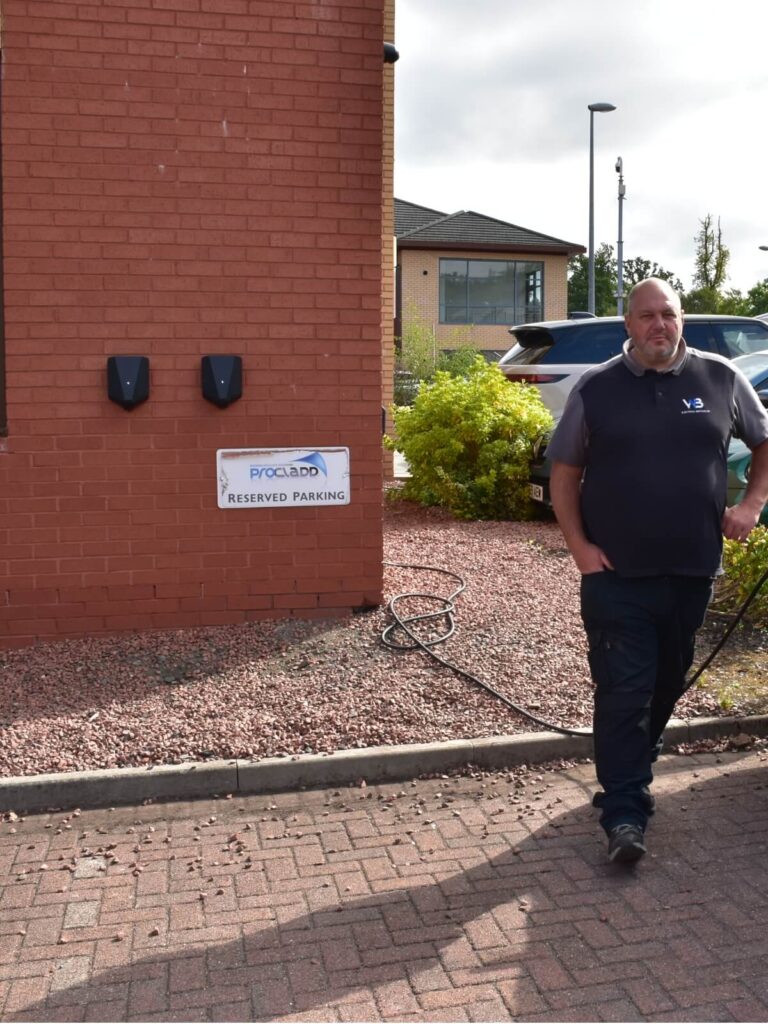
A practical charging plan for shared parking.
Flats, factored developments and managed residential estates
Plan for the residents and the whole car park
A landlord-owned block, a development with several owners and a housing association estate have different approval and management arrangements. Establish how parking and charging will work before choosing equipment.

Allocated or shared bays
Identify who can use each space and whether charging will be dedicated or shared. Consider residents’ parking habits, accessible routes, cable reach and how a charging bay becomes available for the next user.

Clear costs and responsibilities
Agree who pays for the installation, electricity, software and maintenance. Separate individual charging use from shared infrastructure costs, with terms residents can understand before committing.

Room for later demand
Record current requests and likely changes across the development. Compare a first installation with future cable routes, distribution and bay provision, so one resident’s arrangement does not obstruct later additions.
From an initial request to a coordinated installation
Choose the support your property needs
Start with the immediate decision, whether that is establishing feasibility, installing agreed chargers or improving an existing shared system.

Establish the options
For a resident request, an uncertain supply or an owners’ proposal.
Review parking plans, existing chargers, supply records and demand. Compare suitable supply and cable-route options, identify further checks and establish the relevant network enquiry or approval process.
Install the agreed infrastructure
For rental properties, blocks of flats and communal parking areas.
Define distribution, protection, isolation, circuits and charger positions. Coordinate ducts, trenching, bases, reinstatement and any building penetrations with the agreed design and contractor responsibilities.

Manage power and resident access
For several users sharing capacity or a managed charging system.
Assess load management alongside the building’s other demands. Check supported resident accounts, usage records, cost recovery and connectivity with the chosen charger and platform provider.
Support the system as the property changes
Use EV infrastructure upgrades when adding bays or replacing unsuitable equipment. For faults, condition checks and ongoing care, see EV maintenance and support.
Owners, residents and the team managing the property
Agree the project before work starts
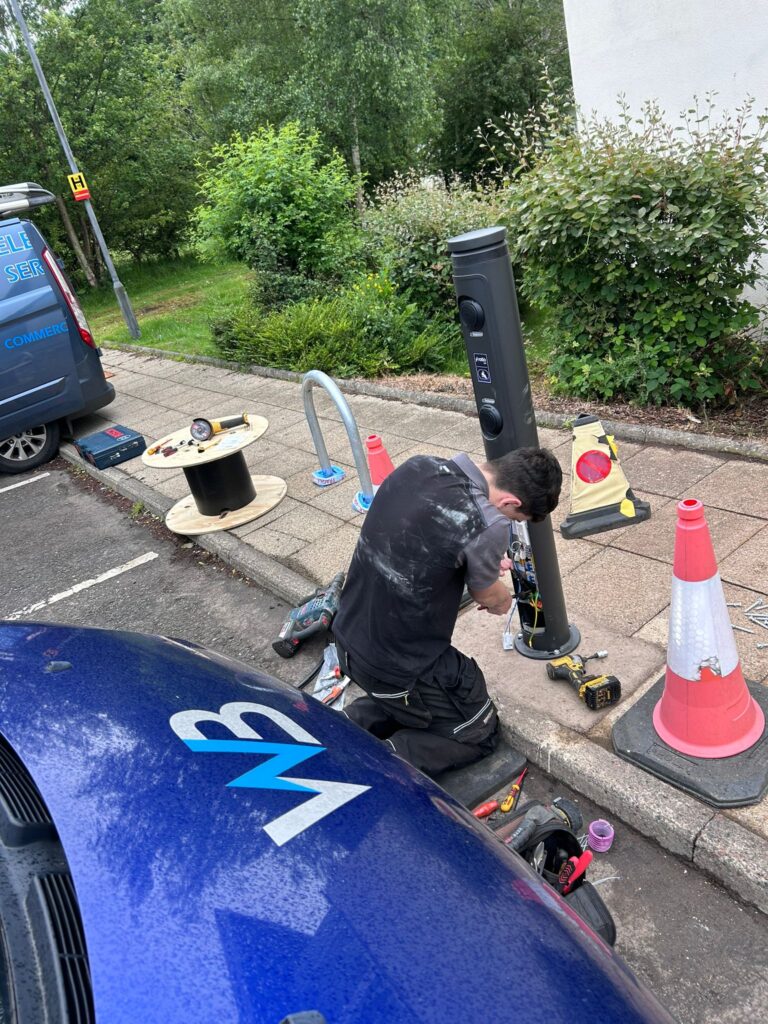
Confirm authority before instructing work. Parking ownership, cable-route rights and required owner or landlord consents need to be established. A quotation does not authorise alterations to shared property.
01
Identify who can approve the proposal
Agree a project contact and ask the landlord, factor or owners’ representative to confirm the approval process. Resolve title, lease and cost-allocation questions with the appropriate property adviser where needed.
02
Set the scope, budget and funding route
Separate active chargers, future provision and recurring charges. WB can provide technical scope and quotation information. The applicant retains responsibility for its funding application, permissions and any written offer required before installation.
03
Plan work around people living there
Arrange notices, temporary bay closures, delivery access and any supply interruptions. Consider mobility needs, emergency access and noise. For enclosed parking, coordinate the design with the building’s fire-safety arrangements and relevant advisers.
Have an initial resident request or a proposed communal scheme? Discuss the property and the next step.
Useful records and straightforward day-to-day management
Make the handover work for the next resident too
Records for the landlord or factor
- Electrical certification, circuit labels and charger asset details.
- Agreed power limits, control settings and commissioning records.
- Instructions, warranty information and scope for later additions.
Define the handover package with the quotation, including any documents needed for an accepted grant claim.

A clear process for access and support
Nominate who adds and removes residents, changes access permissions, reviews usage and answers billing questions. Confirm account ownership, data access and any platform subscription or transaction charges.
Keep fault contacts, maintenance responsibilities and response arrangements with the property records. Plan how accounts and documentation transfer when a tenant, property owner or factor changes.
Commercial EV installation experience
A coordinated charging installation at Procladd
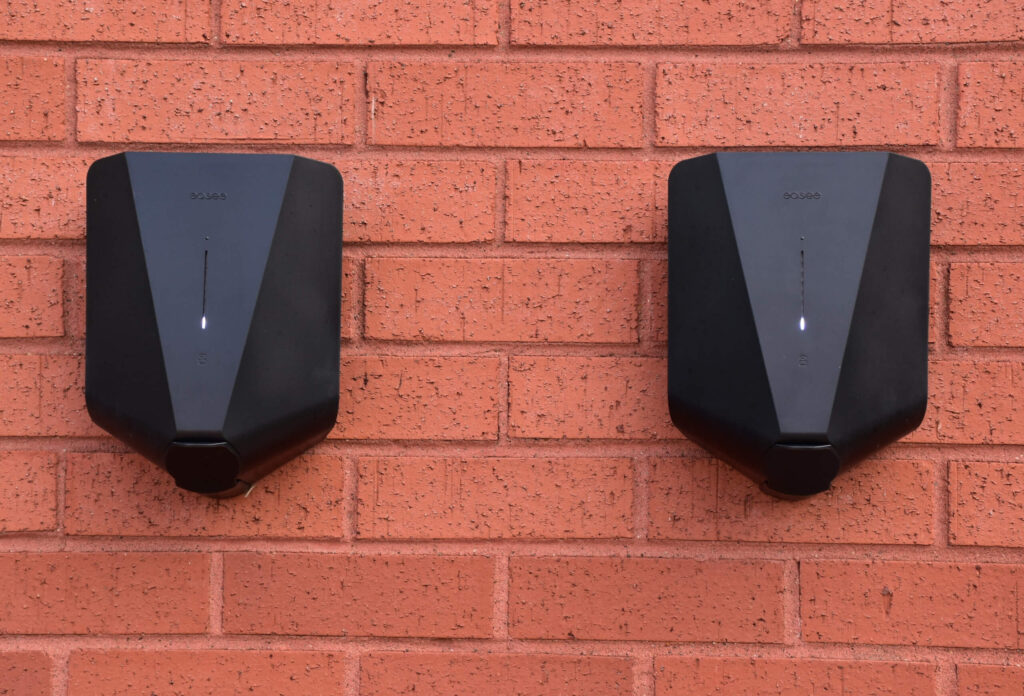
Ten workplace chargepoints in Hamilton
The published Procladd case records WB’s installation of ten Easee chargepoints in 2025, including supporting electrical work, testing and authorised-user access.
It provides relevant evidence of coordinated installation and handover at a working site. Residential permissions, resident charging arrangements and funding would be assessed for your development.
Supplier assurance
Use WB’s published accreditation information in your contractor assessment. Confirm the scheme-specific installer eligibility, insurance, working arrangements and documentation required for your particular project.
Practical questions from landlords and property managers
Landlord and shared parking charging questions
Who needs to approve charging in a shared car park?
The answer depends on ownership, title or lease conditions, parking rights and the factor’s authority. Ask the responsible property representative to establish the required consents before work is instructed. Do not assume one resident or the factor can approve every change. WB can explain the proposed electrical work to support that decision.
Can residents pay for their own charging?
Supported systems can identify users and record sessions for cost recovery. Agree the supply account, metering, charging prices, platform fees and billing responsibility before selecting equipment. A report of electricity use is not automatically a complete billing service. The property manager should confirm the appropriate pricing and tax treatment.
Can chargers use the existing communal electricity supply?
Possibly, after checking the supply, distribution, existing loads and proposed demand. Permission from the account holder and an agreed cost arrangement are also needed. Load management can share available power, but it may reduce charging rates. A separate supply or network upgrade may be appropriate for some developments.
Does every parking bay need a charger immediately?
No. The design can distinguish chargers needed now from future routes and distribution provision. Compare dedicated bays with shared charging and agree how later users can join. Any grant-funded phasing must also meet the scheme’s conditions; an infrastructure-only proposal should not be assumed eligible.
Is funding available for landlords and Scottish factors?
Eligible projects may qualify for Scottish factored-development funding or the residential landlord chargepoint grant. Check current terms, applicant and installer eligibility, permissions and offer requirements before starting. WB can supply the quotation and technical evidence; the applicant must complete its own factored-development application.
Can you assess chargers already installed at the property?
Yes, we can agree an assessment of the installation and reported problems. Share the charger models, asset records, warranty details and existing support arrangements. Repairs, platform changes or a transfer of administration depend on condition, permissions, compatible equipment, parts availability and access to the relevant accounts.
If you intend to open bays to general visitors or customers, review public and customer charging separately. For employee parking, see workplace charging. All options sit within our Commercial EV Charging service.
One property, a shared development or a managed portfolio
Tell us about the property and parking
You can enquire before every detail is settled. Tell us what residents need and what has already been agreed, so we can identify the appropriate review.
Useful information for the first discussion
- Property address, landlord or factor and nominated project contact.
- Parking ownership, allocated or shared bays and known permissions.
- Current charging requests, likely usage and future phases.
- Existing chargers, supply records and any available layout plans.
- Billing preferences, funding plans, access needs and target dates.
Let us know which drawings or photographs you have. The office will advise how to share the useful records.

What affects the quotation?
Charger numbers, supply changes, cable routes, groundworks, building interfaces and access affect the installation cost. Account for software, connectivity, billing and maintenance separately.
A useful proposal distinguishes current work, future provision, third-party responsibilities and costs that remain subject to assessment or approval.
For an individual home charger with your own parking, use the domestic enquiry route.