
For production, engineering and maintenance teams
Industry & Manufacturing LED Lighting in Scotland
Plan high-bay, task, inspection and control upgrades around machinery, production areas and shutdown windows. WB Electrical helps define the lighting package, coordinate access and deliver the work around live industrial operations.
From our Larkhall base, we support manufacturing and industrial sites across Glasgow, Lanarkshire and the Central Belt. Larger projects and Scottish site programmes are considered by agreement.

Lighting planned around tasks, equipment, access and the way production actually runs.
Different tasks need different lighting decisions
Lighting that fits production, inspection and movement
A production hall, inspection bench and plant access route do not have the same visual task or operating conditions. Start with what people need to see, where equipment creates shadow or glare, the environment around the fittings and how the area can be accessed safely.

Production and machinery areas
Review operator positions, machine layouts, guarding, movement routes, mounting heights and existing services together. The aim is useful, consistent visibility without creating avoidable glare, deep shadow or awkward maintenance points around plant.

Assembly, inspection and quality areas
Detailed assembly, checking, measurement and quality-control tasks can need more considered local lighting than the wider production floor. Task position, colour appearance, reflections and the surrounding light level all affect the useful result.

High-level, harsh and supporting areas
High bays, plant rooms, stores and areas exposed to dust, moisture or washdown need fittings and access arrangements suited to the actual environment. Where an area is classified for an explosive atmosphere, the lighting requirement belongs within the hazardous-area scope rather than a standard industrial LED specification.
Choose the lighting service that solves the actual problem
Bring the right lighting work into one manufacturing plan
Industrial sites can combine several LED Lighting components, but each solves a different need. We can help define the package without assuming that every production area needs a complete relight, advanced controls or the same specification throughout.
Upgrade ageing high-bay and production lighting
For fluorescent, discharge, legacy LED or mixed systems where failures, poor coverage, changed layouts or maintenance difficulty are driving the project.
A lighting upgrade can review existing fittings, mounting heights, task areas, controls, access and electrical alterations before deciding whether repair, partial renewal or wider replacement is appropriate.

Use controls around shifts and operating zones
For stores, intermittent production zones, welfare areas, plant spaces and other areas where occupancy or operating hours vary.
Occupancy sensing, daylight response, schedules, dimming and zoning can be considered where they suit the process. More advanced control systems need detection behaviour, interfaces and ownership agreed for the actual site.

Keep emergency lighting separate and coordinated
For escape routes, open areas, final exits and other locations covered by the agreed emergency-lighting design and fire-safety information.
New emergency fittings, alterations and remedial installation work can be coordinated with industrial lighting changes, while routine emergency-lighting testing remains a separate Testing & Inspection service.
Keep high-level lighting maintainable and specialist areas correctly routed
Lighting maintenance and repairs can deal with failed high-bays, drivers, sensors and recurring lighting faults. For yards, loading areas and perimeter points, use external and security lighting.
During shutdowns, plant moves or staged refurbishment, temporary lighting can support work areas. Lighting within identified hazardous zones should instead be scoped through CompEx & Hazardous Areas.
Production, permits and a workable installation window
Plan the lighting work around machinery and live operations

Industrial lighting work often sits above machinery, process areas and active production routes. Access, isolations, permits, shutdown windows, production priorities and the condition of the existing electrical installation can all change how the work should be sequenced.
01
Map tasks, equipment and environmental conditions
Confirm the areas in scope, machinery and operator positions, inspection or assembly tasks, mounting heights, access routes, daylight, existing controls and the lighting problems that prompted the project. Record dust, moisture, washdown or other environmental conditions that may affect equipment selection.
02
Coordinate operations and specialist interfaces
Agree the site contact, access equipment, work-area controls, permits, inductions and isolation arrangements. Production, engineering, maintenance, H&S, fire, controls, process or hazardous-area teams may need to contribute where their systems or responsibilities interface with the lighting work.
03
Choose a realistic shutdown or phased programme
Suitable work can often be delivered line by line, zone by zone or during planned downtime. Evening, weekend or shutdown working may be considered where agreed, but safe separation from machinery, production activity and other contractors still needs to be planned rather than assumed.
A fitting count alone is not a lighting design. Task detail, machinery, shadows, mounting height, environment, controls, maintenance access and hazardous-area boundaries can all change the right solution.
Need to protect production time? Discuss your manufacturing lighting programme.
From installation to a system maintenance teams can manage
Leave useful lighting records and clear control zones
A good handover should help engineering and facilities teams understand what changed, how included controls work and what still needs attention. Agree useful line, bay, area or asset references before installation begins.
For each completed area
- A clear production line, bay, task area or zone reference and the agreed lighting scope.
- Relevant electrical inspection, testing and commissioning records for the work completed.
- Control settings, sensor zones or user instructions where these form part of the project.
- Outstanding defects, exclusions and any separate follow-on recommendations.
Across several lines, buildings or sites
Use consistent line, bay, area, fitting or control-zone references. This makes later fault finding, plant moves, planned maintenance and future lighting changes easier than relying on a generic fitting list with no operational context.
The aim is a lighting handover that remains useful when machinery moves, production layouts change or another contractor needs to understand the installed scope.
When maintenance is the next need: repeated high-bay failures, damaged fittings, drivers or sensors can be handled through the lighting-maintenance route rather than starting another upgrade project. Explore lighting maintenance and repairs.
Relevant experience in live manufacturing environments
Lighting support across production, warehousing and industrial sites
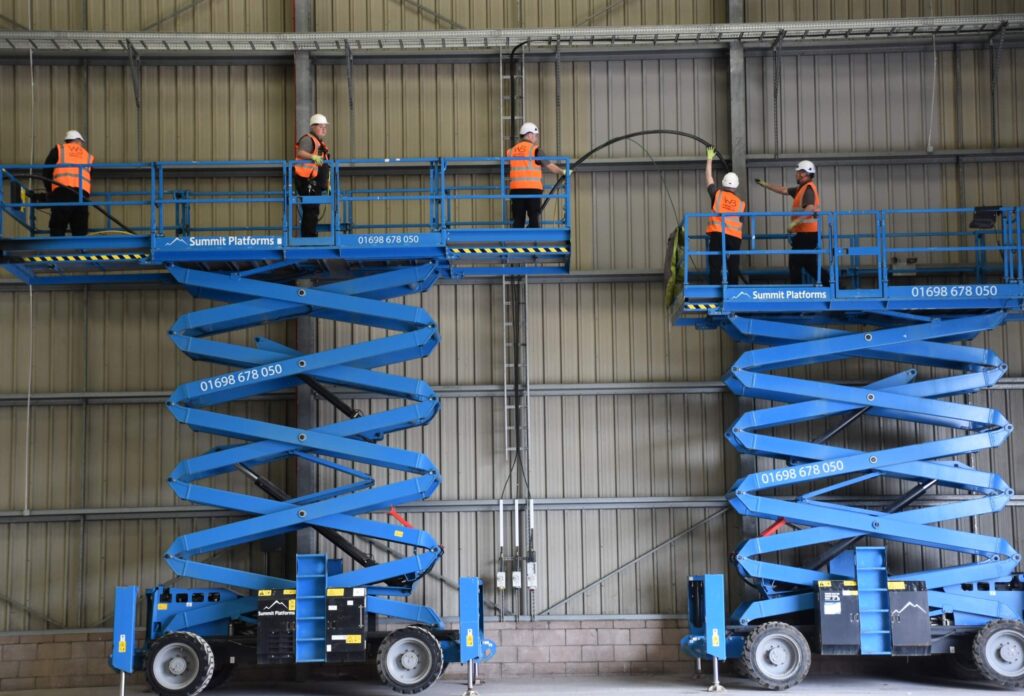
Bridon-Bekaert, Coatbridge and Grangemouth
WB’s published Bridon-Bekaert case study records a client relationship since 2014 across manufacturing and warehouse facilities in Coatbridge and Grangemouth, covering ongoing maintenance, planned improvements, machinery-related electrical work and later decommissioning.
Recorded lighting work includes warehouse, production and high-level lighting maintenance, new lighting and sensors, emergency lighting, plus yard and security lighting. This is direct evidence of industrial lighting work; the accompanying photograph shows high-level industrial access during the later decommissioning phase rather than the lighting installation itself.
Supplier assurance
For contractor selection and procurement, review WB’s current accreditations and certificates. Tell us about permits, approved-contractor requirements, shutdown rules or supplier documentation when enquiring.
Before you plan the project
Industry and manufacturing lighting questions
Does every area of a factory need the same lighting level?
No. Production, assembly, inspection, stores, circulation and plant areas can involve different visual tasks and conditions. BS EN 12464-1 covers indoor workplace lighting, but the requirement should be established for the actual task and area rather than copied from one generic figure.
Can you improve lighting at inspection or quality-control points?
Yes, where lighting is part of the problem. We can review the local task, surrounding light, reflections, colour appearance, shadows and electrical arrangement, then define suitable task or area lighting within the agreed scope.
What about dust, moisture or washdown areas?
The fitting and installation approach should suit the environment and manufacturer requirements. IP ratings may form part of that assessment, but an IP rating alone does not establish suitability for every industrial condition. Identified explosive atmospheres need a separate hazardous-area assessment and Ex equipment route.
Can industrial lighting work be phased around production?
Often, yes. Suitable projects can be phased by line, bay, area or shutdown window. The final programme depends on machinery access, production priorities, permits, isolation, work-at-height controls and safe separation from site operations.
Do you provide lighting in hazardous areas?
WB has a separate CompEx and hazardous-area service for identified explosive atmospheres. Those areas need the relevant classification, equipment and installation requirements applied, so they should not be treated as an ordinary industrial LED specification.
Need wider distribution, three-phase supplies, machinery interfaces or containment changes? See Electrical Installations. For hazardous zones, use CompEx & Hazardous Areas. For the wider lighting family, explore LED Lighting Solutions.
One production area, factory or multi-site programme
Plan lighting for your manufacturing site
Tell us what is driving the project and how the area operates. We can identify whether the next step is a photo review, site survey, outline scope or quotation.
Useful information to send
- Company, site address and the production, workshop, inspection or support areas involved.
- What is wrong now, or what you want the lighting to achieve.
- Approximate fitting quantities, mounting heights, machinery layouts, drawings or photographs, if available.
- Shift pattern, shutdown windows, permits, induction requirements, access restrictions and known isolation constraints.
- Any controls, emergency-lighting, environmental, hazardous-area, refurbishment or multi-site requirements already known.
Exact fitting counts or drawings are not essential for the first enquiry. Mention photographs or existing information in the form; the WB team can confirm the most useful way to share them.
What affects the quotation?
Fitting quantities, mounting height, task requirements, machinery and access constraints, environmental conditions, controls, emergency-lighting scope, working hours, electrical alterations, phasing and the number of visits can all affect cost.
Survey, design coordination, supply, installation, controls and handover will be scoped as applicable. Unknown existing conditions or hazardous-area requirements may need resolving before a final installation price is confirmed.
Need wider fixed-wiring or compliance checks? See Manufacturing & Industrial Testing. For hazardous zones, use CompEx & Hazardous Areas.