
For office occupiers, landlords and facilities teams
Electrical Maintenance for Offices & Commercial Property in Scotland
Plan preventative maintenance and responsive electrical support around staff, tenants, IT and shared areas. WB Electrical helps keep workplace electrical systems dependable, actions visible and disruption controlled.
Based in Larkhall, we support offices and commercial premises across Glasgow, Lanarkshire and the Central Belt. Wider Scottish portfolios are considered by agreement.

Practical support for live workplaces.
One building can have several maintenance priorities
Maintenance that fits how your premises are used
An occupied office, a managed multi-tenant building and a property portfolio need different arrangements. Start with how the premises are used, what is critical to keep running and which electrical responsibilities sit with each party.

Keep the working day moving
Staff, visitors, meetings, reception areas and IT equipment affect access. Agree which maintenance tasks can be completed during normal hours and which need a controlled interruption or quieter working window.

Plan around landlord and tenant boundaries
Lease arrangements, common areas and tenant-controlled spaces can divide responsibility. Confirm the relevant areas, assets and approval route before work starts rather than assuming one maintenance scope covers the whole building.

Bring several sites into one maintenance view
For managed buildings or several offices, keep site references, local contacts, recurring tasks and open actions consistent. A common reporting approach helps, while each building can retain its own priorities and access rules.
Start with the part of the building that needs attention
Bring the right maintenance services into one plan
These services solve different maintenance problems. We can scope one immediate requirement or bring several into a practical programme, while keeping the purpose and records of each activity clear.
Planned maintenance and routine care
For recurring attention to distribution, lighting, small power and agreed electrical assets before avoidable faults become disruption.
A planned programme can combine agreed inspections, servicing, minor maintenance and action tracking around the way the building is used.

Reactive faults and urgent repairs
For unexpected power loss, tripping, damaged accessories, lighting faults and other electrical issues that need investigation and a safe next step.
Reactive support can cover triage, make-safe work, fault finding and practicable restoration or repair within the agreed scope and response arrangement.

Electrical equipment servicing and repairs
For distribution boards, isolators, protective devices, fixed supplies and other agreed electrical equipment that benefits from planned attention.
Servicing scope depends on the asset and manufacturer requirements. Internal OEM, mechanical or proprietary work remains with the appropriate specialist where required.
Condition, compliance and continuity needs
Thermal imaging and condition monitoring can support repeat condition tracking where suitable. Compliance testing and scheduling helps coordinate due dates and records without replacing the individual test requirements.
For comms rooms, essential circuits or other continuity concerns, backup and standby power support can address the agreed electrical interfaces. If you need one defined contractor relationship across several services or sites, see Electrical Maintenance Contractor.
People, permissions and a workable maintenance window
Agree access, responsibility and working windows

Some maintenance tasks require isolation or controlled access. Identify servers, network equipment, access control, lifts or other affected services before booking. Agree who can authorise interruptions and who needs to check systems after reinstatement.
01
Map the building and responsibilities
Confirm whether the scope covers tenant rooms, landlord areas, shared spaces, distribution equipment or particular assets. Identify the local contact and who can approve access, isolation and follow-on work.
02
Coordinate the people affected
Involve the facilities team, managing agent, occupiers, IT provider or other system specialists where their equipment may be affected. Agree notices, secure-room access and the handback route before work begins.
03
Choose a realistic working window
Review reception hours, desk occupancy, meeting rooms, cleaners, deliveries and public access. Phased areas or agreed evening and weekend visits may help, but the task and safe method determine what can be achieved in each window.
Any inaccessible area, unavailable asset or unresolved isolation should remain visible in the work record. A restricted attendance must not imply that excluded equipment or areas have been maintained.
Need help coordinating occupiers or access? Discuss your office maintenance plan.
From individual visits to manageable property records
Keep actions connected to the right site
Useful maintenance records identify the location, the work completed, defects found and actions still open. Agree building, floor and asset references before recurring visits begin.
For each attendance
- A clear site, floor or asset reference and the agreed maintenance scope.
- Work completed, limitations and anything that could not be accessed.
- Urgent defects raised with the nominated building contact.
- Follow-on actions, records provided and the next agreed review or attendance.
Across tenancies or several offices
Use consistent site names, local contacts and work references. Planned tasks, recurring faults, outstanding repairs and future review dates can then remain connected to the correct building rather than becoming a separate email trail.
The aim is a property maintenance record your team can use when budgets are reviewed, occupiers change, faults recur or follow-on work is authorised.
Where installation changes are needed: keep the maintenance finding separate from the alteration scope and quotation. New circuits, distribution changes or wider upgrades can be routed to office electrical installations and alterations.
Practical experience across occupied and mixed-use buildings
Coordinating support across a varied estate
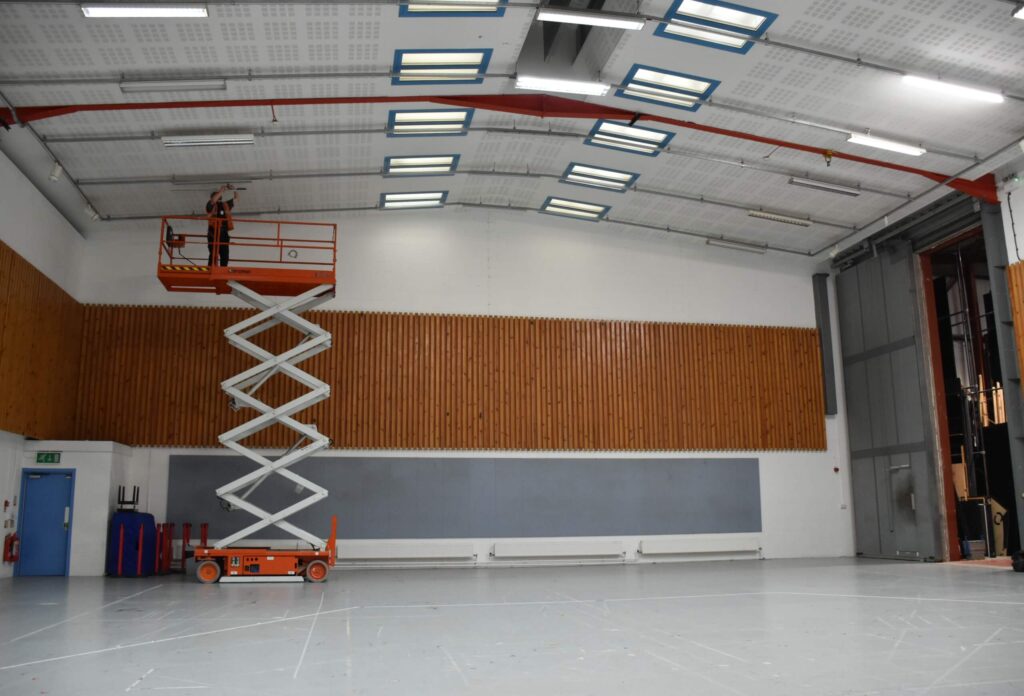
Scottish Opera, Glasgow
WB’s published Scottish Opera case study records an ongoing relationship since 2015 across four Glasgow locations, including office, welfare and support areas within a wider mixed-use estate.
The recorded work includes planned improvements, reactive repairs, lighting, distribution, EICR, PAT and remedial activity coordinated with the onsite maintenance team. It demonstrates practical continuity, local coordination and clear handover across different working spaces rather than a single repeated maintenance task.
Supplier assurance
For contractor selection and procurement, review WB’s current accreditations and certificates. Tell us about supplier questionnaires, reporting formats, service levels or site rules when enquiring.
Before you set the maintenance arrangement
Office and commercial maintenance questions
What should office electrical maintenance include?
Office electrical maintenance can include planned preventative work, servicing, fault response, condition monitoring, compliance scheduling and agreed remedials. The useful scope depends on the building, existing assets, operating pressures and who controls each part of the premises.
Who is responsible for electrical maintenance in a leased office?
Not necessarily. Agree the landlord, tenant and managing-agent boundaries from the lease, management arrangements and actual electrical control points. WB can help define the electrical work area, but does not decide contractual responsibility between parties.
Can maintenance be carried out without disrupting staff or IT?
Some tasks can be completed around normal occupation, while others need isolation, ceiling access or a quieter period. Identify IT, access control and other business-critical services in advance. We will agree the work window for the specific task rather than promise zero disruption.
Do you provide reactive or out-of-hours support for offices?
Reactive support can be included or arranged separately. Response times, out-of-hours coverage and any priority categories depend on the agreed maintenance arrangement, geography and availability. A contract-specific 24/7 service should not be assumed unless it is expressly agreed.
Can one maintenance arrangement cover several offices?
Yes. A maintenance arrangement can cover several offices or commercial sites with consistent contacts, instruction routes and reporting. Each location can still retain its own asset scope, access restrictions, priorities and agreed response expectations.
Need testing-specific information as well? See office and commercial electrical testing. For the wider service family, explore Preventative & Reactive Maintenance.
One office, a managed building or several sites
Plan maintenance for your commercial premises
Tell us what is prompting the enquiry and how the building is managed. We can identify whether the next step is a scope discussion, site review, immediate fault response or a maintenance quotation.
Useful information to send
- Company, site address and building or floor references.
- The maintenance need, recent faults and any existing service or inspection records.
- Key electrical assets, critical areas and known recurring problems, if available.
- Occupancy, landlord/tenant contacts, access, IT and interruption restrictions.
- One-off support, recurring visits or a programme covering several locations.
Missing asset lists or perfect records need not stop an enquiry. Mention any reports, photographs, site plans or existing contractor information you have; the office can confirm the useful next step.
What affects the quotation?
Building size, asset scope, number of sites, access, working hours, planned visit frequency, reactive cover and reporting requirements all affect cost. Multi-site consistency can simplify administration, but each location still needs a realistic scope.
Planned work, reactive response, parts, specialist attendance and follow-on alterations are priced according to the agreed arrangement. Any service level or out-of-hours commitment must be explicit in the quotation or contract.
For a home or residential letting, use the domestic quote route.